Key messages
- Twelve countries (37.5%) have road inspection laws.
- Nine countries (28.12%) have inspection laws that focus on protecting all road users.
- The countries in the Region are far from achieving Target 4 of the Global Plan 2021-2030, which states that by 2030 more than 75% of travel on existing roads will be on roads that meet technical road safety standards:24
- Eleven countries are investing to improve high-risk locations with the safety of all road users in mind.
- Eight countries are investing to improve black spots, hot spots, or hazardous stretches of road.
- Five countries are investing to improve the safety of their systems.
- Eight countries have an investment plan to make roads safer.
- Despite some progress, most countries still fail to conduct audits or implement systematic approaches to assess roads and protect all road users.
- Thirteen countries are implementing systematic approaches to assess or audit new road construction.
- Nine countries carry out official audits or give star ratings on some of their road networks, and four countries do this nationwide.
- Fifteen countries have set targets to meet technical goals to ensure the safety of all road users.
- The technical standards of approximately half the countries align with international conventions based on currently recognized good practice.
- Twenty countries have technical standards for new infrastructure.
- Seventeen countries have design standards that comply with international conventions, including UN conventions.
- Two countries have adopted the star ratings system to audit their roads.
- Only six countries have global design guidelines for pedestrians and cyclists.
- Twelve countries have design standards establishing speed limits. Eighteen countries have design guidelines that incorporate safe crossings, and 15 have guidelines for traffic segregation.
- Sustainable mobility is unequal across countries. Thirteen countries have national policies promoting public transport, seven focus on promoting cycling, five on encouraging walking, and five promote alternative means of transport.
Strengthening road infrastructure
WHO promotes a safe systems approach as a theoretical and action framework for improving global road safety. One of this approach’s principles is that road safety must be proactive. In other words, action must be taken to prevent crashes from occurring. Where crashes are unavoidable, the safety conditions of the system’s different layers must provide the necessary protection to mitigate their negative consequences. One of these layers is road infrastructure.
Infrastructure affects choice of mode of transport and accessibility to goods, services, and social relationships. Road capacity and travel time are two of the main pillars around which infrastructure planning and development has been organized in urban and intercity areas. This has reduced the incentive for alternative and sustainable forms of mobility, especially active mobility and public transport. It has also been linked to crashes and deaths among vulnerable road users, such as pedestrians and cyclists.
Developing new infrastructure that considers the safety of all road users and promotes sustainable modes of transport, maintaining existing infrastructure, and adapting it to people’s varying needs is essential to achieving the target of the Second Decade of Action for Road Safety 2021-2030, namely reducing road traffic deaths and injuries by at least 50% during that period.
The countries of the Region of the Americas are striving to achieve the targets of the Global Plan 2021-2030. Target 3 promotes the use of guidelines and standards to assess and audit road quality. These include star rating systems, such as the International Road Assessment Programme or the Global Street Design Guide. Target 4 also promotes the development of infrastructure that considers the safety of all road users.
The next section describes the current laws of countries in the Region regulating the following: road network inspections; investment in improving road safety; audits; guidelines and standards governing the design, development, and maintenance of new and existing roads, and promoting sustainable mobility.
Road network inspection laws
Effectively enforcing laws that align with internationally recognized good practice improves road safety. This section describes laws regulating road network inspections and explicitly promoting the safety of all road users.
As Table 2 shows, 12 countries in the Region have national legislation regulating periodic safety inspections on the existing road network. A similar, but ultimately smaller, number of countries (nine) reported having legislation providing for the protection of all road users.
Table 2. Countries with laws regulating road network inspections
Note: The colors represent level of compliance with global good practice in road safety (green indicates full compliance, and red non-compliance).
Countries with legislation regulating inspections or audits on new and existing roads are in the minority. Even fewer have laws providing for the protection of all road users. A key way to improve road infrastructure is to create legal frameworks regulating mandatory safety inspections, in accordance with good practice. This means working with legislators and decision-makers to help them understand the relevance and impact of urban and intercity road infrastructure. It is also important to garner public opinion, to generate demand and support for changes to legal frameworks. Social media campaigns can be a useful way to achieve this objective. Box 6 shows Colombia’s progress in conducting road safety audits and inspections.
Box 6. Colombia’s methodology for conducting road safety audits and inspections
In August 2021, the Minister of Transport and the Director of the National Road Safety Agency adopted the document Metodología para el desarrollo de auditorías e inspecciones de seguridad vial para Colombia [Methodology for carrying out road safety audits and inspections in Colombia] through Resolution 20213040035705. This document’s adoption followed recognition of the lack of national standardized methods, strategies, and techniques for carrying out audits. This manual helps prevent inconsistent application of criteria for assessing road infrastructure. It also enables technical staff to be trained in systematic audit procedures.
The document Metodología para el desarrollo de auditorías e inspecciones de seguridad vial para Colombia is based on the Manual de auditorías de seguridad vial para Colombia [Colombian Road Safety Audit Manual], published previously. The Inter-American Development Bank, Ministry of Transport, and Ministry of Infrastructure supported its creation. It includes a chapter on the general principles of audits, their benefits, and the stages involved. These stages include planning, preparing checklists, field visits, preliminary reports, corrections or responses to identified problems, final reports, and publishing results. It also includes a chapter on conducting special audits for the following projects: urban or architectural development; infrastructure for vulnerable road users, such as pedestrians, cyclists, and motorcyclists; public passenger transport and tunnels, railway level crossings, and bridges.
Source: Prepared by the authors, based on Ministry of Transport of Colombia materials. Resolution 20213040035705 of 2021 adopting the Metodología para el desarrollo de auditorías e inspecciones de seguridad vial para Colombia. Diario Oficial No. 51770 of 18 August 2021; National Road Safety Agency (ANSV), Ministry of Transport of Colombia. Metodología para el desarrollo de auditorías e inspecciones de seguridad vial para Colombia. Bogotá: ANSV; 2021.
Investment to improve road quality
This aspect refers to countries investing to improve the safety of their road systems. Specifically, it includes investments to improve high-risk areas, reduce or eliminate black spots or hot spots, improve systems, and invest in safer roads.
As Table 3 shows, 11 countries are investing to improve high-risk areas on their roads, considering the safety of all road users. Not all countries are investing in the same type of improvements: eight countries are focusing on black spots or hot spots, five on improving the safety of their systems, and eight on improving their roads.
Table 3. Countries investing to improve the safety of their road systems
Note: The colors represent level of compliance with global good practice in road safety (green indicates full compliance, and red non-compliance).
According to available data, countries in the Region of the Americas are still far from achieving Target 4 of the Global Plan 2021-2030. This target is that, by 2030, more than 75% of travel on existing roads must be on roads that meet technical standards for all users. One indicator of this target is to design and implement road improvement plans. However, most countries are not investing in this area. No progress has been made in this regard since the previous PAHO report in 2019 (9).
Countries in the Region must invest to improve the quality of their infrastructure. This requires reliable information. Identifying the areas of greatest risk and their surrounding environmental conditions is the first step towards improvement. Creating road observatories is a good initiative to carry out this task. Establishing bilateral collaborations between countries with and without experience in this area may prove useful. PAHO has facilitated and supported this type of collaboration in the past.
Road audits and assessments
This aspect refers to carrying out road quality audits and assessments. Audits must align with international conventions, including but not limited to UN conventions. It also involves assessing safety conditions for vulnerable road users and establishing temporary objectives and goals to create safe roads.
As Table 4 shows, 13 countries carry out systematic assessments or audits on all or some of their new roads, considering the safety of all road users. Four countries use nationwide star rating systems, and nine use these systems on some of their road networks.
Only four countries reported the percentage of roads audited. Canada and Dominica reported auditing more than half of their roads. Cuba audited between 20% and 50% of its roads. Peru reported having audited less than 20%.
Less than half of the countries (15) in the Region set technical goals to achieve safety for all road users. Ten countries aimed to achieve this by 2030. Four countries aimed to do this sooner.
Table 4. Countries using audits, assessments, and systematic approaches to ensure road safety for all users
Note: The colors represent level of compliance with global good practice in road safety (green indicates full compliance, yellow partial compliance, and red non-compliance).
Around a third of countries carry out systematic assessments or audits on their road infrastructure using star rating systems; however, not all of them do so on all of their roads. In the previous PAHO report (9), 18 countries conducted audits. The number is slightly lower in this report. This puts the Region of the Americas some way from meeting Target 3 of the Global Plan 2021-2030, which states that by 2030 all new roads must achieve technical standards for all road users (that take into account road safety), or meet a three star rating or better. More countries must therefore systematically audit their new and existing roads. A first step towards this may be establishing objectives and time frames to meet technical goals. However, there are also delays in this regard. Countries must also have systematic information on their assessment processes. Despite the importance of this metric, very few countries reported the percentage of roads they had audited. Support from PAHO, other international organizations, and countries with improved audit processes may be key to the Region’s progress.
Guidelines and design standards for new roads
This aspect refers to guidelines and standards for creating new roads and assessing or improving existing ones. These guidelines and standards are important, as they allow for an objective assessment of the minimum acceptable safety for new and existing roads. They include star rating guidelines and standards, global design guidelines, and audit guidelines. They also include design standards for roads used by pedestrians and cyclists. Land-use design standards aimed at promoting the use of intermodal transport are also involved.
Table 5 shows that 20 countries have technical standards for developing infrastructure that protects all road users. The design standards for 17 of these countries comply with international conventions, including UN conventions or equivalent. Few countries use the star rating system or global design guidelines to audit their roads. This is also the case when creating pedestrian and cyclist routes. Twelve countries have guidelines for setting speed limits within a safe system. Eighteen have guidelines for ensuring safe crossings. Fifteen have guidelines for segregating different modes of transport. Finally, 14 countries have standards recognizing the extent to which land use influences intermodal transport use.
Table 5. Countries with design guidelines and standards
Note: The colors represent level of compliance with global good practice in road safety (green indicates full compliance, yellow partial compliance, and red non-compliance).
Note: The colors represent level of compliance with global good practice in road safety (green indicates full compliance, yellow partial compliance, and red non-compliance).
Targets 3 and 4 of the Global Plan 2021-2030 each have two global indicators. These global indicators state that by 2030 all countries must use systematic approaches to assess or audit new and existing roads. However, while progress has been made, countries in the Region are a long way from having widespread technical standards and guidelines. Some countries use star rating systems or global design guidelines. Some countries’ standards do not comply with international regulations promoting good practice, including UN regulations and equivalent.25 Box 7 describes the experience of two countries that have recently implemented a road infrastructure assessment.
Countries in the Region of the Americas still need to make efforts to adopt technical standards that protect vulnerable road users. The use of intermodal transport is poorly promoted. In contrast, greater efforts have been made to improve safety conditions for individual motor vehicles. This may be one reason for the sustained rise in the number of cars compared to alternative modes of transport, and the number of crashes and fatalities among vulnerable road users. Sustainable and active modes of transport cannot be promoted without developing the infrastructure that ensures their safety.
Box 7. Canada and Dominica’s star rating systems
The International Road Assessment Programme (iRAP) was founded in 2006 to coordinate road assessment programs worldwide. These include the European Road Assessment Programme (EuroRAP), the United States Road Assessment Program (UsRAP), and the Australian Road Assessment Program (AusRAP). Its main mission is to promote improvements in road safety and road quality to benefit the public, on an international scale. Using a star rating system, the program assesses the safety conditions of road infrastructure. Its implementation gives countries immediate, objective, evidence-based standards to prevent unnecessary deaths and suffering caused by road traffic crashes. Including the program in the initial stages of a project is useful for both assessment and funding, as it provides immediate information on the infrastructure’s safety before it is built. A three- or four-star rating is equivalent to a minimum acceptable level of safety.
To date, iRAP has collaborated on road infrastructure assessments in 126 countries. Twenty-five of these are in the Region of the Americas. However, the latest global road safety data collected show that only two countries reported having this assessment system: Canada and Dominica.
Canada has assessed 1,270 kilometers of road in collaboration with iRAP. Thirty-four people have also been trained. If Canada were to achieve Targets 3 and 4 of the Global Plan 2021-2030, it would save 102,751 lives and US$ 75,346,808,345 by 2030.
Meanwhile, Dominica has assessed 548 kilometers of road in collaboration with iRAP. This collaboration helped secure US$ 1,049,000 in infrastructure investment. Twenty-one people were also trained. These actions have enabled Dominica to move closer to meeting Targets 3 and 4 of the Global Plan 2021-2030. Achieving this goal would save an estimated 588 lives and approximately US$ 74,225,327.
Note: The 25 countries are: Argentina, Barbados, Belize, Bolivia (Plurinational State of), Brazil, Canada, Chile, Colombia, Costa Rica, Dominica, the Dominican Republic, Ecuador, El Salvador, Guatemala, Guyana, Haiti, Honduras, Jamaica, Mexico, Nicaragua, Panama, Paraguay, Peru, Saint Lucia, and Suriname.
Source: Prepared by the authors, based on International Road Assessment Programme. History. London: iRAP.
Sustainable mobility
This aspect includes indicators on initiatives designed to increase the use of sustainable modes of transport. It includes statistics on cycling, walking, and travel using non-motorized personal devices. It also considers policies that promote these forms of mobility as an alternative to car use.
Table 6 shows that there is little incentive for sustainable transport in the Region. Available information on personal devices, such as electric scooters, is scarce. Only one country has data on this mode of transport, which is understandable, given its relatively new and limited use. In contrast, there is slightly more information on walking and cycling. Nine countries have data on cycling and seven have data on pedestrian transport.
Public transport is promoted more than cycling and walking at the national and subnational level. Eighteen countries have policies aimed at promoting the use of public transport. Thirteen promote cycling, and 10 promote walking. Boxes 8 and 9 present the experience of two cities in the Region of the Americas that have created cycle lane networks and public bicycle schemes. As a result, they have seen an increase in cycling as a mode of transport.
Table 6. Countries with statistics and policies on sustainable modes of mobility
Note: The colors represent level of compliance with global good practice in road safety (green indicates full compliance, yellow partial compliance, and red non-compliance).
The targets of the Global Plan 2021-2030 do not explicitly include promoting sustainable transport. However, Target 4 is to improve existing roads considering the safety of all users. To achieve this target, it is important to develop policies aimed at encouraging the use of modes of transport other than personal motor vehicles. These include active mobility, the use of electric scooters, or public transport. It is worth noting that the number of countries that reported promoting public transport was slightly lower than in the 2019 PAHO report (9). Investing in accessible, safe, and quality urban infrastructure is important to encourage users to use sustainable modes of transport instead of personal motor vehicles.
One of the many positive effects of sustainable mobility is traffic calming. This goal is linked to Target 6, which aims to reduce speed-related injuries and fatalities. Despite the road safety benefits of sustainable mobility, very few countries in the Region reported having any type of strategy designed to promote it.
Developing policies that encourage sustainable mobility requires information on modal split across different modes of transport. Data provided by countries in the Region indicate that few are making efforts in this area. Big data analytics based on smartphone and public transport system usage can be valuable initiatives for generating data on urban and intercity travel. Other sources of information may come from origin-destination studies and empirical studies on perceived needs and obstacles reported by users of different modes of transport in their daily travel.
Box 8. Public bicycle schemes in Mexico City (Ecobici)
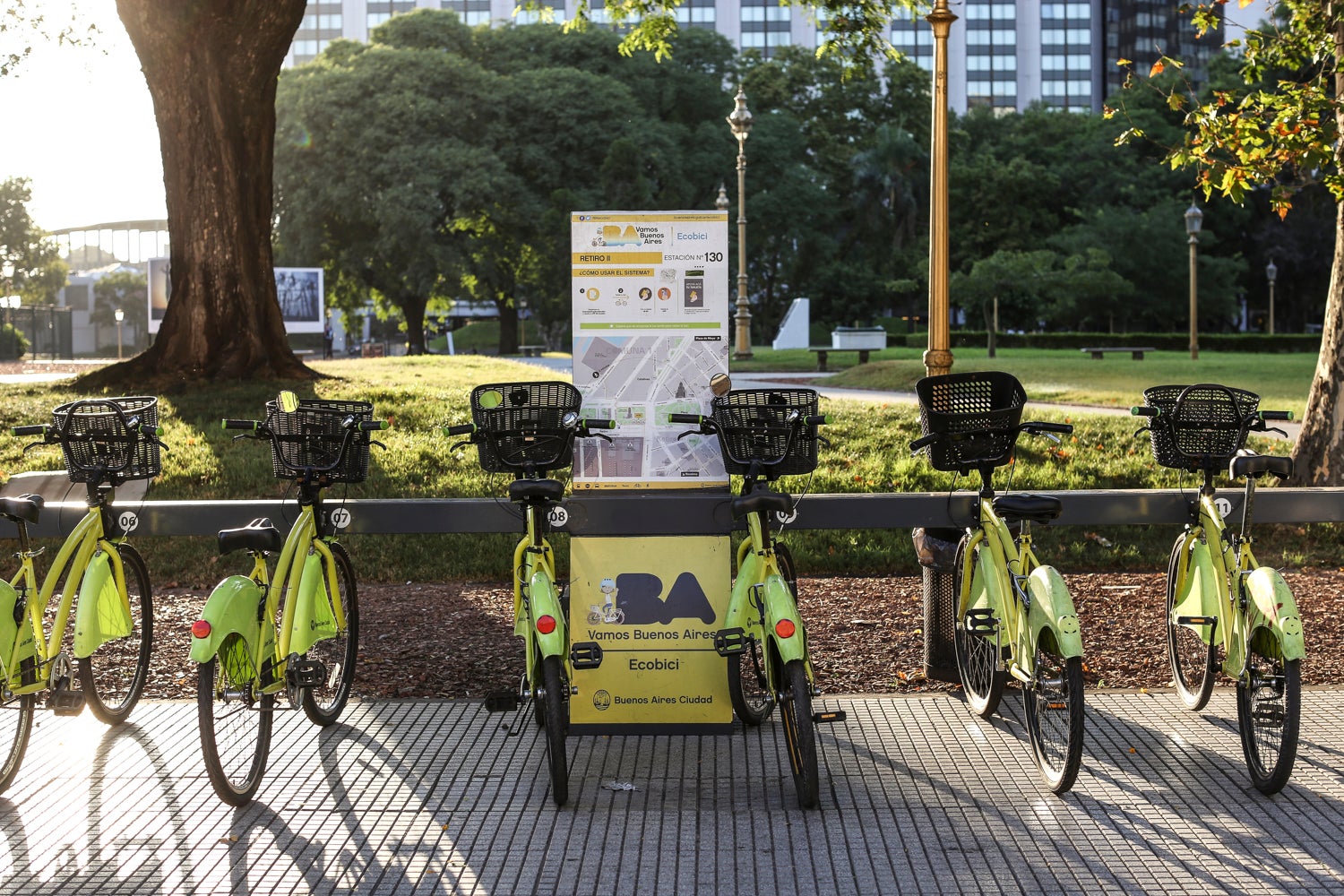
Since 2007, Mexico City has pioneered bicycle use thanks to the Ministry of the Environment’s Move by Bike program. Every Sunday, as part of the program, seven major roads —including the iconic Paseo de la Reforma avenue— are closed to cars. Instead, they become extensive recreational cycle routes spanning more than 50 kilometers and six districts, attracting around 90,000 cyclists at peak times. In recent years, the city has also been expanding its network of daily-use cycle paths, which currently cover more than 400 kilometers.
In 2018, responsibility for planning and implementing cycling projects was transferred from the Ministry of the Environment to the Ministry of Mobility. Mexico City has operated a public cycle scheme (Ecobici) since 2010. This marked the official launch of the city’s bicycle mobility policy. The strategy’s main objectives include promoting intermodal transport, establishing a cycling infrastructure network, and facilitating bicycle access.
Over the past decade, the city has developed and adapted its infrastructure and equipment to enable bicycle-only or intermodal travel, integrating cycle lanes with the metro system, bus lines, and the elevated trolleybus. Ample and secure bicycle parking is key to making this change successful. There are currently 10 parking areas across the city, located mainly around the center, with capacity for between 80 and 400 bicycles.
Until recently, Ecobici was government-run, which meant that the city was responsible for acquiring all the bicycles and building the necessary stations. While this approach ensures a veritable public service, it is expensive. In 2021, Mexico City sought private investment to expand its bicycle system. It partnered with Grupo Expansión and BKT bici pública for resources in exchange for sponsorship, while remaining publicly owned.
Plan Bici [the Bike Plan] represents a milestone in Mexico City’s public policy. It aims to build on the actions implemented in previous years to promote the everyday use of bikes as a mode of transport, in order to improve mobility and urban sustainability. According to the Digital Agency for Public Innovation’s 2019 origin-destination survey, nearly 4% of daily trips were made by bicycle. Mexico City’s Comprehensive Mobility Program 2019-2024 expects the modal split of bicycle use to triple by 2030, compared to 2017, when it accounted for 3.2% of the total.
Map of Mexico City’s cycle lanes.
Source: © Semovi and Google Maps.
Box 9. Complete Streets initiative and reducing speeding on Avenida del Libertador, Autonomous City of Buenos Aires
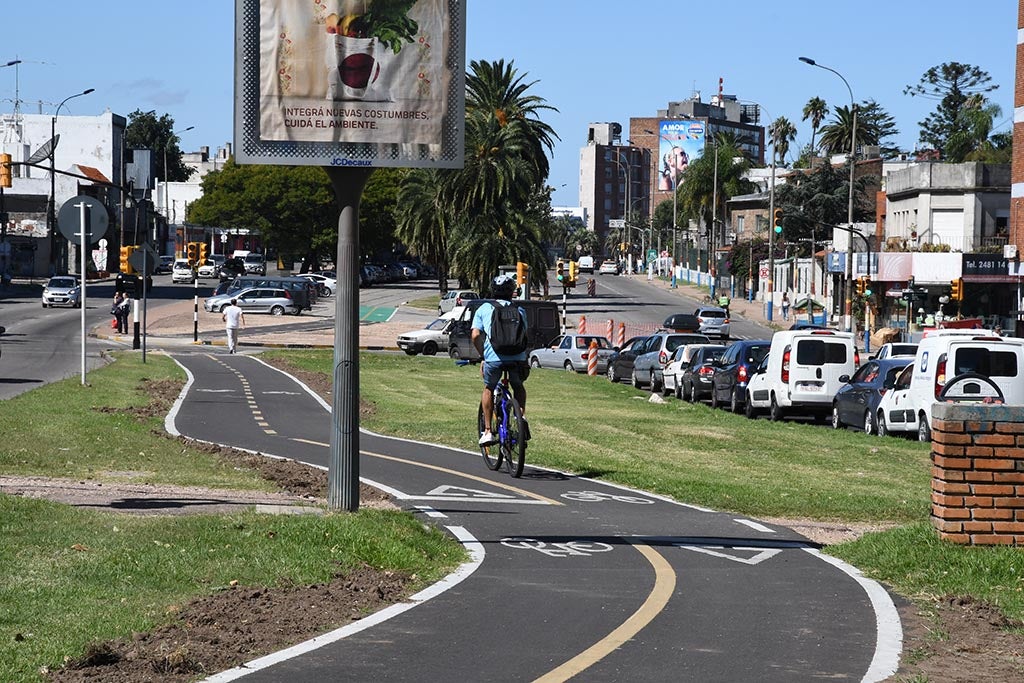
Since 2009, the Autonomous City of Buenos Aires has been implementing an active policy to encourage cycling as a means of urban transport. Creating a protected cycle lane network and public cycle scheme have been instrumental in increasing its modal split across the city’s transport network. Bicycle use increased from 0.4% in 2009 to 4.5% in 2022.
In 2020, the city launched its Sustainable Mobility Plan 2030. As part of this plan, in 2022, the road infrastructure of Avenida del Libertador was changed under the Complete Streets model. The project included redistributing road space to include and protect all road users. A one-way cycle lane was built in each direction along the avenue, public transport waiting platforms were added, the width of vehicle lanes was reduced, and the sidewalk was opened up and made pedestrian-only. Flowerbeds with vegetation and absorbent soil were also built to separate cycle lanes from vehicular traffic. The intervention aimed to prioritize cycling by continuing a route that ran along the sidewalk and caused conflict with pedestrians. The changes led to shorter pedestrian crossings and safe, comfortable waiting areas for public transport users. These changes were expected to indirectly lead to a reduction in speeding.
To test this, an observational study was carried out on Avenida del Libertador before and after the intervention. This was done in collaboration with researchers from the National Scientific and Technical Research Council (CONICET), Johns Hopkins University, and the city’s Department for Mobility Planning. Speed measurements were taken on two weekdays and one weekend day. Vehicles traveling both into and out of the city were included. During the pre-intervention phase, the speed of 3,124 vehicles was measured. During the post-intervention stage, the speed of 3,601 vehicles was measured. The average vehicle speed before and after the intervention remained stable (pre-intervention: average speed = 46.8 km/h, standard deviation = 10.4; post-intervention: average speed = 48.3 km/h, standard deviation = 8.1). The 85th percentile speed also remained stable (pre-intervention = 57 km/h; post-intervention = 56 km/h). However, a reduction in speeding was observed (Table R9.1). The probability of speeding was reduced by 33% following the intervention (95% confidence interval = 0.67).
Table R9.1. Percentage of vehicles above different speed limits
Limit |
Percentage |
|
Pre-intervention |
Post-intervention |
|
50 km/h |
33.5 |
40.0 |
60 km/h |
11.1 |
8.3 |
65 km/h |
9.3 |
6.5 |
70 km/h |
2.8 |
1.3 |
In summary, the infrastructure changes made under the Complete Streets model resulted in fewer vehicles exceeding the maximum permitted speed limit. This was achieved without changing current regulations or speed enforcement measures.
Source: Prepared by the authors, based onDepartment for Mobility Planning materials. Modal split of travel in the city of Buenos Aires 2019-2020-2021-2022. Buenos Aires: Mobility and Road Safety Observatory; 2023; Institute for Research in Basic, Applied, and Technological Psychology, Johns Hopkins International Injury Research Unit. Speed measurements on Avenida del Libertador. Preliminary results. Technical report. Buenos Aires: CONICET, Johns Hopkins International Injury Research Unit; 2023.
Conclusions
- Countries must develop information systems that provide reliable and systematic data on the safety of their roads, identified needs, modes of transport used, and investments made.
- Many countries lack legislation regulating road inspections and the protection of all road users. It is therefore essential to establish legal frameworks with mandatory safety inspections.
- Investment in road infrastructure must go hand in hand with accurate data collection on risk areas and their surrounding environmental conditions. Road observatories and international collaboration have an important role to play.
- Despite improvements in road infrastructure audits, there is still a long way to go, especially to achieve the technical standards and targets of the Global Plan 2021-2030.
- More must be done to promote sustainable transport, rather than individual motor vehicles. Policies encouraging alternative, safe modes of transport are needed.
- Sustainable mobility not only benefits road safety but leads to traffic calming. Policies promoting this type of mobility are therefore essential. Developing and strengthening information systems on modal split across different modes of transport is required, with a particular focus on sustainable mobility.