The tobacco control team works to reduce the burden of disease, death, and economic consequences caused by tobacco use and exposure to secondhand smoke in the Region of the Americas. Tobacco is currently the leading cause of preventable death worldwide. As its consumption rises in many parts of the globe, it becomes increasingly important for governments to work with civil society to implement the mandates of the WHO Framework Convention on Tobacco Control to protect their citizens and educate them about the dangers associated with its use.
- In the Region of the Americas, there are nearly 115 million tobacco consumers, 111 million of whom are smokers.
- Tobacco kills more than 700,000 people every year, which is equivalent to one death every 43 seconds.
- Globally, there are 1.202 billion tobacco consumers.
- Tobacco kills 7 million people every year (6 million active smokers and more than one million non-smokers affected by exposure to tobacco smoke), including nearly 736,000 in the Americas.
- The life expectancy of smokers is at least 10 years shorter than that of non-smokers.
- Mortality attributable to tobacco consumption in the Region accounts for 12% of deaths from cardiovascular diseases, 16% from cancer, and 29% from chronic respiratory diseases.
- Tobacco is the only legal consumer product that kills up to half of its users when used exactly according to the manufacturer's instructions.
- Half of all smokers will die from a tobacco-related disease, losing an average of 10 to 15 years of life.
- Tobacco product companies spend more than US$ 8 billion annually on marketing and advertising.
- The total economic cost of smoking worldwide (derived from associated healthcare expenditures and productivity losses) is estimated at US$ 1.4 trillion, which is equivalent to 1.8% of the global annual GDP in 2012.
- Children and adolescents who use electronic cigarettes are at least twice as likely to smoke conventional cigarettes later in life.
Explore the data on the ENLACE data portal
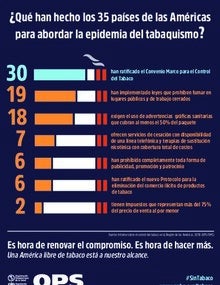
The WHO Framework Convention on Tobacco Control (WHO FCTC) is the first international public health treaty negotiated under the auspices of the WHO; it contains guidelines and requirements for the implementation of the most cost-effective tobacco control measures available that are necessary to reduce the tobacco epidemic.
Key provisions that Parties to the WHO FCTC are obliged to implement include:
- Article 6: Raising taxes on tobacco products.
- Article 8: Protection against exposure to second-hand tobacco smoke in all indoor workplaces, indoor public places, and public transport.
- Article 11: Strong health warnings on cigarette packaging covering at least 30% (and ideally 50%) of the exposed surfaces within three years.
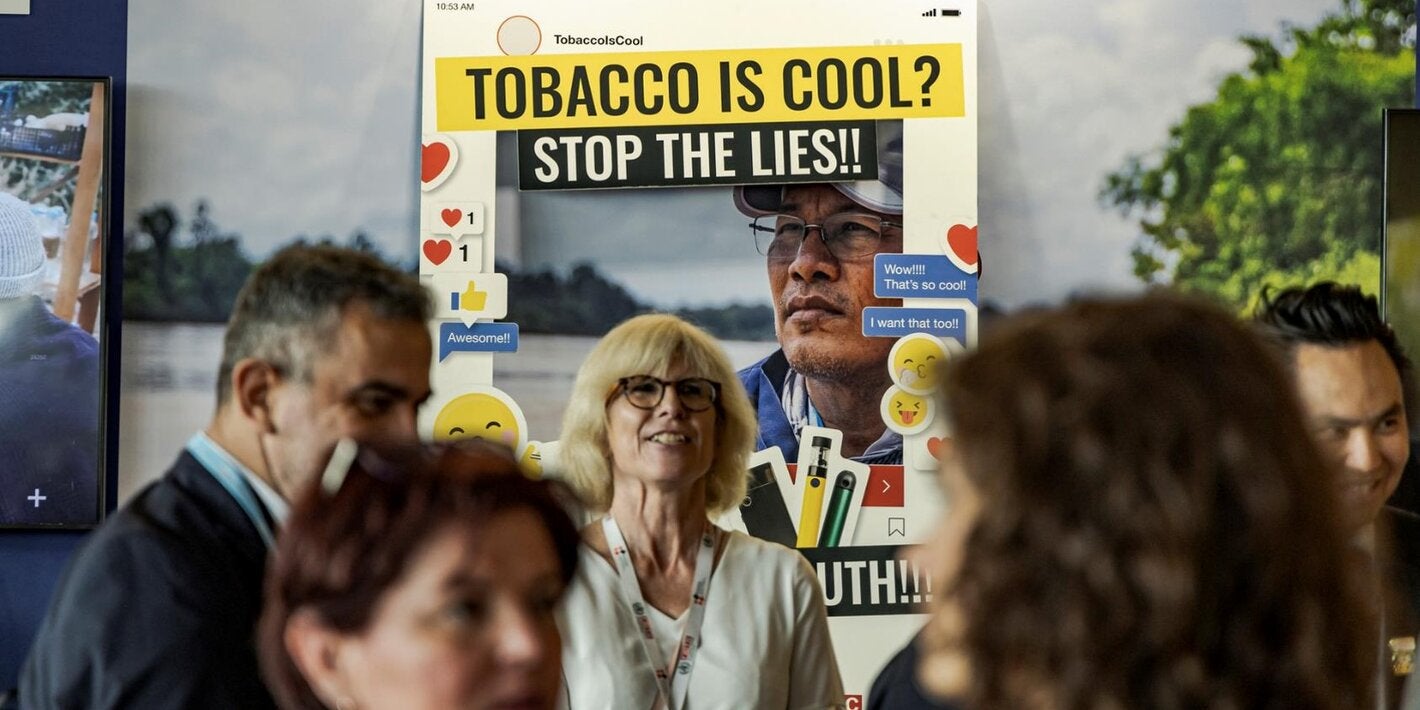
- Article 13: A comprehensive ban on tobacco advertising, promotion, and sponsorship.
PAHO’s objective is to accelerate the implementation of the FCTC in the Region, particularly those articles that the WHO considers to be the best investments—or "best buys"—for the prevention and control of NCDs.
Strategic lines of action include:
- Implementation of effective measures to regulate the consumption and marketing of conventional and emerging tobacco products; this includes establishing environments that are 100% free of tobacco smoke and emissions in all indoor public places and workplaces, as well as in public transport; adopting legislation regarding the packaging and labeling of tobacco products; and implementing a comprehensive ban on tobacco advertising, promotion, and sponsorship.
- Implementation of pricing and taxation measures to reduce the demand for tobacco, with the aim of reducing the affordability of tobacco products by increasing consumption taxes.
- Provision of comprehensive, high-quality services that promote effective measures for cessation and the appropriate treatment of tobacco dependence, through the offering of comprehensive, high-quality services to quit tobacco use.
- Ratification of the FCTC and the Protocol to Eliminate Illicit Trade in Tobacco Products by those Member States that have not yet done so.
- Strengthening the capacity of Member States regarding public health policies to counter attempts at interference by the tobacco industry and those who defend its interests.
- Assisting Member States in the preparation, review, and implementation of tobacco control regulations and policies, regardless of whether they are Parties to the FCTC.
- Promoting technical cooperation with and among countries to share best practices and lessons learned.
- Strengthening technical cooperation to enhance Member States' capacities to promote policy coherence between trade and public health in the context of tobacco control, in order to protect health from interference by the tobacco industry.
- Promoting partnerships with other international organizations and subregional entities, as well as with members of civil society at the national and international levels, for the implementation of this Strategy and Plan of Action.
The Better Care for NCDs initiative encourages tobacco cessation. Discover how we're transforming the approach to NCDs in primary health care.