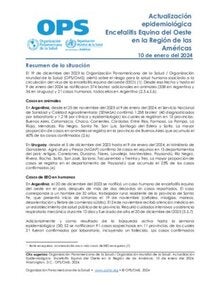
What are arboviral encephalitis?
Arboviral encephalitis are mosquito-borne diseases that can cause neurological symptoms in humans and animals. Examples of arboviral encephalitis include West Nile virus encephalitis (WNV), St. Louis encephalitis (SLEV), Japanese encephalitis (JEV), Eastern equine encephalitis (EEEV), and Western equine encephalitis (WEEV).
Types
These arboviruses that affect the nervous system are divided into two main groups: flaviviruses (of the genus Orthoflavivirus, part of the family Flaviviridae) and alphaviruses (of the genus Alphavirus, part of the family Togaviridae). Examples of flaviviruses known to cause neurological symptoms include West Nile virus (WNV), St. Louis encephalitis virus (SLEV), Usutu virus (USUV) and Japanese encephalitis virus (JEV). The USUV and JEV are not found in the Americas. On the other hand, alphaviruses include Eastern equine encephalitis virus (EEEV), Venezuelan equine encephalitis virus (VEEV) and Western equine encephalitis virus (WEEV), which are also known to affect the nervous system.
Dengue virus (DENV), chikungunya virus (CHIKV), and Zika virus (ZIKV) have also been linked to encephalitis and other neurological disorders.
Symptoms
Common symptoms of these diseases may include high fever, severe headache, confusion, seizures, muscle weakness, and other neurological problems.
Prevention and treatment
Prevention focuses on avoidance of mosquito bites, as well as vaccination in the case of Japanese encephalitis (JEV). Treatment mainly involves supportive care and symptom management, as there are no specific antiviral treatments for arboviral encephalitis.
PAHO/WHO is providing technical cooperation for comprehensive, integrated vector surveillance and control in its member countries throughout the Americas, in cooperation with international partners.
PAHO/WHO is helping to raise awareness of vector-borne diseases, including WNV, and the need for people and communities to protect themselves against mosquito bites through the use of window screens, protective clothing, and insect repellent and by destroying mosquito breeding sites in residential areas.
Alertas y actualizaciones epidemiológicas
Qué son las encefailits arbovirales
Las encefalitis arbovirales son enfermedades transmitidas por mosquitos, que pueden causar síntomas neurológicos en humanos y animales. Algunos ejemplos de encefalitis arbovirales incluyen la encefalitis del virus del Nilo Occidental (WNV), la encefalitis de San Luis (SLEV), la encefalitis japonesa (JEV), la encefalitis equina del este (EEEV), y la encefalitis equina del oeste (WEEV).
Tipos
Estos arbovirus que afectan el sistema nervioso se dividen en dos grupos principales: los flavivirus (del género Orthoflavivirus, parte de la familia Flaviviridae) y los alfavirus (del género Alphavirus, parte de la familia Togaviridae). Algunos ejemplos de flavivirus conocidos por causar síntomas neurológicos incluyen el virus del Nilo Occidental (WNV), el virus de la encefalitis de San Luis (SLEV), los virus Usutu (USUV) y de la encefalitis japonesa (JEV). Por otro lado, entre los alfavirus, se encuentran el virus de la encefalitis equina del este (EEEV), el virus de la encefalitis equina venezolana (VEEV) y el virus de la encefalitis equina del oeste (WEEV), que también son conocidos por afectar al sistema nervioso.
El virus del dengue (DENV), el virus del chikungunya (CHIKV) y el virus del Zika (ZIKV) también han sido relacionados con la encefalitis y otros trastornos neurológicos.
Síntomas
Los síntomas comunes de estas enfermedades pueden incluir fiebre alta, dolor de cabeza intenso, confusión, convulsiones, debilidad muscular y otros problemas neurológicos.
Prevención y tratamiento
La prevención se centra en evitar las picaduras de mosquitos, así como en la vacunación en el caso de la encefalitis japonesa (JEV). El tratamiento implica principalmente cuidados de apoyo y el manejo de los síntomas , ya que no existen tratamientos antivirales específicos para las encefalitis arbovirales.