• Pruebas diabetes

Diabète

Diabetes is a chronic, metabolic disease characterized by elevated levels of blood glucose (or blood sugar), which leads over time to serious damage to the heart, blood vessels, eyes, kidneys, and nerves. The most common is type 2 diabetes, usually in adults, which occurs when the body becomes resistant to insulin or doesn't make enough insulin. In the past three decades, the prevalence of type 2 diabetes has risen dramatically in countries of all income levels. Type 1 diabetes, once known as juvenile diabetes or insulin-dependent diabetes, is a chronic condition in which the pancreas produces little or no insulin by itself. For people living with diabetes, access to affordable treatment, including insulin, is critical to their survival. There is a globally agreed target to halt the rise in diabetes and obesity by 2025

Symptoms of type 1 diabetes include the need to urinate often, thirst, constant hunger, weight loss, vision changes, and fatigue. These symptoms may occur suddenly. 

Symptoms of type 2 diabetes are generally similar to those of type 1 diabetes but are often less marked. As a result, the disease may be diagnosed several years after onset, by which time complications have already arisen. For this reason, it is important to be aware of risk factors.

Although type 1 diabetes cannot currently be prevented, effective approaches are available to prevent type 2 diabetes and the complications and premature death that can result from all types of diabetes. These include policies and practices across whole populations and within specific settings (school, home, workplace) that contribute to good health for everyone, regardless of whether they have diabetes, such as exercising regularly, eating healthily, avoiding smoking, and controlling blood pressure and lipids.

The starting point for living well with diabetes is an early diagnosis—the longer a person lives with undiagnosed and untreated diabetes, the worse their health outcomes are likely to be. Therefore, easy access to basic diagnostics, such as blood glucose testing, should be available in primary healthcare settings. Patients will need periodic specialist assessment or treatment for complications.

A series of cost-effective interventions can improve patient outcomes, regardless of the type of diabetes. These interventions include blood glucose control through a combination of diet, physical activity, and, if necessary, medication; control of blood pressure and lipids to reduce cardiovascular risk and other complications; and Prevention and treatment.

  • 112 million adults (18 years or older) live with Diabetes in the Americas, a number that has tripled in the Region since 1990. Prevalence has been rising more rapidly in low—and middle-income countries than in high-income countries.
  • Diabetes is a major cause of blindness, kidney failure, heart attacks, stroke, and lower limb amputation. Poorly controlled diabetes increases the chances of these complications and premature mortality. In addition, people with diabetes are at higher risk of presenting cardiovascular diseases and tuberculosis, especially those with poor glycemic control.
  • The burden of disease associated with diabetes is enormous and growing: in just 20 years, diabetes mortality has increased by over 50% worldwide. In the Region of the Americas, it is the sixth leading cause of death and the fifth cause of years of life lost prematurely.
  • In the Region, diabetes (including diabetes-related kidney disease) causes approximately eight million years of life lost each year due to premature death.
  • Diabetes is currently the third cause of DALYs, preceded only by ischemic heart disease and COVID-19.
  • The expansive increase in the diabetes epidemic goes hand in hand with the increase in its risk factors. The Americas is the region with the most overweight/obesity and physical inactivity in the world: 68 out of every 100 adults are overweight or obese, and 36 out of every 100 people have an insufficient level of physical activity.
  • The increase in risk factors for type 2 diabetes is alarming in children and adolescents. 16 out of 100 adolescents and 19 out of 100 children are obese, while 81 out of 100 adolescents do not engage in enough physical activity.
  • Diabetes can be treated and its consequences avoided or delayed with diet, physical activity, medication, and regular screening and treatment for complications.

Explore the data interactively in the ENLACE data portal


The burden of Diabetes mellitus

Prevalence of raised blood glucose

Prevalence of overweight/obesity

Type 1 Diabetes

Type 1 diabetes (previously known as insulin-dependent, juvenile or childhood-onset) is characterized by deficient insulin production and requires daily administration of insulin. In 2017 there were 9 million people with type 1 diabetes; the majority of them live in high-income countries. Neither its cause nor the means to prevent it are known.

Symptoms include excessive excretion of urine (polyuria), thirst (polydipsia), constant hunger, weight loss, vision changes, and fatigue. These symptoms may occur suddenly.

Type 2 Diabetes

Type 2 diabetes (formerly called non-insulin-dependent, or adult-onset) results from the body’s ineffective use of insulin. More than 95% of people with diabetes have type 2 diabetes. This type of diabetes is largely the result of excess body weight and physical inactivity.

Symptoms may be similar to those of type 1 diabetes but are often less marked. As a result, the disease may be diagnosed several years after onset, after complications have already arisen.

Until recently, this type of diabetes was seen only in adults but it is now also occurring increasingly frequently in children.

Gestational Diabetes

Gestational diabetes is hyperglycaemia with blood glucose values above normal but below those diagnostic of diabetes. Gestational diabetes occurs during pregnancy.

Women with gestational diabetes are at an increased risk of complications during pregnancy and at delivery. These women and possibly their children are also at increased risk of type 2 diabetes in the future.

Gestational diabetes is diagnosed through prenatal screening, rather than through reported symptoms.

Impaired glucose tolerance and impaired fasting glycaemia

Impaired glucose tolerance (IGT) and impaired fasting glycaemia (IFG) are intermediate conditions in the transition between normality and diabetes. People with IGT or IFG are at high risk of progressing to type 2 diabetes, although this is not inevitable.

Health impact

Over time, diabetes can damage the heart, blood vessels, eyes, kidneys, and nerves.

  • Adults with diabetes have a two- to three-fold increased risk of heart attacks and strokes(1).
  • Combined with reduced blood flow, neuropathy (nerve damage) in the feet increases the chance of foot ulcers, infection and eventual need for limb amputation.
  • Diabetic retinopathy is an important cause of blindness, and occurs as a result of long-term accumulated damage to the small blood vessels in the retina. Close to 1 million people are blind due to diabetes(2).
  • Diabetes is among the leading causes of kidney failure(3).

Prevention

Simple lifestyle measures have been shown to be effective in preventing or delaying the onset of type 2 diabetes. To help prevent type 2 diabetes and its complications, people should:

  • achieve and maintain a healthy body weight;
  • be physically active – doing at least 30 minutes of regular, moderate-intensity activity on most days. More activity is required for weight control;
  • eat a healthy diet, avoiding sugar and saturated fats; and
  • avoid tobacco use – smoking increases the risk of diabetes and cardiovascular disease.

Diagnosis and treatment

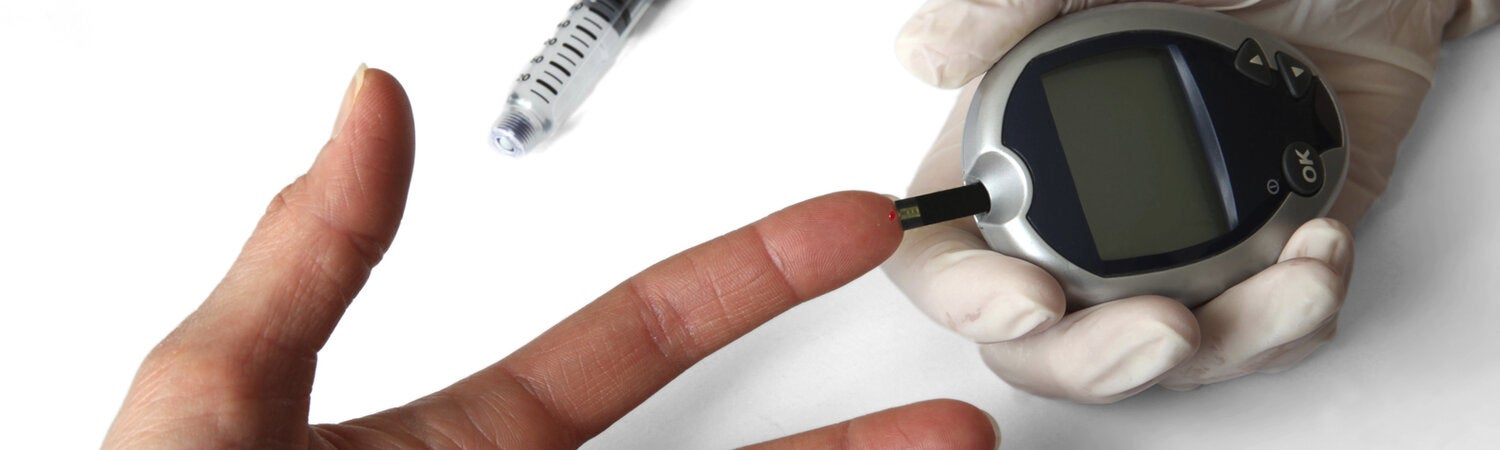
Early diagnosis can be accomplished through relatively inexpensive testing of blood sugar.

Treatment of diabetes involves diet and physical activity along with lowering of blood glucose and the levels of other known risk factors that damage blood vessels. Tobacco use cessation is also important to avoid complications.

Interventions that are both cost-saving and feasible in low- and middle-income countries include:

  • blood glucose control, particularly in type 1 diabetes. People with type 1 diabetes require insulin, people with type 2 diabetes can be treated with oral medication, but may also require insulin;
  • blood pressure control; and
  • foot care (patient self-care by maintaining foot hygiene; wearing appropriate footwear; seeking professional care for ulcer management; and regular examination of feet by health professionals).

Other cost saving interventions include:

  • screening and treatment for retinopathy (which causes blindness);
  • blood lipid control (to regulate cholesterol levels);
  • screening for early signs of diabetes-related kidney disease and treatment.

PAHO/WHO aims to stimulate and support the adoption of effective measures for the surveillance, prevention and control of diabetes and its complications, particularly in low- and middle-income countries. To this end, PAHO/WHO:

  • provides scientific guidelines for the prevention of major noncommunicable diseases including diabetes;
  • develops norms and standards for diabetes diagnosis and care;
  • builds awareness on the global epidemic of diabetes, marking World Diabetes Day (14 November); and
  • conducts surveillance of diabetes and its risk factors.

The WHO Global report on diabetes provides an overview of the diabetes burden, interventions available to prevent and manage diabetes, and recommendations for governments, individuals, the civil society and the private sector.

The WHO module on diagnosis and management of type 2 diabetes brings together guidance on diagnosis, classification and management of type 2 diabetes in one document. The module is for policy-makers who plan service delivery of diabetes care, national programme managers responsible for training, planning and monitoring service delivery, and facility managers and primary care staff involved in clinical care and monitoring processes and outcomes of diabetes care.

In April 2021 WHO launched the Global Diabetes Compact, a global initiative aiming for sustained improvements in diabetes prevention and care, with a particular focus on supporting low- and middle-income countries. The Compact is bringing together national governments, UN organizations, nongovernmental organizations, private sector entities, academic institutions, and philanthropic foundations, people living with diabetes, and international donors to work on a shared vision of reducing the risk of diabetes and ensuring that all people who are diagnosed with diabetes have access to equitable, comprehensive, affordable and quality treatment and care.

In May 2021, the World Health Assembly agreed a Resolution on strengthening prevention and control of diabetes. It recommends action in areas including increasing access to insulin; promoting convergence and harmonization of regulatory requirements for insulin and other medicines and health products for the treatment of diabetes; and assessing the feasibility and potential value of establishing a web-based tool to share information relevant to the transparency of markets for diabetes medicines and health products.

Subscribe to our newsletter on non-communicable diseases and mental health


We're committed to improving diabetes care through the Better Care for NCDs initiative. Discover how we're transforming the approach to NCDs in primary health care.

ACCESS BETTER CARE FOR NCDs WEBSITE

Le diabète est une maladie chronique qui apparaît lorsque le pancréas ne produit pas suffisamment d’insuline ou que l’organisme n’utilise pas correctement l’insuline qu’il produit. L’insuline est une hormone qui régule la concentration de sucre dans le sang. L’hyperglycémie, ou concentration sanguine élevée de sucre, est un effet fréquent du diabète non contrôlé qui conduit avec le temps à des atteintes graves de nombreux systèmes organiques et plus particulièrement des nerfs et des vaisseaux sanguins.

Principaux faits

Principaux faits

  • La prévalence du diabète a augmenté plus rapidement dans les pays à revenu faible ou intermédiaire.
  • Le diabète est une cause majeure de cécité, d’insuffisance rénale, d’accidents cardiaques, d’accidents vasculaires cérébraux et d’amputation des membres inférieurs.
  • En 2015, on a estimé que 1,6 million de décès étaient directement dus au diabète et que 2,2 millions de décès supplémentaires devaient être attribués à l’hyperglycémie en 2012**.
  • Près de la moitié des décès dus à l’hyperglycémie surviennent avant l’âge de 70 ans. L’OMS prévoit qu’en 2030, le diabète sera la 7e cause de décès dans le monde (1).
  • Avoir une alimentation saine, une activité physique régulière, un poids normal et éviter la consommation de tabac, sont autant de moyens de prévenir ou de retarder l'apparition du diabète de type 2.
  • Un régime alimentaire sain, l’activité physique, des médicaments, un dépistage régulier et le traitement des complications permettent de traiter le diabète et d’éviter ou de retarder les conséquences qu’il peut avoir.
Fiche d'information

Diabète de type 1

Le diabète de type 1 (précédemment connu sous le nom de diabète insulino-dépendant ou juvénile) est caractérisé par une production insuffisante d’insuline3 et exige une administration quotidienne de cette dernière. La cause de diabète de type 1 n'est pas connue, et en l'état des connaissances actuelles, il n'est pas évitable.

Les symptômes sont les suivants: excrétion excessive d’urine (polyurie), sensation de soif (polydipsie), faim constante, perte de poids, altération de la vision et fatigue. Ces symptômes peuvent apparaître brutalement.

Diabète de type 2

Le diabète de type 2 (précédemment appelé diabète non insulino-dépendant ou diabète de la maturité) résulte d’une mauvaise utilisation de l’insuline par l’organisme. Le diabète de type 2 représente la majorité des diabètes rencontrés dans le monde. Il est en grande partie le résultat d’une surcharge pondérale et de la sédentarité.

Ses symptômes peuvent être les mêmes que ceux du diabète de type 1 mais sont souvent moins marqués. De ce fait, la maladie peut être diagnostiquée plusieurs années après son apparition, une fois les complications déjà présentes.

Récemment encore, ce type de diabète n’était observé que chez l’adulte mais on le trouve désormais aussi chez l’enfant.

Diabète gestationnel

Il se caractérise par une hyperglycémie, c’est-à-dire une élévation de la teneur en sucre du sang, avec des valeurs supérieures à la normale, mais inférieures à celles posant le diagnostic de diabète, apparaissant pendant la grossesse.

Les femmes ayant un diabète gestationnel ont un risque accru de complications pendant la grossesse et à l’accouchement. Leur risque ainsi que celui de leur enfant, d’avoir un diabète de type 2 à un stade ultérieur de leur vie augmente également.

Il est très souvent diagnostiqué au cours du dépistage prénatal et non pas suite à des symptômes.

Altération de la tolérance au glucose et de la glycémie à jeun

L’altération de la tolérance au glucose et de la glycémie à jeun sont des affections intermédiaires qui font la transition entre normalité et diabète. Les personnes qui en sont atteintes sont exposées à un risque élevé d’évolution vers un diabète de type 2, même si ce dernier n’est pas inévitable.

Quelles sont les conséquences habituelles du diabète?

Avec le temps, le diabète peut endommager le coeur, les vaisseaux sanguins, les yeux, les reins et les nerfs.

  • Le diabète multiplie par 2 ou 3 le risque chez l’adulte de souffrir d’accidents cardiaques ou vasculaires cérébraux2.
  • Associée à une diminution du débit sanguin, la neuropathie qui touche les pieds augmente la probabilité d’apparition d’ulcères des pieds, d’infection et, au bout du compte, d’amputation des membres.
  • La rétinopathie diabétique est une cause importante de cécité et survient par suite des lésions des petits vaisseaux sanguins de la rétine qui s’accumulent avec le temps. 2,6% de la cécité dans le monde peut être attribuée au diabète3.
  • Le diabète figure parmi les principales causes d’insuffisance rénale4.

Comment réduire la charge de morbidité du diabète?

Prévention

On a montré que des mesures simples modifiant le mode de vie pouvaient être efficaces pour prévenir ou retarder le diabète de type 2. Pour prévenir ce diabète et ses complications, les gens doivent:

  • parvenir à un poids corporel normal et le maintenir;
  • faire de l’exercice physique – au moins 30 minutes par jour d’une exercice régulier d’intensité modérée. Une activité physique plus intense est nécessaire pour perdre du poids;
  • avoir un régime alimentaire sain et éviter le sucre et les graisses saturées;
  • arrêter le tabac – la cigarette augmente le risque de diabète et de maladies cardio-vasculaires.

Diagnostic et traitement

On peut poser un diagnostic précoce à l’aide d’un test sanguin relativement peu coûteux.

Le traitement du diabète impose d'avoir un régime alimentaire sain et de pratiquer une activité physique ansi que de réduire la glycémie et les autres facteurs de risque de lésion des vaisseaux sanguins. L’arrêt du tabac est également important pour éviter les complications.

Les interventions économiques et réalisables dans les pays en développement sont les suivantes:

  • le contrôle de la glycémie, en particulier chez les personnes atteintes de diabète de type 1 qui ont besoin d’insuline; celles atteintes de diabète de type 2 peuvent être traitées par une médication par voie orale, mais peuvent également avoir besoin d’insuline;
  • contrôle de la tension artérielle; et
  • soin des pieds.

Les autres interventions économiques comprennent:

  • le dépistage de la rétinopathie (qui provoque la cécité);
  • le contrôle des lipides sanguins (afin de réguler les concentrations de cholestérol);
  • le dépistage des premiers signes d’une maladie rénale liée au diabète et son traitement.

Diabetes Clinical Pathway

The type 2 diabetes clinical pathway is a standardized technical resource aimed at improving the quality and efficiency of health care for people with type 2 diabetes at the primary health care. It is based on the D Module of HEARTS, Diagnosis, and Management of Type 2 Diabetes. It summarizes diabetes care and its complications in a single instrument, integrating them with the cardiovascular prevention strategy.

PAHO provides technical support to Member States to develop the type 2 diabetes clinical pathway adapted to the local context. Its adoption allows for improved health outcomes, with benefits such as better metabolic control of diabetes, prevention and early diagnosis of diabetes-related complications, and better control of hypertension and cardiovascular risk. Its institutionalization ensures the continuity of these and other related benefits, contributing to a more robust and effective healthcare system.


Iniciatives


Pacto Mundial contra la Diabetes:

Implementación en la Región de las Américas


El Pacto Mundial contra la Diabetes (PMD) de la Organización Mundial de la Salud (OMS) se crea como una iniciativa mundial para mejorar la prevención y la atención de la diabetes y para contribuir a las metas mundiales para reducir la mortalidad prematura por enfermedades no transmisibles en un tercio para 2030.
Pacto Mundial contra la Diabetes: mejorar la prevención, el diagnóstico y el tratamiento.


Pacto Mundial contra la Diabetes:

Implementación en la Región de las Américas


El Pacto Mundial contra la Diabetes (PMD) de la Organización Mundial de la Salud (OMS) se crea como una iniciativa mundial para mejorar la prevención y la atención de la diabetes y para contribuir a las metas mundiales para reducir la mortalidad prematura por enfermedades no transmisibles en un tercio para 2030.
Pacto Mundial contra la Diabetes: mejorar la prevención, el diagnóstico y el tratamiento.


Resources

Virtual course

Care for people with type 2 diabetes mellitus in primary health care

(available in English)

AcceS THE COURSE

Diabetes self-care modules


cover selfcare modules

Access the modules

WHO recommendations on care for women with diabetes during pregnancy


Download the publication

Documents

Matériel de communication