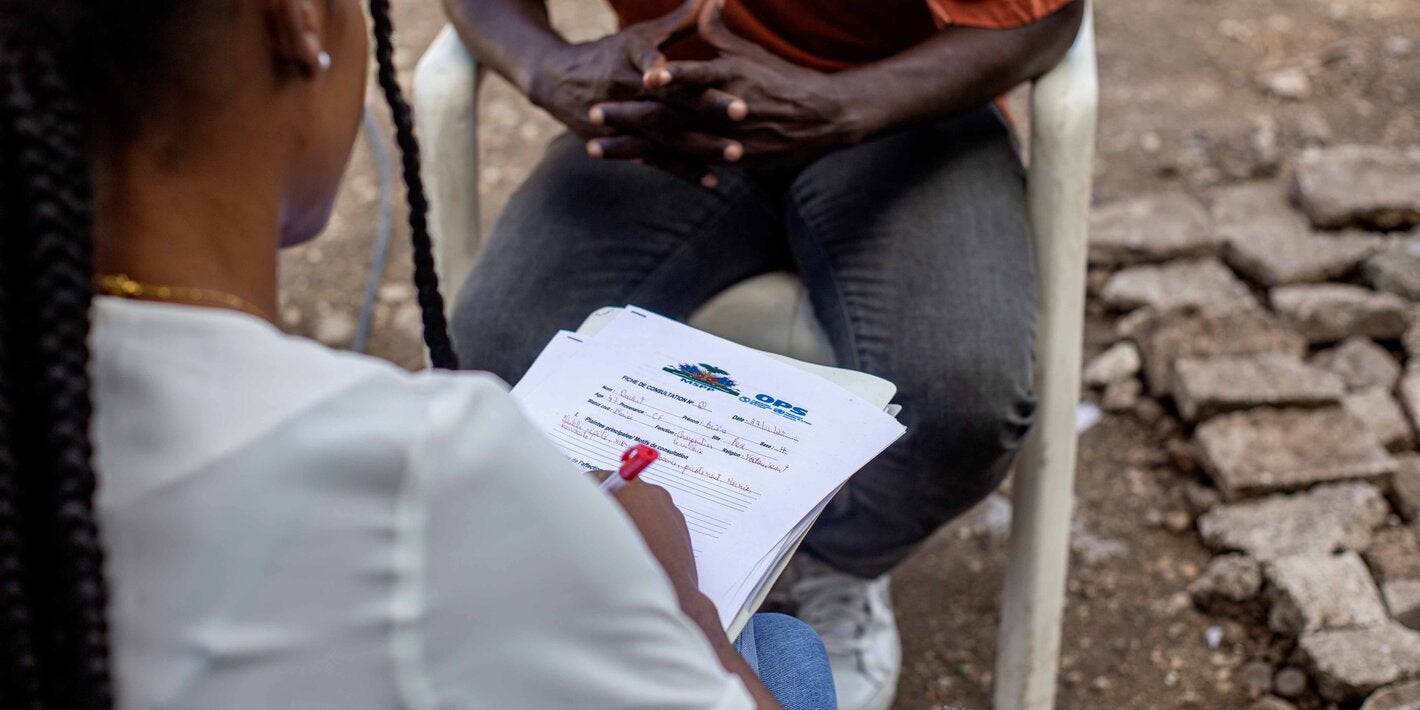
Good-quality health information is essential for planning and implementing health policy in all countries. PAHO provides ongoing technical cooperation to Member States by supporting the collection, analysis, and dissemination of information on country-level noncommunicable diseases and risk factors to support decision-making.
The NMH Surveillance and Monitoring team supports the development and implementation of standard methodologies for data production while strengthening countries' surveillance capacity and fostering the use of data to guide policy.
Contact the surveillance team
Public health surveillance is the ongoing systematic collection, analysis, and interpretation of health data essential to planning, implementing, and evaluating public health practice. It is an essential public health function.
Key data sources for NCD and risk factors surveillance include vital statistics, cancer registries, primary health care information systems, and population-based surveys. Population-based surveys provide a comprehensive snapshot of a population's health status over a certain period without leaving anyone behind. They require applying scientific methods, such as using probability sampling to obtain information representative of a population. Population-based surveys on NCD and risk factors include household, school-based, and mobile phone surveys.
Surveillance tools






In response to the growing burden of NCDs and their risk factors, countries have made global and regional commitments, such as the endorsement of the Global and Regional Action Plans for the Prevention and Control of NCDs and the adoption of the 2030 Agenda for Sustainable Development at the United Nations. Furthermore, countries have adopted monitoring frameworks to track progress toward implementing policies and interventions, such as the NCD Global Monitoring Framework.
To fulfill its mandate to monitor countries’ progress in preventing and controlling major noncommunicable diseases, PAHO periodically assesses national capacity for NCD prevention and control using a number of monitoring tools.
Monitoring Frameworks
- Sustainable Development Goals Progress Indicators
- NCD Global Monitoring Framework
- Universal Health Coverage
- Global Nutrition Monitoring Framework
Monitoring Tools
The availability of data to guide the implementation of policies and interventions is essential to strengthening health systems. The NCD Surveillance team strives to make available data from all NCD surveillance activities and supports open data access to improve evidence-based and data-informed public health programming for NCD prevention and control.
The WHO NCD Microdata Repository contains reports, fact sheets, and data sets from relevant surveys using the standardized PAHO/WHO tools and methods for undertaking population-based surveys on NCD risk factors.
ENLACE data portal is PAHO’s one-stop shop for epidemiological, health policy, and strategic data related to non-communicable diseases, injuries, disabilities, rehabilitation, and mental health. Through interactive data visualizations, ENLACE makes it easier for users to explore data, discover information, and share insights to support the efforts to improve the health and well-being of people in the Region of the Americas.
Reporting Tools
- ENLACE: Data Portal on Noncommunicable Diseases, Mental Health, and External Causes
- Noncommunicable Diseases Data Portal
- WHO NCD Document Repository
- NCD Microdata Repository
- Knowledge Action Portal on NCDs
- Global Health Observatory