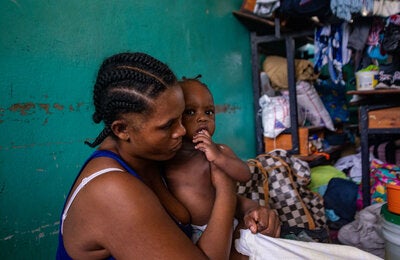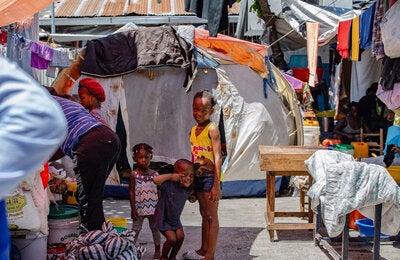
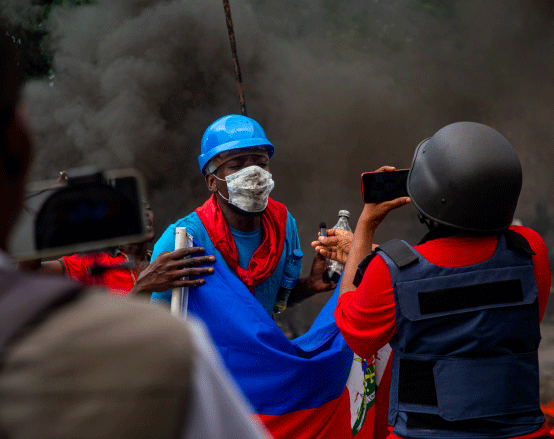
For several years, Haiti has been engulfed in a socioeconomic, political, and humanitarian crisis that reached critical levels in mid-September 2022 due to escalating armed violence and gang control. The widespread insecurity continues to rise in 2025. The situation has drastically affected the country's access to essential goods and services, such as food, water and sanitation, and health care, and forced hundreds of thousands of people to flee their homes.
Meanwhile, a cholera epidemic resurged in October 2022, after 3 years without cases, and spread rapidly across the country. Conditions remain in place for a heightened risk of further spread of this and other diseases, notably in Internally Displaced Populations (IDP) sites.
In the country 26% of inpatient health facilities are fully functional, 49% partially functional, 21% non-functional and 4% have been destroyed.
In the PAP metro area 37 % of inpatient health facilities are fully functional, 13% partially functional, 40 % non-functional and 10% have been destroyed.
The response to cholera, epidemiological surveillance for outbreak detection and control, including dengue, and vaccination efforts for diseases such as polio, measles, tuberculosis, and diphtheria are severely constrained.
There are shortages of medicine and supply caused by insecurity and looting.
Check the latest Situation Report for detailed information.
Over 5.2 million individuals, almost half the population, urgently require humanitarian assistance
More than 1 million people are internally displaced. Many displaced multiple times.
Only 1 of the 3 major hospitals in the metropolitan area of Port-au-Prince is operating due to attacks.
Insecurity and blockades of ports and airports is significantly limiting foreign assistance to provide vital health supplies and medication.
Cholera Situation
After more than three years with no cases, Haiti's national authorities reported two confirmed cases of cholera in the greater Port-au-Prince area on October 1, 2022. Newly suspected cholera cases are still reported in both IDP sites and communities, despite a decrease in cases. Although localized outbreaks are being monitored, the crisis impacts the response. Case reporting and confirmation, sample transportation, and the dispatch of medical and WaSH supplies are severely hampered.
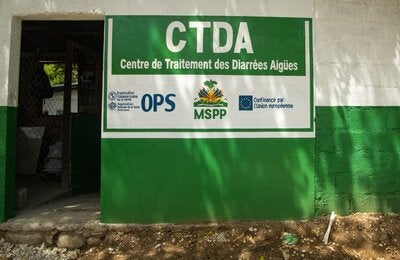
PAHO continues its efforts to curb the cholera outbreak, working with national authorities, supporting awareness and vaccination campaigns, strengthening the local cholera response team, and providing essential drugs and supplies for treatment. Improving water supply, sanitation, and hygiene conditions—particularly in IDP sites—remains a priority.
Check the latest Situation Report for detailed information on surveillance, case management, and response activities.
Diphtheria Situation
As of 20 June 2026, 1,924 suspected diphtheria cases had been reported, of which 159 were laboratory confirmed. A total of 18 deaths were recorded, including 13 among suspected cases and 5 among confirmed cases.
Since the beginning of 2026, 37 suspected cases and 4 confirmed cases of diphtheria have been identified in sites hosting displaced persons in the Ouest Department. In the Artibonite Department, one suspected case was identified in a site hosting displaced persons. Response measures, including vaccination, were implemented at the affected site and in two neighboring sites, and no additional cases have been detected.
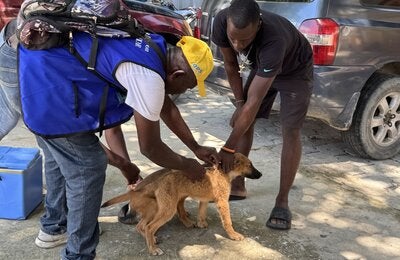
All ten departments of the country have reported suspected diphtheria cases, with the highest concentration observed in the Ouest (39%), Sud-Est (22%), and Nord-Est (10%) departments. The response includes case investigation, contact tracing and prophylaxis, as well as reactive vaccination in affected localities, carried out by the departmental response teams.
PAHO/WHO's Response
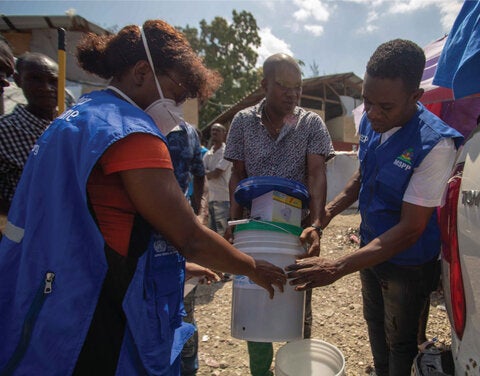
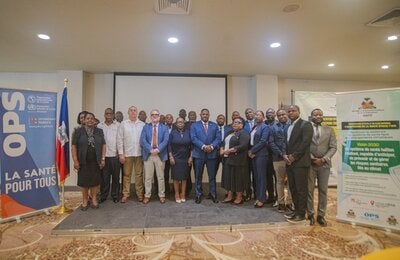
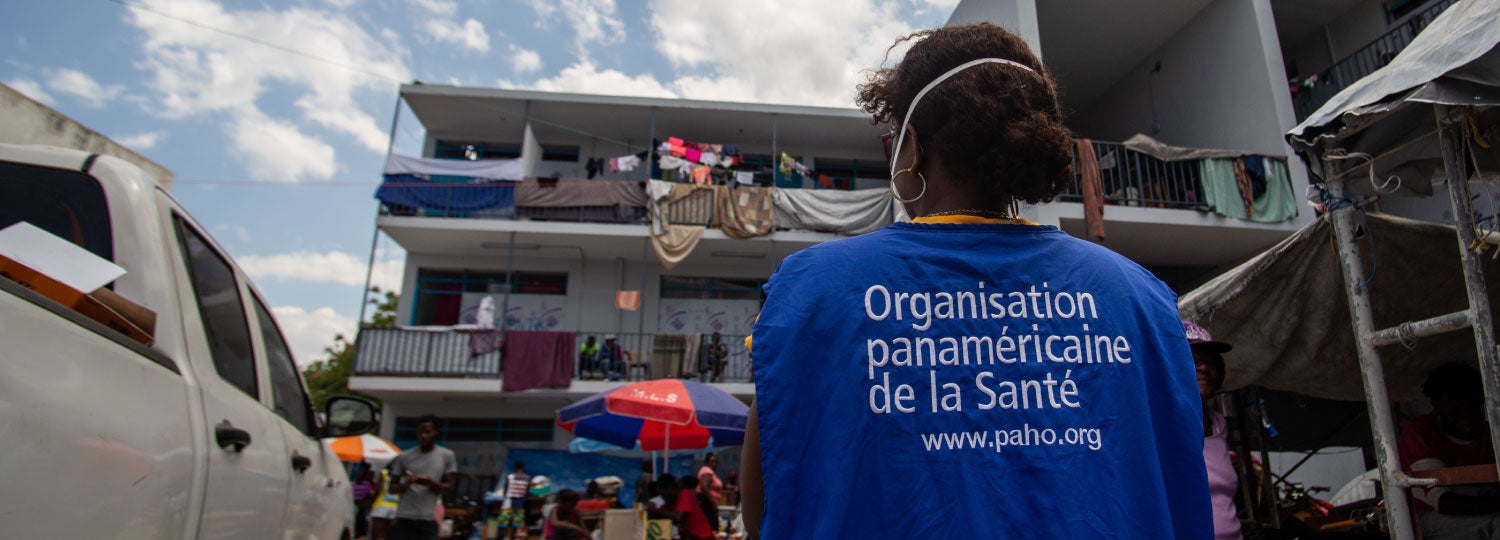
The Pan American Health Organization (PAHO) has been actively supporting the Ministry of Health (MSPP) and health partners to address the most pressing health needs and protect the lives of the most vulnerable during this crisis. Despite incredibly difficult circumstances, Haitian health care workers and authorities continue to provide lifesaving care, and PAHO remains fully present and operational in the country supporting them.
PAHO is focusing on:
Restoring essential health services, by ensuring availability of and access to emergency and life-saving health services.
Strengthening health system resilience, by maintaining and strengthening disease surveillance and outbreak response mechanisms.
Addressing the needs of displaced and vulnerable populations, by securing critical supply chain operations.ns and operation of mobile clinics.
Protecting the Health of Displaced Haitians
PAHO/WHO has been supporting the response of Haitian health authorities and other health partners to detect and address the acute health needs of displaced populations. In 2025, PAHO expanded direct support to IDP sites, addressing critical health challenges in displacement settings through enhanced disease surveillance, the provision of essential medical supplies, and the deployment of mobile health services to reach those with limited access to care.
Critical funding is needed to maintain and scale up the health emergency response in Haiti. PAHO has called for $18.5 million in funding to sustain health interventions and continue supporting the provision of lifesaving essential health services to the most vulnerable Haitians.
Critical health needs include:
Improve water supply, and hygiene and sanitation conditions, particularly in IDP sites.
Advocate for operational referral system in zones inaccessible due to insecurity,
Procuring blood transfusion supplies, oxygen, and essential medicines and medical equipment.
Ensuring access to food, transportation, and financial gratification for overworked healthcare professionals reporting for duty;
Provide technical, operational, and logistical support to health facilities to maintain operations (fuel, minor repairs, generators, casualty contingency plan);
Support the National Ambulance Center to increase patient and casualty transfers (fuel, spare parts, medical supplies).
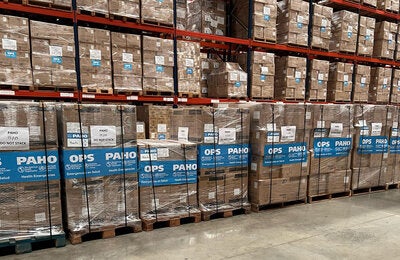
Prepositioning and scaling up logistics and supply chain operations.
Access Haiti's Health Emergency Appeal to learn more and donate.