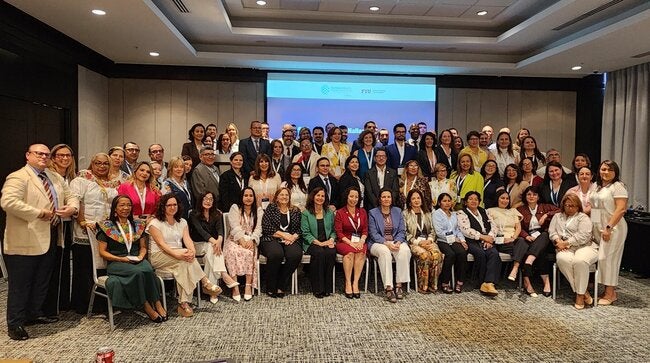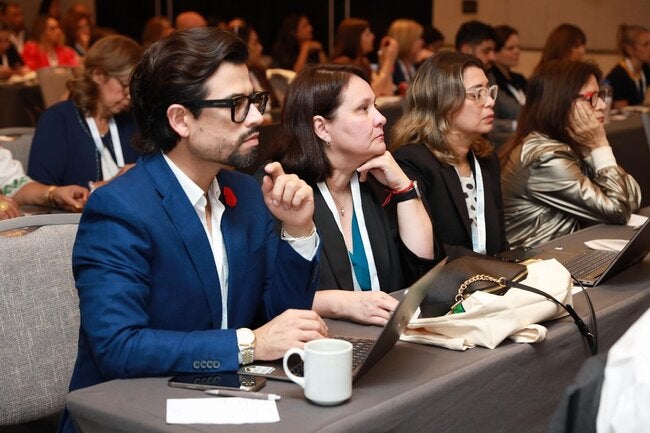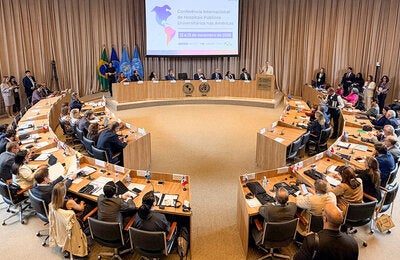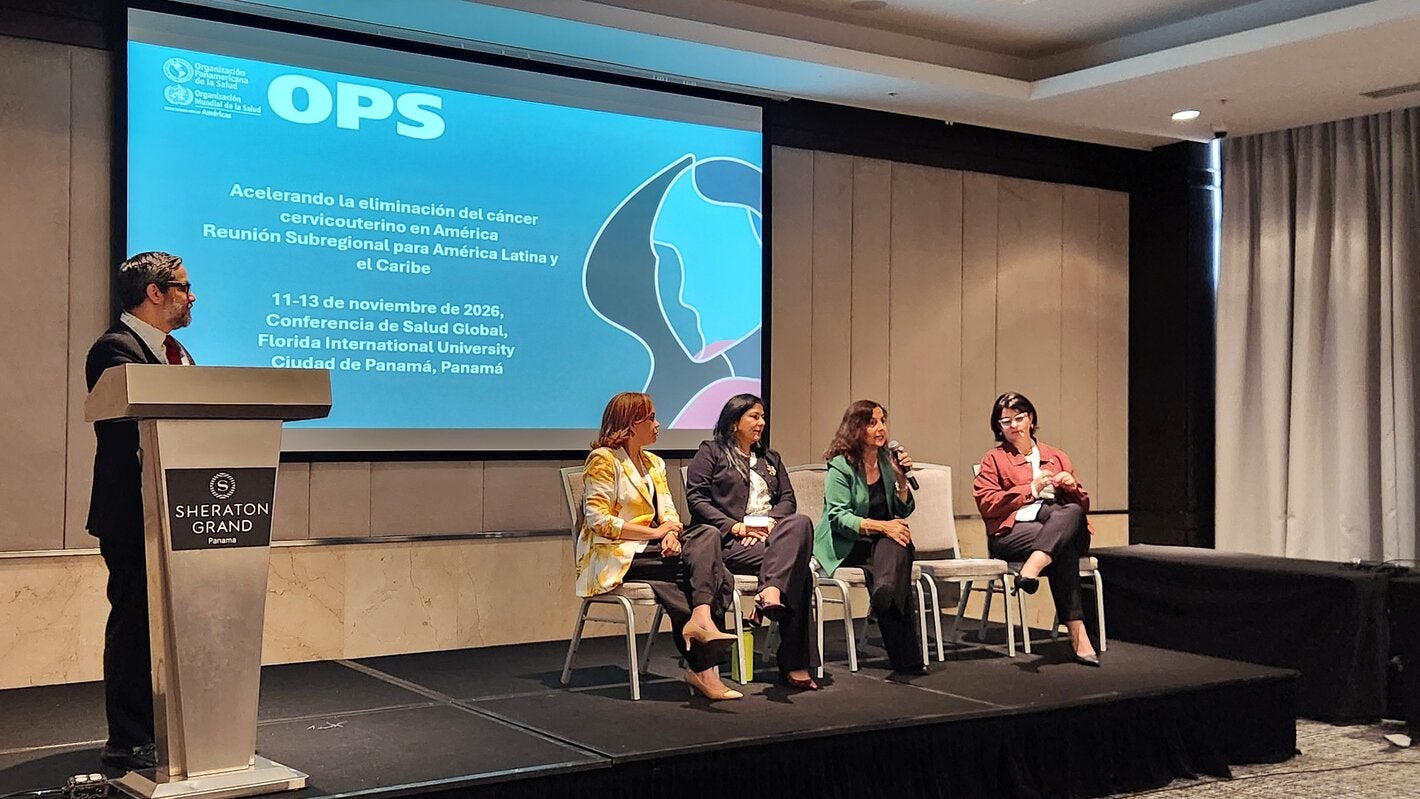
Panama City, November 13, 2026 (PAHO) – Representatives from 18 Latin American and Caribbean countries met this week in Panama City to strengthen the implementation of cervical cancer prevention and control programs. The focus was on expanding HPV (human papillomavirus) screening, consolidating effective strategies to increase HPV vaccination coverage, and broadening access to essential vaccines, tests, and technologies through the PAHO Revolving Fund.
The subregional meeting for Latin America and the Caribbean—titled "Accelerating the Elimination of Cervical Cancer in the Americas"—was organized by the Pan American Health Organization (PAHO) and held from November 11 to 13. It took place within the framework of the Global Health Conference of the Americas, hosted by Florida International University (FIU), ahead of World Cervical Cancer Elimination Day. Observed on November 17, this day recognizes progress made and mobilizes further action toward global elimination targets for 2030.
The meeting brought together officials responsible for national cancer, immunization, and surveillance programs from Argentina, Bolivia, Brazil, Chile, Colombia, Costa Rica, Cuba, El Salvador, Guatemala, Honduras, Mexico, Nicaragua, Panama, Paraguay, Peru, the Dominican Republic, Uruguay, and Venezuela, alongside regional experts and PAHO representatives.
A preventable disease that continues to affect thousands of women
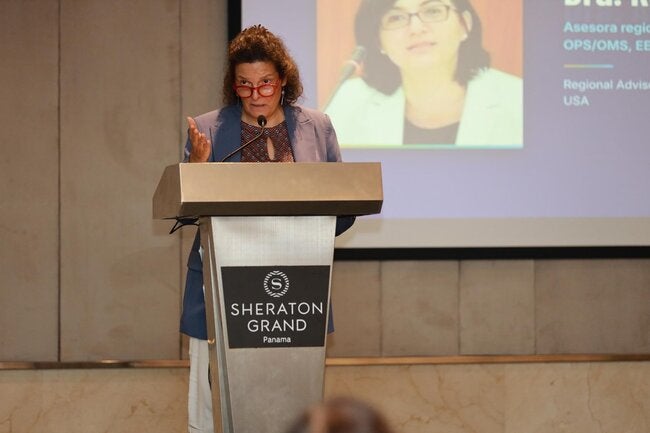
"We have gathered for an urgent reason: cervical cancer is a preventable disease, yet it remains the third most common cancer among women in Latin America and the Caribbean," stated Dr. Zohra Abaakouk, national advisor for noncommunicable diseases and mental health, speaking on behalf of Dr. Lilian Ninett Reneau Gaitan, acting PAHO representative in Panama.
In 2024, more tan 81,000 women were diagnosed with this disease in the Region of the Americas, and over 38,000 died from it. Mortality rates in Latin America and the Caribbean are three times higher than in North America, reflecting persistent inequalities associated with the disease. "Behind these figures are mothers, daughters, and sisters, as well as deep-seated inequities that we cannot accept. We know what needs to be done. We must work together to close the gap between what we know and what we actually achieve," added Dr. Abaakouk.
The meeting aimed to accelerate progress toward the 90-70-90 targets set out in the World Health Organization’s global strategy for the elimination of cervical cancer by 2030: ensuring 90% of girls are vaccinated against HPV by age 15; ensuring 70% of women are screened using a high-performance test; and ensuring 90% of women with precancerous lesions or cervical cancer receive appropriate treatment. Eliminating the disease as a public health problem requires achieving and maintaining an incidence rate of fewer than four cases per 100,000 women. "Addressing this disease is a matter of public health—but it is also a matter of rights, equality, and social justice—ensuring that the place where a woman is born, lives, and works does not determine her chances of preventing a disease or receiving quality healthcare," stated Itziar Gonzalez Camacho, General Coordinator of the Spanish Agency for International Development Cooperation (AECID) in Panama, during the opening of the meeting.
Expanding vaccination and reaching girls who are not yet protected
In the Region of the Americas, 49 countries and territories (out of 51) have already incorporated the HPV vaccine into their national immunization programs, making it the region with the highest level of access. However, challenges to expanding coverage remain, as only two countries in the Region have reached a 90% first-dose coverage rate among girls.
During the sessions, participants reviewed the situation in the Region and the new recommendations from the Strategic Advisory Group of Experts (SAGE) on HPV vaccination. These recommendations reinforce the use of a single-dose regimen for girls aged 9 to 14 as the most efficient way to reach the 90% vaccination target.
Furthermore, discussions covered strategies to identify and vaccinate girls who have not yet received the vaccine—utilizing individual-level (nominal) registries—and participants shared experiences regarding school-based vaccination, promotion and communication, program sustainability, the use of individual-level registries, and other strategies implemented in countries such as Chile, Uruguay, Cuba, Mexico, Brazil, Panama, and Bolivia.
Strengthening Screening with HPV Testing
The second day focused on strengthening national screening and treatment programs. Participants examined the transition from programs based primarily on cytology to HPV detection tests, as well as strategies to improve planning, follow-up of women, and service quality.
HPV testing is the recommended method for screening due to its superior effectiveness; when combined with innovative approaches such as “screen-and-treat,” it has proven effective in preventing cervical cancer. Of the countries attending the meeting, 13 have already incorporated HPV testing into their national screening programs. Furthermore, thanks to an agreement between the PAHO Revolving Fund and suppliers, these countries can now access HPV tests at a preferential price, accompanied by a comprehensive support package.
The meeting also provided an opportunity to work with an innovative planning tool for screening and treatment—developed by PAHO—which national teams used to assess their needs and enhance service planning. The sessions also addressed data collection, cancer registries, quality control for laboratories performing HPV tests, and recommendations for screening and managing cervical lesions.
Improved Access to Vaccines, Tests, and Equipment Through the Revolving Fund
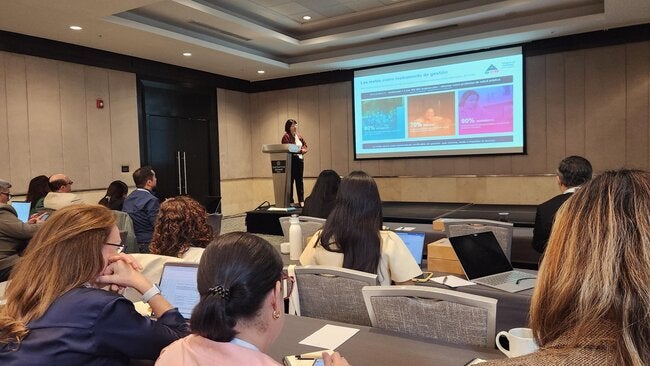
Another key component of the meeting was strengthening knowledge and use of the PAHO Regional Revolving Fund as a mechanism to expand countries' access to the products and technologies needed to prevent, detect, and treat cervical cancer.
During a practical session, national teams learned about the portfolio of available products, which includes HPV vaccines, HPV screening tests, and equipment for diagnosis and treatment—such as thermoablators, mobile colposcopes, and loop electrosurgical excision procedure (LEEP) equipment. They also worked on the process for forecasting and procuring these supplies and devices.
From Regional Strategies to Implementation in Countries
Furthermore, participants reviewed national elimination plans, monitoring and evaluation frameworks, and the capacity of countries to track individuals with precancerous lesions or cervical cancer. Currently, seven countries in the Region have finalized their national elimination plans, and nine others are developing them.
The elimination of cervical cancer is part of two flagship PAHO initiatives: "Better Care for Noncommunicable Diseases," which seeks to expand equitable access to integrated and comprehensive services for noncommunicable diseases (NCDs) through primary health care; and the "Disease Elimination Initiative," which aims to eliminate more than 30 diseases and related conditions in the Americas by 2030.
The meeting is part of a series of training sessions organized by PAHO to accelerate the elimination of cervical cancer in the Region. These sessions are supported by the Spanish Agency for International Development Cooperation (AECID) and by resources provided by the Global Health Conference—part of the Global Health Consortium at Florida International University (FIU).