A confiança é o princípio fundamental dos programas de imunização. Quando as populações confiam nos profissionais de saúde, no sistema de saúde e no ministério da Saúde de seu país, é mais provável que sigam suas recomendações de vacinação. No entanto, quando essa confiança é minada ou quebrada, a adesão vacinal pode se enfraquecer, deixando as populações em risco de contrair doenças imunopreveníveis.
Uma das coisas mais importantes que os governos podem fazer para fortalecer a confiança na vacinação é seguir os princípios de comunicação de risco e envolvimento da comunidade. A falta de claridade na comunicação permite a proliferação de rumores sobre os riscos da vacinação, da desconfiança sobre o programa de imunização e da recusa ou hesitação vacinal. Se as informações sobre a vacinação não forem transmitidas de forma eficaz, isso pode causar sérios problemas de reputação para os programas de imunização e para o sistema de saúde em geral, diminuindo a aceitação e a adesão às vacinas e aumentando o risco de surtos de doenças imunopreveníveis entre grupos populacionais com imunização incompleta.

Princípios de comunicação de risco e envolvimento da comunidade para a vacinação
Seguir os princípios de comunicação de risco e envolvimento da comunidade da estrutura de comunicações estratégicas da OMS melhora a comunicação sobre as doenças imunopreveníveis e a vacinação:
O envolvimento da comunidade é essencial para entender suas necessidades e perspectivas sobre a vacinação. Além disso, a colaboração com as comunidades permitirá que os programas de imunização desenvolvam serviços de vacinação de melhor qualidade e aprimorem sistemas e políticas.
Use o documento da OMS Desenho centrado nas pessoas para adaptação dos programas de vacinação para envolver as comunidades no diagnóstico das barreiras à vacinação, planejar e implementar intervenções para enfrentá-las e avaliar e ajustar conforme necessário.
Gestão de informações errôneas sobre vacinação
Informações errôneas sobre a vacinação têm um impacto muito real sobre a adesão vacinal. Informações falsas e desinformação sobre as vacinas têm o potencial de abalar a confiança do público no calendário de imunização de rotina, bem como nas novas vacinas. Estudos demonstraram que a exposição a informações falsas negativas sobre as vacinas por apenas 5 a 10 minutos aumenta a percepção de risco da vacinação e está associada a uma menor probabilidade de tomar a vacina; a exposição a informações errôneas sobre o risco da vacinação pode levar as pessoas a perceberem riscos que não existem ou são extremamente baixos.
Os comunicadores que apoiam os programas nacionais de imunização devem investir em atividades de escuta social em diversas plataformas para entender o que o público está pensando e dizendo sobre a vacinação. Essas informações podem então serem utilizadas para tomar medidas a fim de corrigir informações errôneas por meio de “imunização informacional” (prebunking) e da refutação de informações errôneas (debunking).
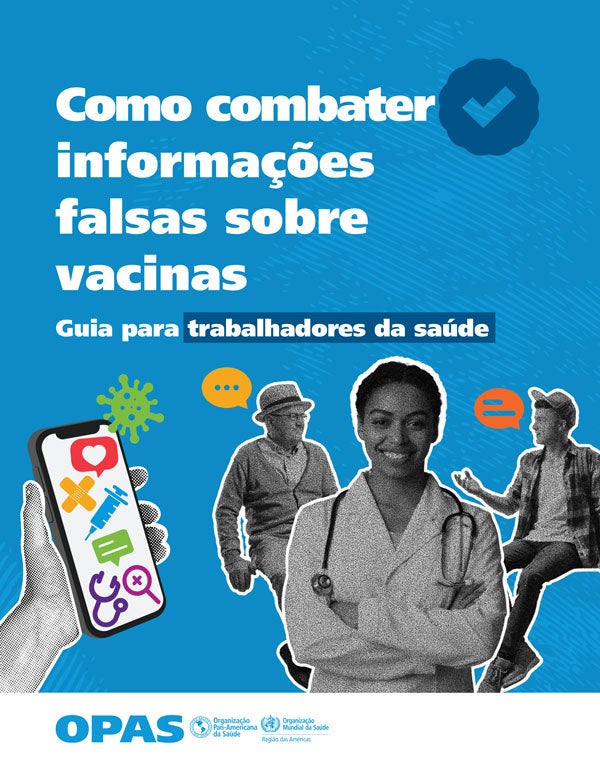
Como combater informações falsas sobre vacinas:
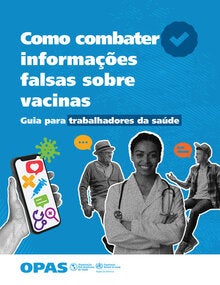
| O documento "Combate à Desinformação sobre Vacinas: Um Guia para Profissionais de Saúde" foi elaborado para auxiliar profissionais de saúde no combate à desinformação sobre vacinas. Ele começa definindo o que é desinformação e explicando por que ela se espalha rapidamente, muitas vezes devido ao seu apelo emocional e explicações simplistas. O guia identifica fontes comuns de desinformação sobre vacinas, incluindo indivíduos influentes que lucram com a disseminação de informações falsas. O documento descreve estratégias para combater a desinformação, enfatizando a importância dos profissionais de saúde como fontes confiáveis. Ele fornece dicas para identificar desinformação online, como verificar URLs, datas e credenciais do autor, e reconhecer táticas como evocar emoções fortes ou promover teorias da conspiração. Duas abordagens principais para combater a desinformação são discutidas: pré-desmentido e refutação. O pré-desmentido consiste em alertar as pessoas sobre possíveis informações falsas antes que elas se deparem com elas, enquanto a refutação visa corrigir informações falsas após sua disseminação. O guia oferece exemplos práticos para ambos os métodos. Além disso, o documento destaca o papel dos profissionais de saúde em apoiar colegas e pacientes para que confiem na imunização. O guia sugere gentileza, imparcialidade e transparência ao abordar preocupações, além do uso de técnicas de entrevista motivacional para compreender e responder às dúvidas dos pacientes. De modo geral, o guia enfatiza o papel crucial dos profissionais de saúde na manutenção da confiança nas vacinas e oferece estratégias abrangentes para identificar, abordar e prevenir a disseminação de informações errôneas sobre vacinas em ambientes clínicos e comunitários. O guia é um recurso valioso para que os profissionais de saúde aprimorem sua capacidade de combater a desinformação sobre vacinas, apoiar a tomada de decisões informadas e promover a confiança nas vacinas em suas comunidades. Ele aborda uma questão urgente com soluções práticas, apoia profissionais de saúde confiáveis e, em última análise, visa proteger a saúde pública, promovendo informações precisas e a confiança nas vacinas. |

| O documento "Combate à Desinformação sobre Vacinas: Um Guia para Gestores do Programa Ampliado de Imunização" foi elaborado para auxiliar os gestores do Programa Ampliado de Imunização (PAI) a lidar com a desinformação sobre vacinas. Ele começa definindo desinformação e explicando por que ela se espalha rapidamente, frequentemente devido ao seu apelo emocional e explicações simplistas. O guia identifica fontes comuns de desinformação sobre vacinas, incluindo indivíduos influentes que lucram com a disseminação de informações falsas. O documento descreve estratégias para combater a desinformação, enfatizando a importância dos gestores do PAI como fontes confiáveis. Ele fornece dicas para identificar desinformação online, como verificar URLs, datas e credenciais do autor, e reconhecer táticas como evocar emoções fortes ou disseminar teorias da conspiração. Duas abordagens principais para combater a desinformação são discutidas: pré-desmentido e refutação. O pré-desmentido consiste em alertar as pessoas sobre possíveis informações falsas antes que elas se deparem com elas, enquanto a refutação visa corrigir informações falsas após sua disseminação. O guia oferece exemplos práticos para ambos os métodos. Além disso, o documento destaca o papel dos gestores do PAI no apoio aos profissionais de saúde para que confiem na imunização. O guia sugere gentileza, imparcialidade e transparência ao abordar preocupações, além do uso de técnicas de entrevista motivacional para compreender e responder às dúvidas dos profissionais de saúde. Ele também enfatiza a importância de criar um ambiente de apoio para esses profissionais, promover normas favoráveis à vacinação e oferecer educação continuada sobre vacinas. Em suma, o guia visa auxiliar os gestores do Programa Ampliado de Imunização (PAI) a manter a confiança nas vacinas e fornece estratégias abrangentes para identificar, abordar e prevenir a disseminação de informações errôneas sobre vacinas em ambientes clínicos e comunitários. Este documento é essencial para capacitar os gestores do PAI com o conhecimento e as ferramentas necessárias para combater a desinformação sobre vacinas, apoiar suas equipes e promover a confiança nas vacinas, protegendo, em última instância, a saúde pública. |

| Informações falsas sobre vacinas e vacinação, sejam elas disseminadas deliberadamente (isto é, desinformação) ou não (isto é, informações errôneas), representam uma séria ameaça à saúde pública na Região das Américas. Vários estudos mostraram que a exposição a informações errôneas sobre vacinas pode abalar a confiança da população no Programa Ampliado de Imunização e ter um impacto negativo nas atitudes e intenções das pessoas quanto à vacinação, mesmo entre as que já tomaram vacinas no passado. Como é de se esperar, informações errôneas que sugerem que a vacinação causa danos e soam cientificamente plausíveis são mais propensas a dissuadir as pessoas de se vacinarem. Combater os negacionistas da ciência e suas informações errôneas é crucial para manter a confiança na imunização e proteger as populações contra diversas doenças imunopreveníveis. Nessa luta, é fundamental compreender como e por que as informações errôneas se espalham; quais abordagens podem ser empregadas para combatê-las antes e depois de as pessoas terem sido expostas; e como restaurar a confiança na imunização após ela ter sido abalada. As equipes de comunicação de risco e envolvimento da comunidade (RCCE, na sigla em inglês) dos ministérios da Saúde enfrentam a difícil tarefa de se manterem a par das informações errôneas para que possam monitorá-las e tomar medidas decisivas para combatê-las, quando necessário. Ao colaborar com diversos parceiros em âmbito nacional, regional e municipal — inclusive com trabalhadores da saúde, que já demonstraram muitas vezes ser a fonte de informações sobre vacinas e vacinação na qual as pessoas mais confiam —, as equipes de RCCE podem usar diversas abordagens diferentes para fornecer a seu público-alvo as ferramentas e os conhecimentos necessários para resistir às informações errôneas. |
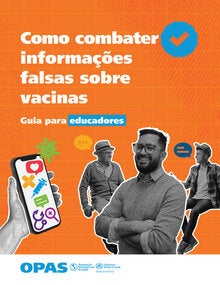
| O documento "Combate à Desinformação sobre Vacinas: Um Guia para Educadores" tem como objetivo auxiliar educadores no combate à desinformação sobre vacinas. Ele começa definindo o que é desinformação e explicando por que ela se espalha rapidamente, frequentemente devido ao seu apelo emocional e explicações simplistas. O guia identifica fontes comuns de desinformação sobre vacinas, incluindo indivíduos influentes que lucram com a disseminação de informações falsas. O documento descreve estratégias para combater a desinformação, enfatizando a importância dos educadores como fontes confiáveis. Ele fornece dicas para identificar desinformação online, como verificar URLs, datas e credenciais do autor, e reconhecer táticas como evocar emoções fortes ou promover teorias da conspiração. Duas abordagens principais para combater a desinformação são discutidas: pré-desmentido e refutação. O pré-desmentido consiste em alertar as pessoas sobre possíveis informações falsas antes que elas se deparem com elas, enquanto a refutação visa corrigir informações falsas após o seu consumo. O guia oferece exemplos práticos para ambos os métodos. Além disso, o documento destaca o papel dos educadores em apoiar os alunos e suas famílias para que confiem na imunização. O guia sugere gentileza, imparcialidade e transparência ao abordar preocupações, além do uso de técnicas de entrevista motivacional para compreender e responder às dúvidas dos alunos. Inclui também ideias para planos de aula e perguntas para discussão em vídeo, auxiliando os educadores a integrar essas estratégias em suas salas de aula. De modo geral, o guia enfatiza o papel crucial dos educadores na manutenção da confiança nas vacinas e oferece estratégias abrangentes para identificar, abordar e prevenir a disseminação de informações falsas sobre vacinas em ambientes educacionais. Ele fornece aos educadores o conhecimento e as ferramentas necessárias para identificar e combater a desinformação sobre vacinas de forma eficaz. Isso é fundamental, pois os educadores são fontes confiáveis de informação e podem influenciar positivamente os alunos e suas famílias. |
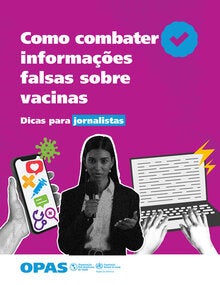
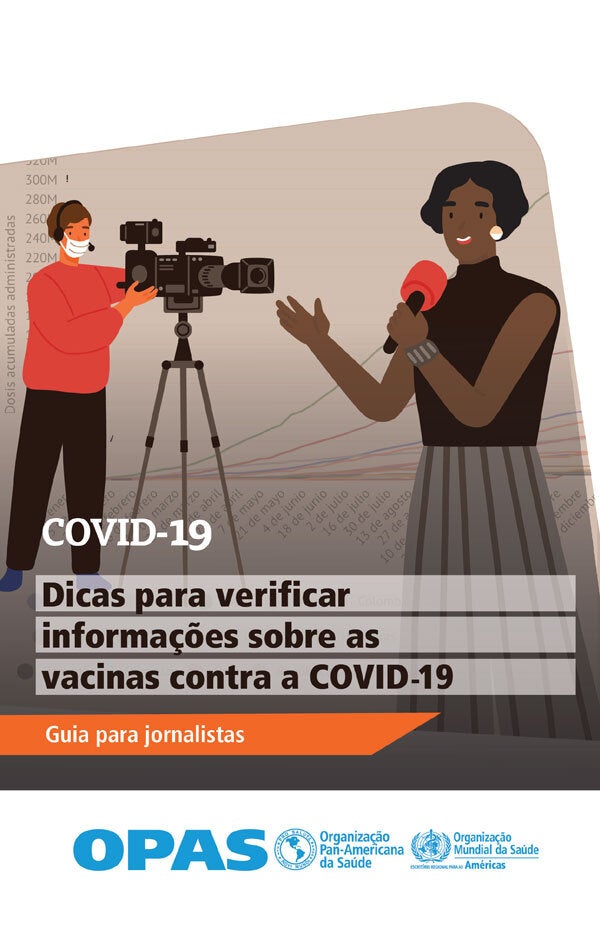
| Os jornalistas desempenham um papel fundamental em manter o público informado sobre as informações necessárias para a sua saúde, incluindo informações sobre vacinas. Juntamente com os profissionais de saúde, a mídia é uma das fontes mais confiáveis de informação científica para o público; os jornalistas ajudam a moldar percepções, atitudes e até mesmo comportamentos. Este documento visa apoiar os jornalistas, independentemente do meio de comunicação, na cobertura precisa de notícias relacionadas a vacinas e vacinação. Embora a desinformação sobre vacinação seja tão antiga quanto as próprias vacinas, sua recente explosão, especialmente nas redes sociais, tem causado preocupação entre profissionais de saúde e cientistas. Estudos demonstraram que mesmo uma breve exposição à desinformação sobre vacinas pode impactar negativamente as atitudes e intenções das pessoas em relação à vacinação, inclusive entre aquelas que já foram vacinadas. Com a queda nas taxas de cobertura vacinal, as populações ficam expostas a doenças preveníveis por vacinação (DPV) mortais, como sarampo, coqueluche, poliomielite, tétano e outras. Manter as pessoas saudáveis e protegidas contra as DPV exige colaboração entre os setores, especialmente diante da desinformação sobre vacinas. Por esse motivo, a OPAS criou este documento para profissionais da mídia que cobrem vacinação, abordando temas como viés e equilíbrio, normas e percepções, dicas sobre outros tópicos relacionados e recursos adicionais para mais informações. |
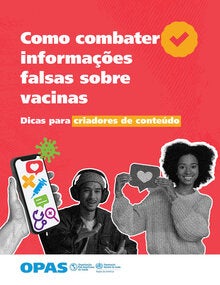
| Você já viu ou ouviu algo sobre vacinas online que te fez repensar? Há muita desinformação sobre vacinas por aí, desde teorias da conspiração absurdas até pequenos fragmentos da verdade que foram distorcidos ou exagerados. O que é verdade, porém, é que a grande maioria dos cientistas e especialistas médicos concorda que as vacinas são seguras e eficazes, e que não se vacinar coloca você e seus entes queridos em risco de doenças mortais que podem ressurgir se não houver vacinação em número suficiente. Como até mesmo uma breve exposição à desinformação sobre vacinas pode influenciar a decisão de uma pessoa de se vacinar, é importante que todos façamos a nossa parte para impedir a sua disseminação. Como influenciador nas redes sociais, você pode aprender dicas e truques sobre como identificar desinformação e compartilhá-las com seus seguidores. Ao fazer isso, você estará contribuindo para um mundo mais saudável e seguro – e quem não quer isso? |
Podcasts
Falando de saúde: Vacinas, mitos e fatos com o Dr. Daniel Salas
[Em espanhol]
Tudo o que você precisa saber sobre vacinas com a Dra. Pau Zúñiga
[Em espanhol]
Imunização informacional
Refutação
Tanto para a imunização informacional quanto para a refutação, a escuta social é essencial para entender o que o público está dizendo sobre a vacinação e quais rumores que podem afetar a adesão vacinal estão circulando.
Para obter mais informações sobre como lidar com informações errôneas relacionadas à vacinação, consulte a publicação da OPAS Orientações para a comunicação de riscos relacionados à vacinação. São apresentadas dicas práticas relacionadas a processos e princípios de comunicação de risco e envolvimento da comunidade, mensagens, percepções de risco, abordagem de informações errôneas, colaboração com parceiros e farmacovigilância, além de exemplos da vida real.
Profissionais de saúde e vacinação
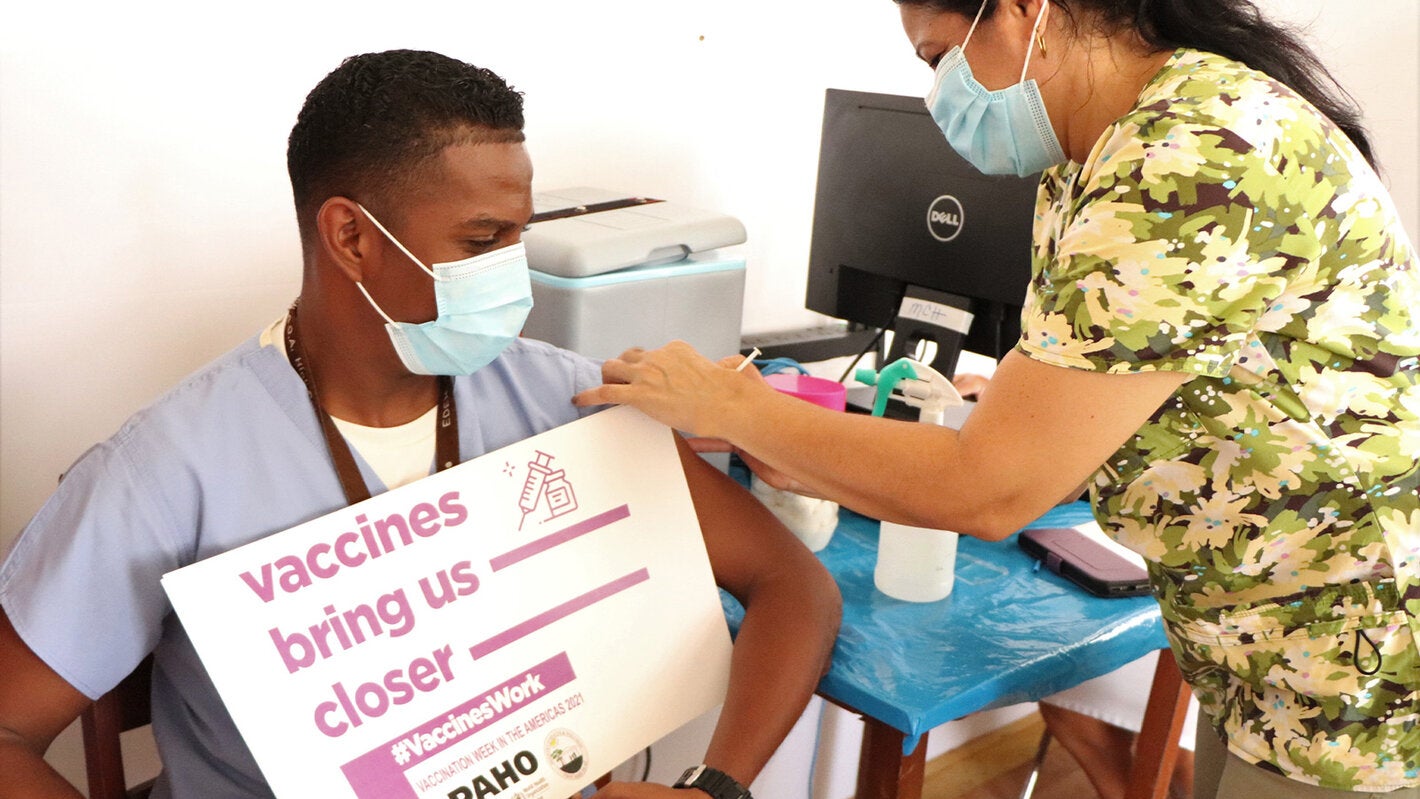

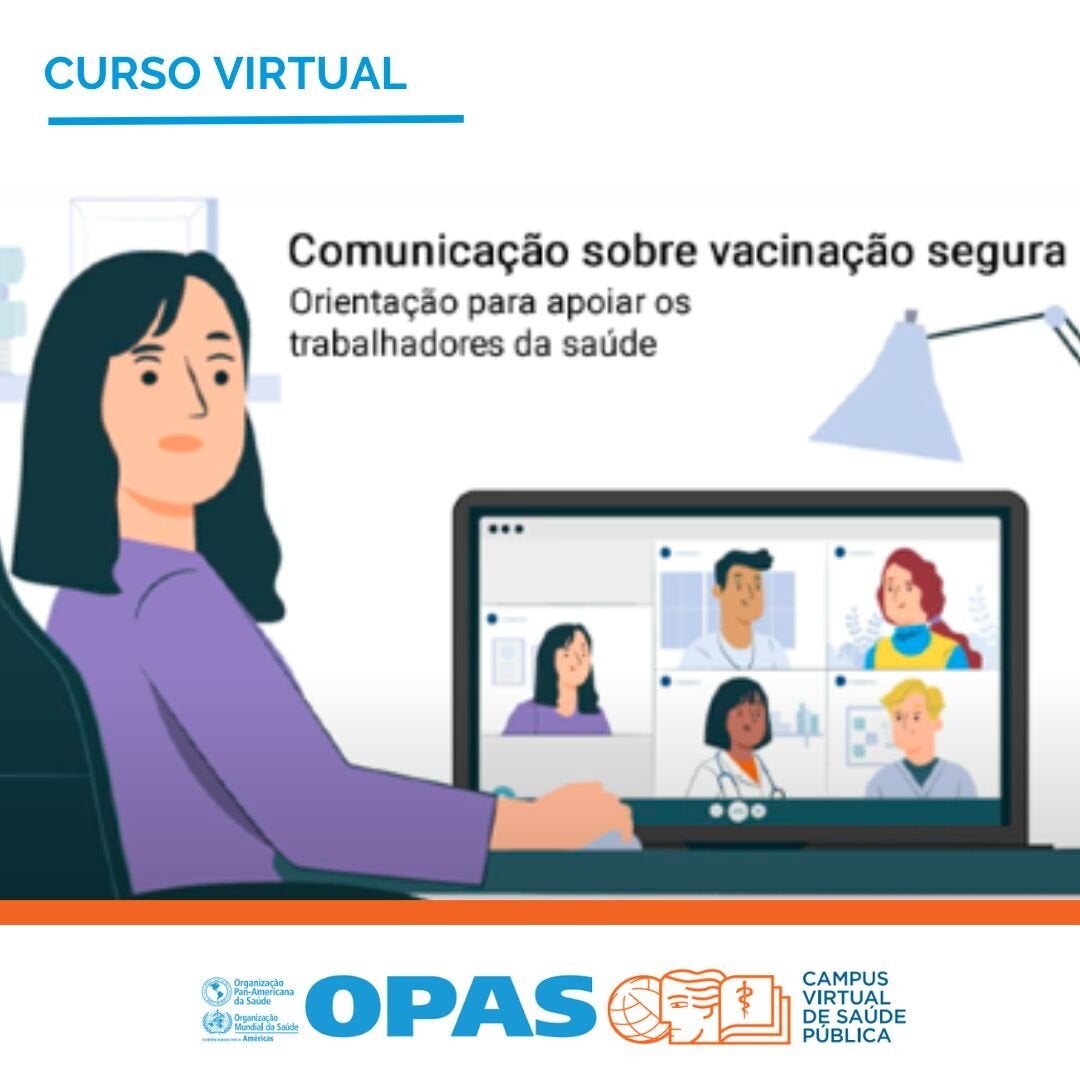
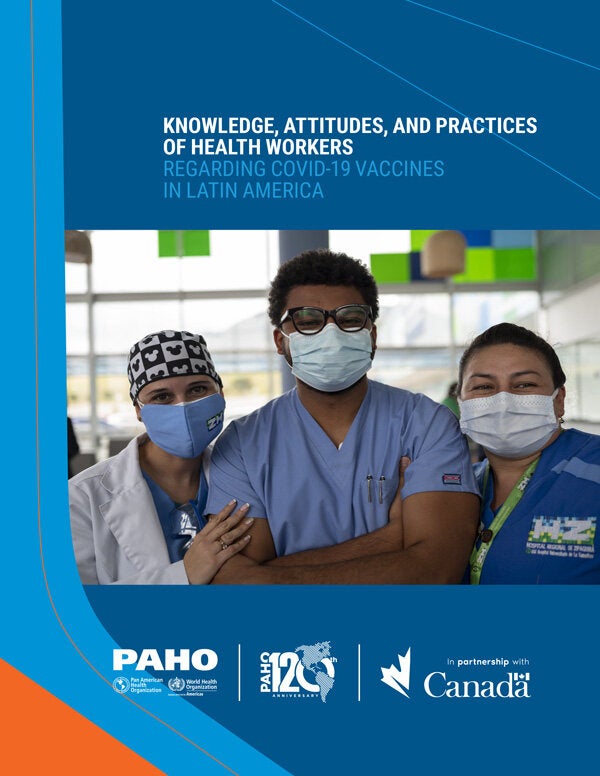
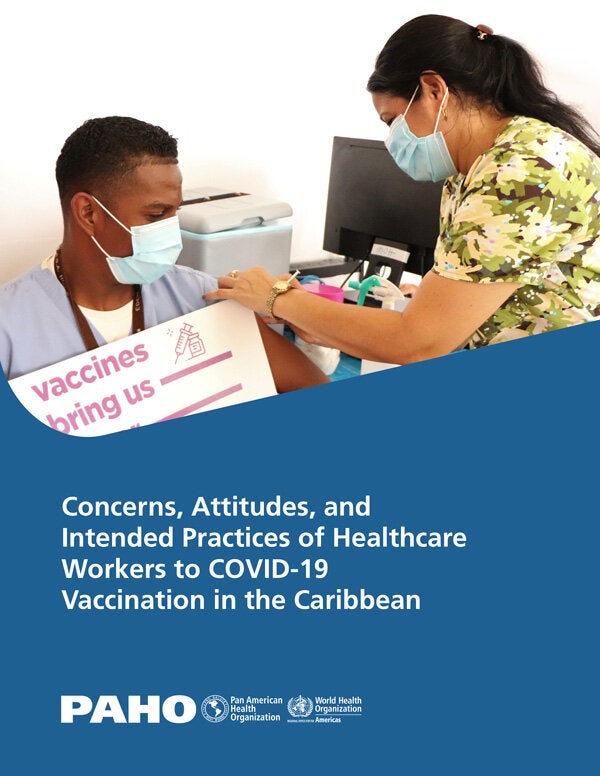
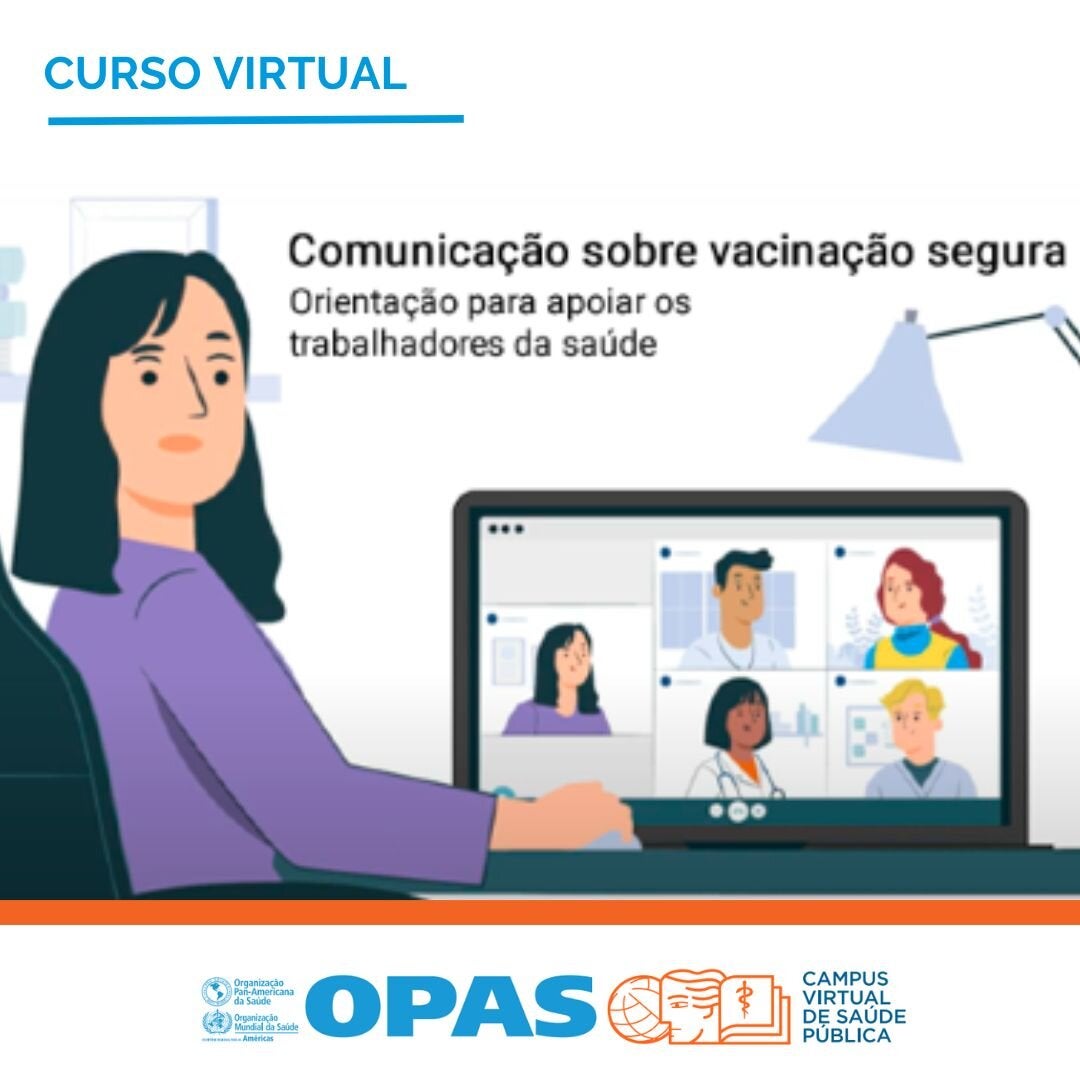
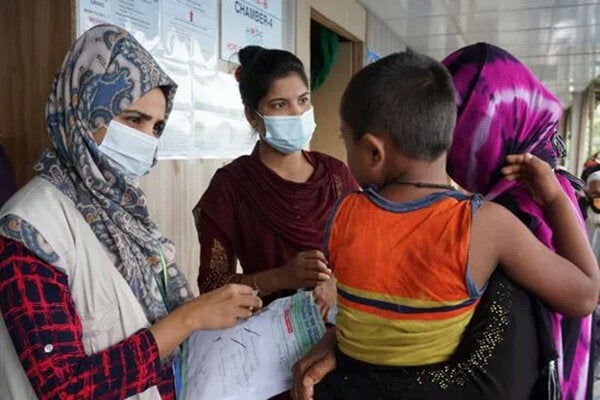
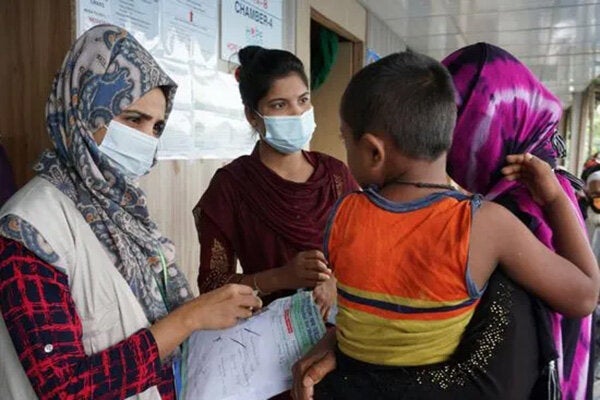
Os profissionais de saúde são consistentemente classificados como uma das fontes de informação que mais inspiram confiança sobre a vacinação. A recomendação de um profissional de saúde a favor da vacinação pode ter um tremendo impacto na adesão vacinal. No entanto, para que essas recomendações tenham o máximo efeito, os profissionais de saúde devem apresentá-las com empatia e usando informações baseadas em fatos, levando em conta aspectos culturais e possíveis barreiras. Por esse motivo, a OPAS incentiva veementemente os programas nacionais de imunização (PNIs) a investir nos profissionais de saúde, capacitando-os em comunicação interpessoal bidirecional sobre vacinação. Além das capacitações, os PNIs podem desenvolver ferramentas e recursos visuais para garantir que os profissionais de saúde tenham em mãos o conhecimento científico necessário ao conversar com clientes e membros da comunidade que possam procurá-los em busca de orientações sobre a vacinação.
Da mesma maneira, os profissionais de comunicação em saúde devem cogitar a elaboração de campanhas, estratégias e intervenções específicas — ou, pelo menos, de mensagens direcionadas que tenham sido pré-testadas com o público-alvo — voltadas para os profissionais de saúde para ajudar a reforçar os principais pontos que as serem abordados na comunicação com os pacientes e o público em geral sobre a vacinação.