Network to Advance Integrated Health Service Delivery Networks (Impulsa-RISS)

A regional cooperation platform to strengthen integrated service delivery and promote continuity of care across health systems

What are IHSDNs?

IHSDNs are a core organizational strategy of the Primary Health Care (PHC) approach. They aim to reorganize health services to provide person-, family- and community-centered care that is comprehensive, continuous and adapted to the specific characteristics of each territory.

IHSDNs are defined as a coordinated set of health organizations and services that work collaboratively to respond effectively to the health needs of a defined population. They strengthen accessibility, continuity of care and quality of services; reduce fragmentation; and improve territorial management—ultimately contributing to more equitable, efficient and resilient health systems.
What is Impulsa-RISS?

Impulsa-RISS is a regional cooperation platform led by the Pan American Health Organization (PAHO) that brings together institutions and actors committed to advancing the implementation and strengthening of IHSDNs in the Region of the Americas.

It provides a space for technical and political collaboration at regional, national and subnational levels, supporting countries in accelerating progress, fostering innovation and aligning reforms with PAHO’s Strategic Plan and international commitments on PHC and Universal Health.

THE NETWORK FACILITATES:Technical support missions and training workshops aimed at strengthening institutional and operational capacities for the planning and management of IHSDNs. A regional repository of good practices, guidelines and tools, accessible
  • Technical support missions and training workshops aimed at strengthening institutional and operational capacities for the planning and management of IHSDNs.
  • A regional repository of good practices, guidelines and tools, accessible for consultation, adaptation and application.
  • Spaces for political and technical dialogue with authorities and key stakeholders to promote appropriate regulatory frameworks and ensure institutional and financial sustainability.

HOW IS THE NETWORK ORGANIZED?

The Network is organized under a participatory and horizontal structure, based on peer technical collaboration, and is composed of:

  • A General Assembly, made up of all members.
  • An Executive Committee, elected by the Assembly.
  • A Technical Secretariat, carried out by PAHO.
  • Technical Working Groups, defined by members according to strategic priorities.

WHO CAN PARTICIPATE?

  • Ministries of health and subnational government entities.
  • Service providers and financing institutions.
  • Academic institutions, research and training centers.
  • Professional and scientific associations.
  • Cooperation agencies and civil society organizations.
  • Independent professionals with technical experience in PHC or network management.
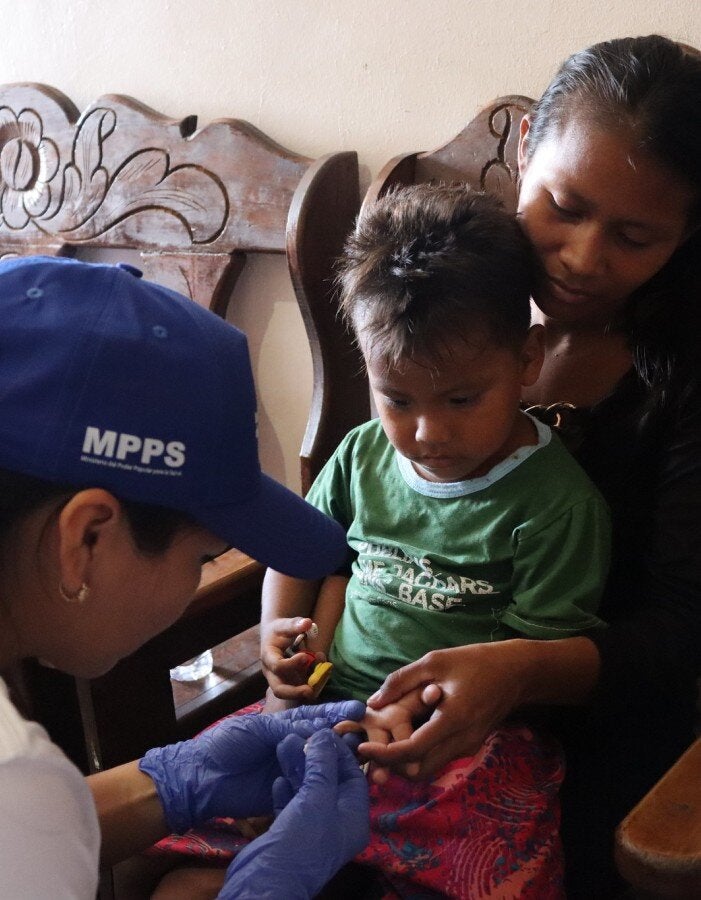
mother holding child receiving blood test
WHY JOIN?

Being part of this Network means becoming part of a regional effort to transform health services in favor of equity and quality.

It is an opportunity to advance with technical support, regional visibility, and peer dialogue among institutions facing shared challenges, within a framework of solidarity-based cooperation among countries and organizations.

foto
HOW TO JOIN?

For non-governmental organizations, a prior assessment is carried out in accordance with institutional norms and procedures.

Once the application has been reviewed, the Executive Committee submits it for consideration to the General Assembly. If approved, the Technical Secretariat confirms the membership and provides the documentation and instructions required for active participation in the Network.

MORE INFORMATION: redriss@paho.org

REQUIRED DOCUMENTS: Admission Form