Castries, St. Lucia, 11 June 2025 (PAHO) - The Pandemic Fund was launched in 2022 following the COVID–19 pandemic, to assist countries to strengthen pandemic prevention, preparedness and response, especially focusing on surveillance, laboratory capacity and human resources for health. In 2024, the Eastern Caribbean Countries (ECC) were awarded funds through a multi–country proposal entitled “Strengthening Prevention, Preparedness and Response to Emerging Health Threats in the Eastern Caribbean”. This proposal was submitted by the Pan American Health Organization/World Health Organization (PAHO/WHO), The Food and Agriculture Organization (FAO) of the United Nations, and the World Bank, in collaboration with the Organisation of Eastern Caribbean States (OECS) Commission on behalf of the six independent Member States of the OECS (Antigua and Barbuda, Dominica, Grenada, Saint Kitts and Nevis, Saint Lucia, and Saint Vincent and the Grenadines).
Activities will follow a One Health approach with the involvement of both Health and Animal sectors in each country and will be aligned with existing national and regional efforts.
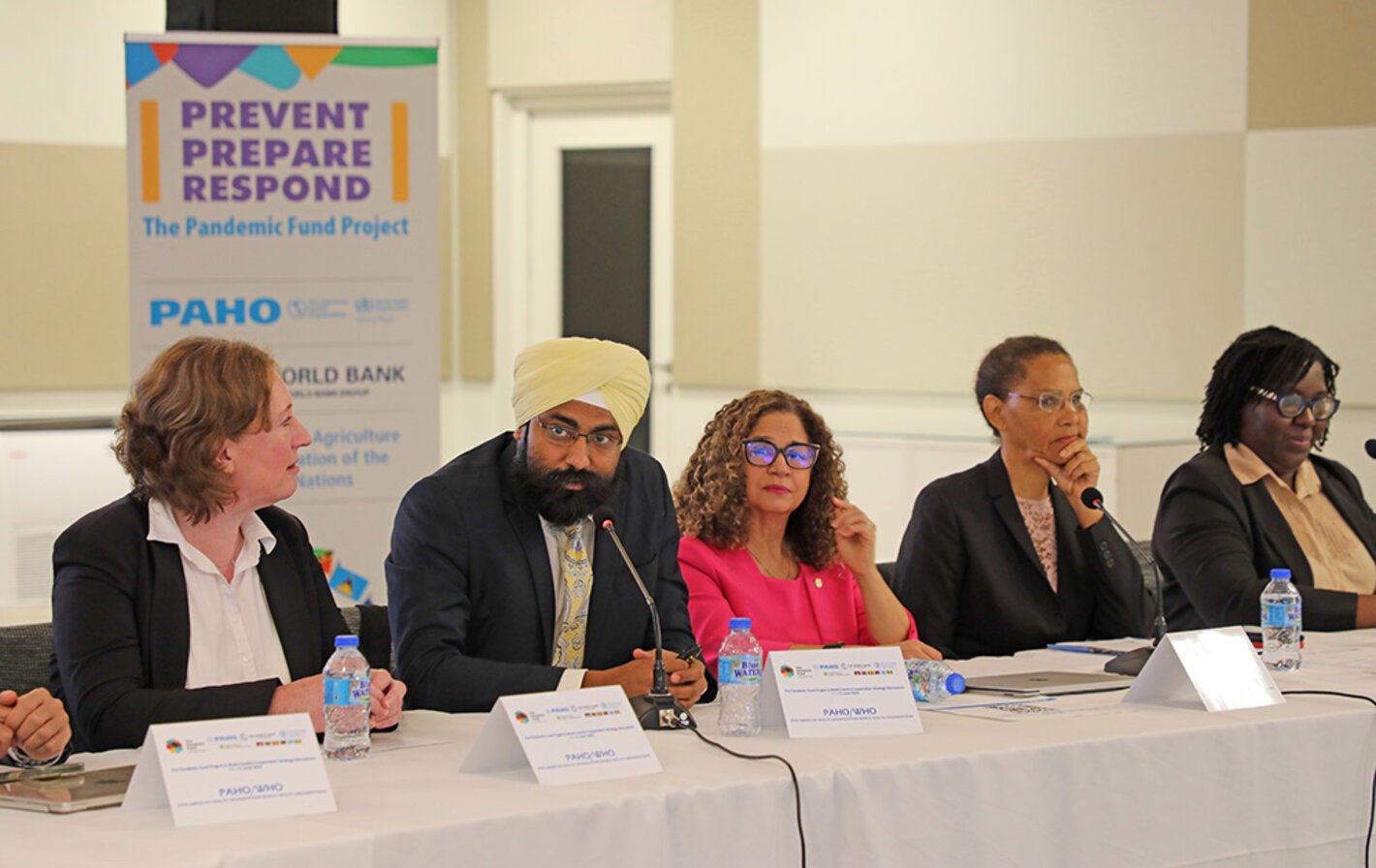
During the Strategic Meeting entitled “Prevent, Prepare, Respond,” held on June 11th, 2025, in St Lucia ahead of the Pandemic Fund Project Launch for the ECC, government ministers, along with officials from PAHO/WHO, the FAO and OECS, convened to plan the way forward.
Opening Perspectives by the implementing entities - Pandemic Prevention with a One Health Approach for the Eastern Caribbean
During the opening ceremony, the implementing entities outlined their strategic roles and collaborative efforts to strengthen health systems, enhance surveillance, and build regional capacity.
Dr. Amalia Del Riego, PAHO/WHO Representative for Barbados and the Eastern Caribbean Countries (ECC)
Dr. Del Riego recalled that the World Health Assembly adopted the Pandemic Accord, a landmark agreement to strengthen global preparedness, cooperation, and equity in pandemic response, just 20 days ago. “This historic achievement reflects a deep recognition that future pandemics will demand not just national readiness but sustained regional and global solidarity”.
With the support from the Pandemic Fund, stated Dr. Del Riego, countries in the Eastern Caribbean now have an “unprecedented opportunity” to develop countries’ capabilities, which is totally aligned with the political will and technical momentum.
Stressing that the effort is not limited to only six countries, Dr. Del Riego said Barbados, through the Best dos Santos Public Health Laboratory, plays a vital role offering reference testing, technical training, and quality assurance support to Member States, leadership in AMR surveillance, and the continuous strengthening of laboratory quality systems across the subregion.
Dr. Renata Clarke, FAO Sub–Regional Coordinator
Dr. Clarke stressed the importance of “working together to reduce illness, mortality, and economic disruption by implementing a set of integrated actions across four core areas.” Those four areas were identified as firstly, conducting comprehensive assessments in both human and animal health sectors to establish evidence-based baselines that will guide collective work. Secondly, improving multi-sectoral surveillance and response systems for zoonoses, antimicrobial resistance, and other emerging threats is important. Thirdly, strengthening regional diagnostic capacity, including laboratory equipment, information systems and access to regional network of laboratories when national capacity is limited. Fourthly, building human resource capacity across ministries to support outbreak investigation, biosafety, AMR stewardship and workforce planning across human and animal sectors.
Tania Dmytraczenko, Practice Manager for Health, Nutrition, and Population in Latin America and Caribbean, World Bank
Describing the Pandemic Fund bid as a highly competitive process, Dmytraczenko said “we have seen many countries who have submitted strong proposals and yet have not been successful. So, this is really a remarkable achievement.”
She said the achievement marks a second major milestone for the World Bank. “The preparation of the World Bank project that accompanies this pandemic proposal, a 1.25 million dollars project represents our first dedicated One Health project in Latin America, and in the Caribbean.” She highlighted that this is the first dedicated regional project in the Caribbean. It complements a project that was recently launched in Guyana. She ended by saying: “so, this is for us, it really is a critical area.”
Priya Basu, Executive Head of the Pandemic Fund, World Bank
The implementing and other entities were reminded that their continued dedication and leadership are instrumental in advancing shared priorities across the region.
Stating that the COVID-19 pandemic highlighted the need for stronger, resilient health systems, Basu surmised: “That's why the Pandemic Fund was created to support low- and middle-income countries close the critical gaps within pandemic prevention, preparedness and response efforts so that our global communities can be healthy and thrive in the future.”
The audience heard from Basu that the Pandemic Fund provided a US$24.4 million grant, an additional US$22 million in co-investment, and almost US$8 million in co-financing.
The launch of the project marked the beginning of a journey toward a more responsive and resilient subregion, backed by the full commitment of participating countries and the support of implementing entities.