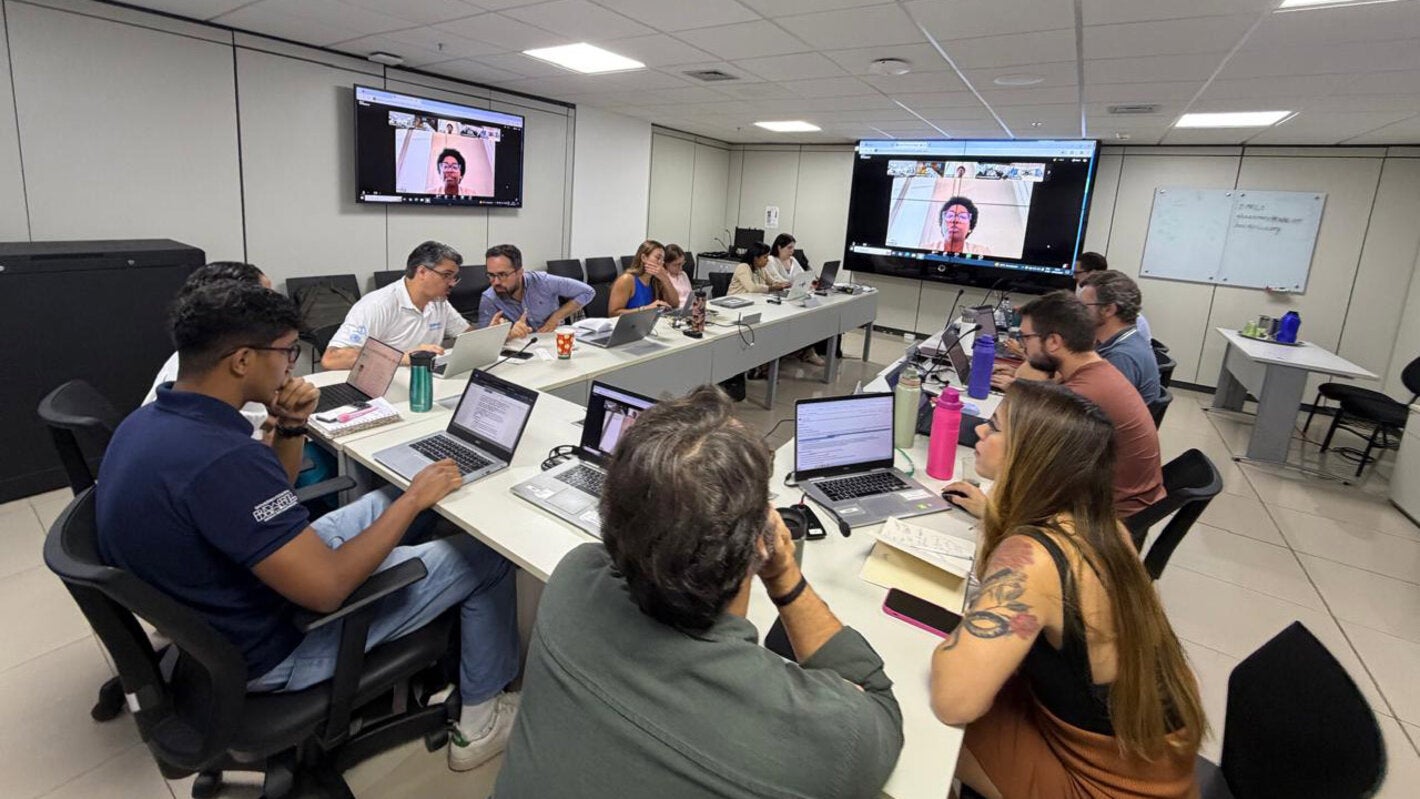
Rodrigo Frutuoso. PAHO/WHO Brazil
Credit
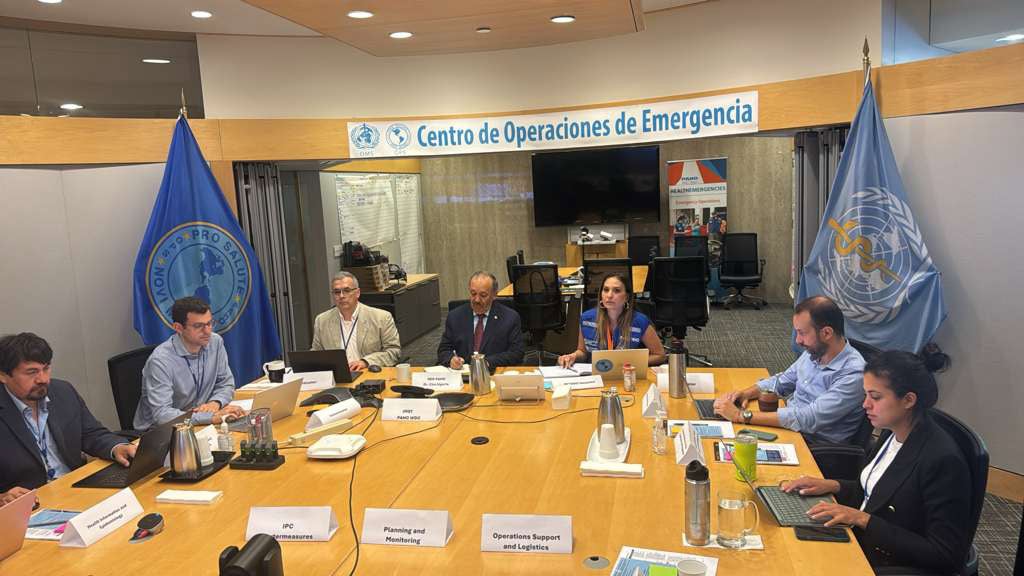
Washington, D.C., April 28, 2026 — On April 22 and 23, Brazil, Colombia, El Salvador, Paraguay, and Suriname took part in Exercise Polaris II, an international simulation coordinated by the World Health Organization (WHO), with the participation of the Pan American Health Organization (PAHO), to assess and strengthen the capacity of national systems to respond to a rapidly evolving pandemic.
The exercise is conducted within the framework of the Global Health Emergency Corps (GHEC), launched by WHO in 2023, which brings together health emergency experts from ministries and agencies across countries, along with the global mechanisms through which they are coordinated. Its vision: a coordinated, interoperable, and prepared health emergency workforce ready to stop the next pandemic, in every country and across borders.
The scenario simulated the emergence and accelerated spread of a novel pathogen across multiple countries and regions, placing national teams under mounting operational pressure that demanded timely decision-making, intersectoral coordination, and the rapid mobilization of surge personnel. Over two days, participants worked through the full operational cycle, from the initial detection and activation of the Emergency Operations Center (EOC) and incident management systems to the identification of critical workforce gaps, the activation of surge mechanisms, and coordination among countries, as well as with regional and global networks.
The exercise put two key frameworks into practice: the Global Health Emergency Corps (GHEC) and WHO's National Health Emergency Alert and Response Framework. For Dr. Ciro Ugarte, Director of the Department of Health Emergencies at PAHO/WHO, this kind of forum is deeply rooted in the region's history: "In the Americas, we have 50 years of experience since the creation of the emergencies program, and that has been possible because our Member States took on the responsibility of establishing mechanisms for joint work."
Ugarte highlighted that national response teams now have closer ties to global mechanisms, and he underscored the value of continuous learning: "We must learn from each of these elements to keep strengthening our capacity. This is a joint task, both of the Member States and of the Secretariat, and in that sense we can be confident that the populations we serve will benefit from our joint work."
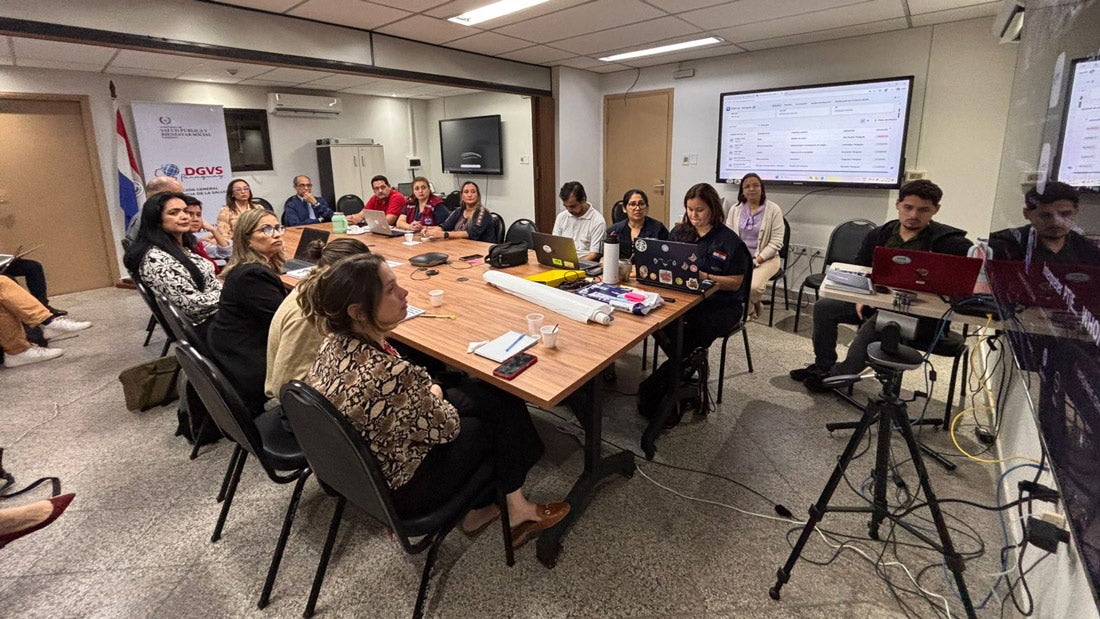
From theory to practice: Voices from the Field
The first day of the exercise focused on detection, activation, and scaling up of the response. Each country reviewed reports on the outbreak, analyzed its potential spread, and activated its incident management system, while also assessing its capacity to rapidly expand the response team and identify gaps that could hinder this expansion. In Colombia, the exercise made it possible to highlight the strengths of its decentralized model, in which mayors and governors take on direct responsibilities for emergencies in their territories. "The response from the national level is subsidiary and concurrent," explained Pier Nicolás González, emergency coordinator at the Ministry of Health. "This strengthens capacities at the subnational level and constitutes a good practice that can be useful for other countries in the region."
The second day moved on to regional and international coordination. As workforce gaps became apparent, countries activated internal surge mechanisms, submitted requests for external support, and took part in a global leaders' conference. In this context, Brazil, which participated in the exercise for the first time, highlighted progress in the regulatory organization of emergency management and the strategic value of its public health laboratory network, articulated at the federal and state levels. "We have a laboratory network that is very important as a backbone for any event of public health significance," noted Edenilo Baltazar, Director of Public Health Emergencies at Brazil's Ministry of Health. At the same time, he stressed the importance of deepening exchange among countries to better understand their response structures and strengthen regional collaboration.
This focus on cross-country learning was also present in Colombia's experience. González identified, as a practice worth adapting, the development of reserve centers with agile mechanisms for procuring and distributing supplies, as well as the need to strengthen interoperable information systems that allow for the timely exchange of data to support decision-making.
Paraguay brought to the exercise a perspective of inter-institutional coordination built on concrete regional preparedness processes. The delegation was led by the Ministry of Public Health and Social Welfare, included the Paraguayan Red Cross, and was joined by PAHO/WHO technical teams in the country, including the PROTECT team —a joint initiative of PAHO/WHO and the World Bank, funded by the Pandemic Fund— which strengthens surveillance and laboratory systems in border areas of seven countries in the region.
"The exercise allowed us to clearly identify where the region's gaps are: we need to strengthen early warning mechanisms to reach the public before the emergency escalates, and to standardize community-based surveillance with a One Health approach. That requires not only technical tools, but also political will and sustained resources," said Rosana Aguirre, Coordinator of Technical and Operational Assistance in Emergencies and Disasters at Paraguay's Ministry of Health.
Exercise Polaris II is the second in a series incorporated by the WHO into its multi-year simulation program. Its results will feed into an after-action report with conclusions, good practices, and specific recommendations by country and by region. PAHO reaffirmed its commitment to supporting countries in implementing the lessons learned, promoting regional interoperability, and the sustained strengthening of preparedness and response capacities in the Americas.