
Annual report 2025
Jamaica, Bermuda, and the Cayman Islands
Pan American Health Organization
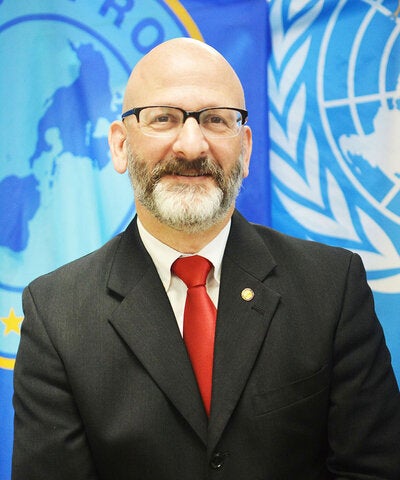
Message from the PAHO/WHO Representative in Jamaica, Bermuda, and the Cayman Islands
The past year was a testament to the remarkable strength and the vulnerability of health systems in Jamaica, Bermuda, and the Cayman Islands. Facing complex public health demands and intensifying climate pressures, health authorities, partners, and frontline workers rose with resolve – protecting lives, safeguarding dignity, and reaffirming health as a fundamental human right. Guided by PAHO’s enduring commitment to equity, solidarity, and universal health, progress continued in protecting the public’s health, advancing the elimination of communicable diseases, and strengthening prevention, treatment, and long‑term management of noncommunicable conditions.
PAHO’s technical guidance and strategic investments in resilient primary health care, emergency preparedness, and climate‑smart infrastructure proved vital, ensuring the continuity of essential services even under significant strain. Stronger public health functions, enhanced access to safe and effective medicines and health technologies, and more robust surveillance and risk analysis reinforced the foundations of universal health coverage and collective health security.
PAHO is unwavering in its partnership with national authorities to translate hard‑won gains into lasting transformation. Looking ahead, collaboration will continue to place people at the center – strengthening primary care, protecting the most vulnerable, building climate‑resilient and inclusive health systems, and advancing sustainable financing – so that every community is healthier, safer, and better prepared for the future.
Ian Stein
PAHO/WHO Representative in Jamaica, Bermuda, and the Cayman Islands
FEB
JUL
AUG
SEP
OCT

ACCESS TO MEDICINES
Bermuda’s National Importation Policy for medicines and health technologies will ensure regulation, quality, and wider access to essential products.
HUMAN RESOURCES FOR HEALTH POLICY
Jamaica completed its HRH policy and plan to build a sustainable, well-trained workforce to advance universal health coverage. The plan aligns with regional and global HRH standards.
USING ENVIRONMENTAL DATA TO GUIDE POLICIES
Jamaica integrated air quality monitoring into public health systems, using environmental data to guide policies and enable faster alerts and evidence-based interventions.
TRANSFORMING HYPERTENSION AND DIABETES CARE
The Cayman Islands launched the HEARTS technical package under the Better Care for NCDs initiative to strengthen cardiovascular disease management within primary health care.
HURRICANE MELISSA RESPONSE
Emergency Medical Teams were quickly deployed to the hardest-hit areas, providing skilled personnel and resources to maintain and restore critical health services where most needed.
Achievements in Jamaica, Bermuda, and the Cayman Islands
Hurricane Melissa response
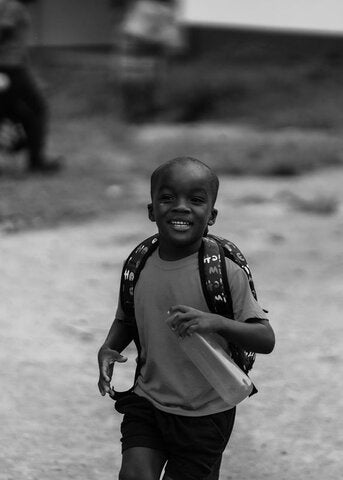
Following the storm, which damaged five hospitals and over 100 primary health centers in Jamaica, PAHO delivered rapid, high‑impact support that protected continuity of health services nationwide. It deployed Emergency Medical Teams, coordinated immediate repairs to damaged health facilities, and carried out rapid health and WASH assessments that guided government action. Surveillance systems were reinforced to prevent outbreaks, and mental health and psychosocial support services were integrated into the response. This comprehensive technical leadership ensured that essential services were restored quickly and safely, reducing avoidable morbidity and mortality during the emergency.
Access to medicines and health technologies
Through PAHO’s collaboration with the Ministry of Health to modernize Bermuda’s regulatory framework, the new national importation policy for medicines and health technologies will enhance regulation, ensure safety and quality, expand access to essential products, promote transparency, and improve distribution, governance, and accountability, bringing the territory closer to universal health coverage while building a resilient, high-quality health system.
HEARTS launch
With support from PAHO, the Cayman Islands launched the HEARTS technical package as part of the Better Care for NCDs initiative to strengthen cardiovascular disease management in primary health care. The program trains health professionals, enhances treatment protocols, and improves diabetes management, positioning the country to cut cardiovascular deaths and advance universal health coverage and noncommunicable disease prevention.
Air quality and health response
With technical guidance from PAHO, Jamaica advanced the integration of air quality monitoring into public health systems. A health impact assessment was performed by integrating air quality and health data to estimate the mortality burden associated with harmful air pollutant concentrations in each parish, with the resulting evidence used to create a national road map.

Human resources for health
PAHO’s technical support was instrumental in finalizing Jamaica’s human resources for health policy and implementation plan, aimed at building a sustainable, well-trained, and equitably distributed health workforce aligned with universal health coverage goals. The plan addresses challenges such as health worker migration, urban‑rural staffing imbalances, and shortages in specialized skills. PAHO’s guidance in strengthening data quality and conducting labor market analyses also equipped Jamaica with reliable workforce information to enable evidence‑based decision-making and align with regional and global HRH standards.
Reinforcing immunization support
Jamaica advanced its immunization program with critical support from PAHO, including technical cooperation through Canada’s CanGIVE initiative. This collaboration strengthened vaccine delivery and monitoring systems, ensuring equitable access and improved coverage nationwide. A key achievement is the planned rollout of an electronic immunization registry in partnership with UNICEF, which will modernize information systems, enable real‑time tracking of vaccine uptake, improve data quality, and support evidence‑based decision-making for national immunization strategies, particularly benefiting vulnerable populations.
Advances in violence against women
Backed by PAHO’s technical support, Jamaica strengthened its health system’s response to violence against women by integrating comprehensive postrape care into emergency services, fully aligned with WHO guidelines. Emergency services now meet all five criteria for postrape care, including the hepatitis B vaccine, and a job aid guides health workers in delivering timely, standardized, survivor‑centered care. PAHO’s technical cooperation provided the guidance and resources necessary to embed these services within the broader emergency health framework, reinforcing equity, resilience, and quality in care for survivors.
Advances in road safety
PAHO’s technical guidance helped Jamaica strengthen its road safety framework, achieving notable progress in reducing alcohol‑related traffic risks. Supported by the United Nations Road Safety Fund and PAHO’s technical cooperation, the country expanded enforcement capacity, and collaboration with the National Road Safety Commission led to a 25% increase in national breathalyzer checks, improving monitoring and deterring unsafe driving. PAHO’s contributions were central in providing guidance on enforcement protocols, training for police and health personnel, and support for strengthening data systems to track alcohol‑related crashes.
Stories from the field
A model for climate-resilient health infrastructure
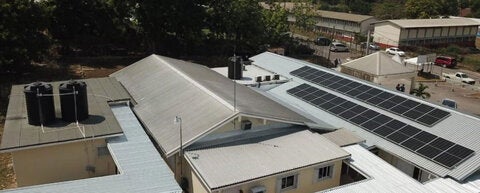
As Hurricane Melissa barreled toward Jamaica, Mr. Sean Brissett was monitoring the situation closely. Being the manager of health services in Saint Elizabeth, he knew the impact would be significant. The winds and storm surge from the Category 5 storm left more than 450 000 people without electricity and rendered roughly 75% of the country’s hospitals and clinics unusable.
Amid the destruction, three facilities stood out: Mandeville Comprehensive Health Centre, Santa Cruz Health Centre, and St. Ann’s Bay Health Centre. Despite being in the hurricane’s path, they remained operational.
Six days later, “the Santa Cruz Health Centre was able to treat the injuries of people who had been sheltering in place for the past week. It continued providing routine services, including pre- and post-natal care for expecting mothers as well as dental services,” Sean said.
The upgrades were part of PAHO’s Smart Hospitals initiative, implemented with Jamaica’s Ministry of Health and Wellness and funded by the United Kingdom. Over 5 years, 12 facilities were retrofitted, showing how smart upgrades can keep essential care available during disasters.

If a caterpillar can fly, so can I
As PAHO’s Jamaica country office team stepped through the gates of Enid Bennett High School, the sounds of the outside world slowly fell away. Leaves rustled in the breeze, and wooden tables rested beneath a vibrant mural that read: “If a caterpillar can fly, so can I.” This is the school’s wellness garden.
Created by students, staff, family members, and friends, the garden was built using recycled materials and a shared vision: to create a safe, welcoming space for students to pause, connect, and reflect. At the center sits a striking blue “wellness bench,” a symbol of care and protection for adolescents navigating life’s challenges. The bench is part of a collaboration between the Ministry of Health and Wellness and PAHO, reinforcing the importance of mental and emotional well-being in school settings.
The garden brings to life the principles outlined in the school’s Social and Emotional Learning Handbook. The handbook guides students through a journey focused on self-awareness, healthy relationships, and responsible decision-making. According to Acting Vice-Principal Mrs. Latoya Bird-Miller, “this is a road map for holistic education, where academic growth and emotional well-being go hand in hand.”
Breastfeeding – A lifeline in the storm
In the days before Hurricane Melissa, Niesha Smith of Lacovia, Saint Elizabeth, stocked her pantry with dry foods and tinned goods, preparing for the storm like many Jamaicans. But when she looked at her six-month-old daughter, Daniela, a sense of relief washed over her. Feeding her baby would not be another worry.
Mindful of PAHO and UNICEF’s consistent public health guidance pertaining to breastfeeding in emergencies when access to clean water may be limited, and reinforcing that this provides essential nutrition and protection against disease, for Niesha, each nursing moment brings peace of mind.
Breastfeeding has become Niesha’s lifeline. Always ready, safe, and nutritious, it ensures Daniela is fed despite the disruption. “I am not worried at all about feeding Daniela because breast milk is clean; it is always ready, and I don’t have to depend on anything else,” she explains.
Even amid the storm’s chaos, her baby is healthy, nourished, and safe.
- Biodiversity Research Institute. Co-executing partner for the Eliminating Mercury in Skin Lightening Products initiative.
- Dalhousie University. Collaboration to strengthen health workforce capacity through technical expertise, research, and policy support.
- European Commission. With support from the European Commission, PAHO is expanding universal health coverage, strengthening climate-resilient systems, and delivering humanitarian aid in Jamaica.
- Global Environment Facility (GEF) / United Nations Environment Programme (UNEP). GEF/UNEP lead the collaboration to eliminate mercury in skin‑lightening products, with the UNEP Global Mercury Partnership providing technical support.
- Government of Canada. Through its Global Initiative for Vaccine Equity (CanGIVE), the Government of Canada supports equitable vaccine access, higher coverage, and emergency aid after Hurricane Melissa.
- Heart Foundation of Jamaica. PAHO collaborates with the foundation to advance the prevention and control of noncommunicable diseases.
- Inter-American Development Bank (IADB). The IADB is a key partner in advancing the Pan-American Highway for Digital Health to improve access to health information.
- International Bank for Reconstruction and Development (IBRD). The IBRD (the World Bank) supports Jamaica’s health sector by strengthening health financing and promoting resilient, people-centered primary health care systems.
- Ministry of Agriculture and Fisheries. The Ministry advances food security, nutrition, animal health, and food safety through a One Health approach.
- Ministry of Economic Growth and Infrastructure Development (MEGID). MEGID leads policies and investments to address key social and environmental determinants of health.
- Ministry of Health and Wellness.The Ministry leads the public health system and advances shared goals to strengthen nationwide health outcomes.
- National Council on Drug Abuse. The Council strengthens substance prevention through surveillance and data-driven policies that guide public education and interventions.
- National Road Safety Council. The Council collaborates with PAHO to strengthen road safety governance in Jamaica by enhancing multisectoral coordination and promoting evidence-based enforcement.
- UNICEF. PAHO and UNICEF collaborate to support Jamaica’s Ministry of Health and Wellness to strengthen maternal, newborn, child, and adolescent health through various initiatives.
- United Kingdom. The United Kingdom’s Foreign, Commonwealth and Development Office provided support to PAHO’s emergency response to Hurricane Melissa and continued its collaboration on climate-resilient health facilities through Strengthening Aftercare and Promotion of ‘SMART’ Health Facility Resilience Standards and Blueprints.
- United Nations Central Emergency Response Fund (UN CERF). UN CERF is supporting lifesaving health sector support following Hurricane Melissa.
- United Nations Road Safety Fund. Through the Fund’s Safe System approach, PAHO and Jamaica’s National Road Safety Council strengthen road safety governance by promoting safer road use and improving data systems.
- University of Leeds. PAHO is collaborating with the University through a behavioral insights partnership to improve school nutrition in Jamaica.

Making health
a commitment for all
2025 Country Annual Reports
of the Pan American Health Organization