

Message from the PAHO/WHO Representative in Suriname
As Suriname advances toward a more resilient, equitable, and people-centered health system, the PAHO country office worked closely with the Ministry of Health, Welfare and Labor, partners, and stakeholders in 2025 to deliver technical cooperation aligned with national priorities. This report highlights the achievements of a dedicated team committed to reinforcing health systems, reducing inequities, and fostering innovation. Through strong partnerships, investments were translated into actions that strengthened the health workforce, advanced digital solutions, prevented disease, and improved service delivery.
Key milestones include consolidating Suriname’s achievement as the first country in the Amazon to achieve WHO malaria elimination certification, supported by improved surveillance, diagnostics, and cross-border collaboration. Progress in noncommunicable disease control advanced through the scale-up of the HEARTS initiative, expanding frontline capacity and improving hypertension and diabetes management. Digital innovation expanded access to care through telehealth in remote regions, while enhanced laboratory capacity for antimicrobial-resistance detection bolstered health security.
This report reflects the value of collaboration and sustained leadership. As Suriname begins implementing the Country Cooperation Strategy 2026–2030, PAHO remains committed to safeguarding public health gains, strengthening primary health care, and advancing health equity. I present the 2025 Annual Report with pride and gratitude, reflecting our shared commitment to a healthier future for all.
Yafflo W. Ouattara
PAHO/WHO Representative in Suriname
JAN

JUN
AUG
OCT
DEC
DIGITAL DEATH CERTIFICATION INSTITUTIONALIZED
Digital death certification institutionalized nationwide to modernize vital statistics, improve data accuracy, and strengthen timely public health decision-making.
MALARIA-FREE CERTIFICATION
Suriname recognized as the first country in the Amazon region to eliminate local malaria transmission.
ONE HEALTH PROMOTED
One Health approach promoted to boost collaboration across human, animal, and environmental health sectors for improved disease prevention and response.
ANTIMICROBIAL-RESISTANCE TESTING CAPACITY BOOSTED
Academic Hospital Paramaribo antimicrobial-resistance testing capacity strengthened through advanced diagnostic equipment, specialized training, and improved laboratory surveillance systems.
EMPOWERMENT OF FRONTLINE INSTITUTIONS
Frontline health institutions empowered with tools and capacity to deliver higher-quality care.
Achievements in Suriname

Sustained malaria elimination
With sustained technical cooperation from PAHO, Suriname became the first country in the Amazon region to achieve and sustain WHO malaria elimination certification. PAHO supported surveillance strengthening, quality-assured diagnostics, and rapid response systems to prevent reestablishment. PAHO-facilitated cross-border collaboration with Guyana and regional partners safeguards this achievement, delivering sustained national and regional impact and demonstrating the high return of strategic, partnership-driven elimination investments.
Advancing newborn and pediatric care capacity
With PAHO’s technical cooperation, Suriname bolstered its health workforce through skills development, leadership support, and strategic workforce planning, improving maternal, newborn, primary, and emergency care outcomes. PAHO supported development of a neonatal intensive care unit curriculum, pediatric nursing training, expanded neonatal and radiological competencies, and workforce intelligence reforms, enabling evidence-based deployment and enhancing quality, equity, and system-wide service readiness.
Scaling solutions for noncommunicable diseases (NCDs)
Suriname accelerated NCD prevention and control through high-impact actions delivered with PAHO’s technical cooperation. Supported by PAHO, the scale-up of the HEARTS initiative strengthened primary care teams, standardized treatment protocols, and improved supply management, resulting in blood pressure control in 59% of patients reached. PAHO’s guidance enabled the introduction of a national diabetic foot screening protocol, and boosted workforce capacity through training 72 nurses in integrated NCD management. Cervical cancer prevention advanced with the rollout of human papillomavirus testing, while enhanced tobacco control enforcement aligned national measures with best practices.
Strengthening laboratory systems
Through targeted technical cooperation, PAHO supported Suriname to boost national laboratory capacity for infectious disease detection and response. Advanced antimicrobial-resistance testing was operationalized at the Academic Hospital Paramaribo, diagnostic capacity expanded for priority diseases, and the Central Laboratory maintained its National Influenza Center designation, reinforcing national readiness and global surveillance contributions.

Ensuring continuity and quality in immunization supply
PAHO technical cooperation helped boost immunization delivery in Suriname through upgraded cold chain systems, expanded workforce capacity, and improved supply reliability. Enhanced storage, transport, and real-time temperature monitoring safeguarded vaccine quality, while PAHO Revolving Fund procurement achieved zero vaccine stock-outs, reinforcing system resilience and continuity of vaccine supply.
Expanding frontline capacity for mental health and suicide prevention
With PAHO’s technical cooperation, suicide and self-harm prevention advanced through stronger governance, improved system readiness, and expanded integrated mental health services. PAHO supported implementation of the LIVE LIFE approach and Mental Health Gap Action Programme based training at primary care level, and bolstered assessment and referral pathways, increasing frontline capacity. Provision of essential equipment enabled establishment of the national mental health helpline. PAHO also supported the development of a pesticide profile to inform paraquat withdrawal and facilitated consultations for a national strategic plan.
Essential equipment and tools for frontline health institutions
With PAHO’s targeted technical and logistic support, institutional capacity was bolstered through the provision of IT equipment, GPS devices, surveillance materials, learning resources, and essential medical equipment for hypertension management and maternal and child health. This investment enhanced service delivery, workforce training, disease surveillance, and data-driven decision-making, significantly improving operational readiness and care quality.
Advancing digital health
With PAHO’s strategic and technical support, telehealth was scaled up in remote facilities, expanding access to essential services and connecting underserved communities to timely, specialist-informed care. PAHO also supported implementation of the digital death certificate, modernizing civil registration and improving the completeness and timeliness of mortality data. These digital innovations boosted evidence-based decision-making and accelerated Suriname’s transition toward a more responsive, data-driven, and modern health system.
Building resilient systems for health emergencies
With PAHO’s technical cooperation, national capacity for disease surveillance and outbreak response was boosted through improved coordination, workforce readiness, and operationalization of the One Health approach. PAHO-supported simulation exercises enhanced International Health Regulations (2005) core capacities, while reinforced risk communication and preparedness planning enabled more timely and effective responses to dengue and other priority diseases, improving early detection, response performance, and overall health system resilience.
Stories from the field
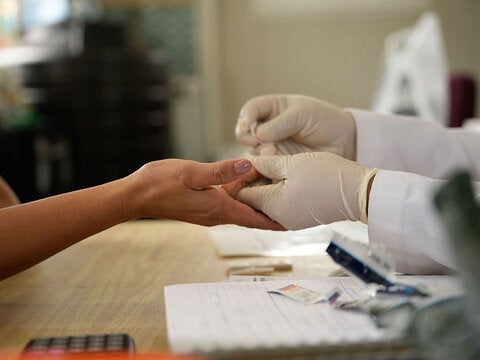
When elimination becomes a daily commitment
Suriname made history as the first country in the Amazon region to achieve WHO malaria elimination certification, the result of strong leadership and sustained technical cooperation. The announcement was a moment of national pride, but also a reminder that elimination is not the end. Vigilance remains high, particularly in border and mining areas, where population movement is constant. “We worked for years to reach zero,” Cairo, a program officer, reflected. “Now our responsibility is to protect it every single day.”
Following certification, efforts intensified to safeguard these hard-won gains through strengthened community surveillance and rapid response. “At the community level, we don’t relax,” said Germania, a malaria service deliverer. “We know the signs, we test quickly, and we act fast, because our communities depend on us.” Through sustained surveillance and cross-border collaboration, Suriname’s achievement now contributes to regional resilience, demonstrating how long-term commitment can transform elimination into lasting public health security.
Turning shadows into lifesaving decisions
Gathered around an ultrasound machine, radiographers and physicians leaned in, eyes fixed on the flickering images. For many, this was their first opportunity to deepen skills in first trimester obstetric ultrasound, an investment in both professional growth and safer pregnancies. The journey began with virtual sessions on ultrasound physics and technology. When in-person training followed, hesitation quickly gave way to confidence. Transducers moved with purpose, and shadows on the screen became meaningful for clinical insight. “This is the first time I truly understand what I’m seeing,” said Vaughn, a participant. “It’s not just an image anymore, it’s information that can change outcomes.”
In Suriname, shortages of trained sonographers often delay diagnosis. By improving the skills of radiographers already serving communities, the initiative expands access and reduces waiting times. “Now I feel equipped to support mothers earlier,” Duarfie, another participant, reflected. “We can detect problems sooner and act faster.” Aligned with national priorities for strengthening the health workforce, the training empowered local professionals to turn technology into timely, lifesaving care for women and families across the country.
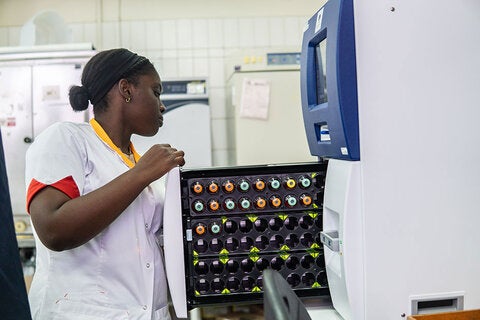
Building national capacity to detect and defeat antimicrobial resistance
A decisive investment in laboratory capacity is transforming how Suriname detects and responds to infectious threats. With PAHO support, diagnostic services have been expanded, and national preparedness significantly improved. What once required external referrals or delayed confirmation can now be analyzed locally, enabling clinicians to tailor treatment more quickly and accurately.
At the Academic Hospital Paramaribo, advanced antimicrobial-resistance testing equipment was installed and fully operationalized, enhancing the country’s ability to detect resistant pathogens, generate timely evidence, and guide effective clinical decisions. For the microbiology team, the impact was immediate. “This transforms our daily practice,” the chief microbiologist, Terence, shared. “We can identify resistance patterns earlier and provide clinicians with precise information they can act on immediately. It improves patient outcomes and helps contain the spread of resistant infections.”
Today, each laboratory result not only informs individual care but also strengthens the country’s ability to respond swiftly and effectively to emerging infectious threats nationwide.
- Bilateral stakeholders (Brazil, Canada, France, Guyana, India, Netherlands, Spain, United Kingdom, United States of America, and European Union). With these key bilateral actors, PAHO maintains active and strategic partnerships that are grounded in continuous dialogue and shared priorities in public health.
- COVAB (De Centrale Opleiding voor Verpleegkundigen en beoefenaren van Aanverwante Beroepen). As the country’s primary nursing training entity, COVAB plays a central role in strengthening the health workforce through education, leadership development, and continuous professional training.
- Government of Suriname. Through its ministries, the Government of Suriname leads coordinated policy action to bolster health systems, protect social spending, and advance intersectoral collaboration.
- Inter-American Development Bank. The bank supports health infrastructures, digital health, and the HEARTS initiative, and is engaged in joint initiatives to modernize care delivery and strengthen health system resilience.
- International Monetary Fund. The fund supports fiscal stabilization, debt restructuring, and public finance reforms, helping protect health spending, sustain essential services, and bolster social sector resilience in Suriname.
- Islamic Development Bank. The bank is a prospective new partner to support health sector transformation and strengthening.
- Medische Zending. A key provider of primary health care in the interior, Medische Zending plays a vital role in delivering maternal, child, and immunization services, supporting equitable access for indigenous and maroon communities.
- Regional Health Services. This key primary health care provider mainly serves the coastal area while also collaborating with other actors to create conditions that enable the entire community to have access to health care and live healthy lives.
- Road Safety Institute. The institute plays a key role in improving road safety through policy development, research, training, and awareness, and in supporting health sector efforts to reduce traffic-related injuries and improve trauma care and prevention systems.
- SPAOGS (Stichting Post Academisch Onderwijs voor de Geneeskunde). SPAOGS plays a critical role in advancing and contributing to clinical guideline development, continuous medical education, and quality improvement initiatives.
- Stichting Lobi Health Center. A leading organization in sexual and reproductive health in Suriname, the center has been instrumental in community outreach, health education, and increasing awareness around screening and early detection of cervical cancer.
- United Nations agencies. The United Nations Country Team plays a critical role in advancing national development and health priorities, while United Nations agencies support initiatives ranging from health governance and climate resilience to immunization, maternal care, and mental health.


Making health
a commitment for all
2025 Country Annual Reports
of the Pan American Health Organization