

Annual report 2025
Trinidad and Tobago,
Aruba, Curaçao,
Sint Maarten,
Bonaire,
Saba, and
Sint Eustatius
Pan American Health
Organization
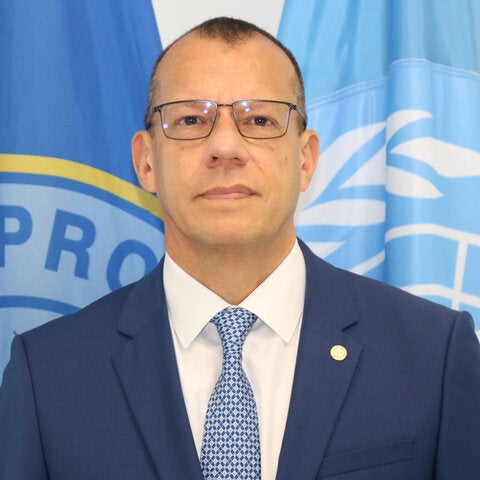
Message from the PAHO/WHO Representative in Trinidad and Tobago, Aruba, Curaçao, Sint Maarten, Bonaire, Saba, and Sint Eustatius
In 2025, shared efforts across Trinidad and Tobago and the Dutch Caribbean demonstrated what is possible when national leadership, partnership, and evidence align, with PAHO’s technical cooperation supporting the priorities of Ministries of Health.
PAHO supported the Better Care for NCDs initiative by strengthening primary care pathways for hypertension and cardiovascular risk through the HEARTS initiative, improving continuity and quality of care. The Baby-Friendly Hospital Initiative reinforced national efforts to promote healthier starts for mothers and newborns, while mental health services expanded through bolstered rights-based approaches guided by the Mental Health Gap Action Programme. Under the Elimination Initiative, cooperation supported equitable immunization coverage, boosting case management of sexually transmitted infections, promoted responsible antibiotic use, and sustained progress toward elimination of mother-to-child transmission and maternal and neonatal tetanus goals. Efforts to maintain Trinidad and Tobago’s malaria-free status and improve early detection of Hansen’s disease were reinforced.
Technical support also advanced digital health, telehealth, and robotics, while climate action progressed toward practical adaptation planning.
PAHO remains firmly committed to sustained, results-oriented technical cooperation that drives measurable impact and strengthens health systems across Trinidad and Tobago and the Dutch Caribbean.
Gabriel Vivas Francesconi
PAHO/WHO Representative in Trinidad and Tobago, Aruba, Curaçao, Sint Maarten, Bonaire, Saba, and Sint Eustatius
FEB

APR
APR
JUN
SEP
SEP
NOV

NOV

TRAIN THE TRAINER WORKSHOP
WHO QualityRights workshop boosted the capacity of mental health practitioners from the Ministry of Health and regional health authorities to deliver rights-based, recovery-oriented care.
TRINIDAD AND TOBAGO COUNTRY COOPERATION STRATEGY 2025–2030
Signing of the Country Cooperation Strategy 2025–2030 between PAHO and Trinidad and Tobago.
HANSEN’S DISEASE CLINICAL TRAINING SERIES
The Ministry of Health, the Trinidad and Tobago Medical Association, and PAHO launched the Hansen’s Disease Continuing Medical Education capacity-building initiative.
MONITORING AND EVALUATION OF IMMUNIZATION PROGRAM
Nationwide assessment of the Expanded Program on Immunization in Trinidad and Tobago.
MENTAL HEALTH TRAINING FOR GENERAL PRACTITIONERS IN CURAÇAO
A three-day Mental Health Gap Action Programme workshop increased the capacity of general practitioners in Curaçao to assess and manage common mental health conditions.
ARUBA COUNTRY COOPERATION STRATEGY 2025–2030
Signing of the Country Cooperation Strategy 2025–2030 between PAHO and Aruba.
DIGITAL HEALTH TRANSFORMATION AND TECHNICAL GUIDELINES
PAHO presented computers, telehealth kits, and key clinical guidelines on healthcare-associated infections to the Ministry of Health, Trinidad and Tobago.
UPDATING OF ESSENTIAL MEDICINES LIST
PAHO supported Trinidad and Tobago in consultations to update the national essential medicines list.
Achievements

PAHO worked closely with national partners in 2025 to strengthen health security, expand access to essential services, modernize digital systems, and advance coordinated progress across priority areas.
Trinidad and Tobago
Accelerating health system performance
PAHO improved health system performance through targeted capacity-building, governance improvements, and stronger data systems. The vascular ultrasonography practitioner enhancement program expanded diagnostic capacity in public hospitals. A new national monitoring and evaluation framework established a unified approach to tracking performance and accountability. The country also initiated an update of its essential medicines list to support transparent, evidence-informed selection of priority medicines.
Building better mental health services for all
PAHO supported implementation of the WHO QualityRights train the trainer program, building a national cadre of facilitators to drive service improvement. This strengthened capacity to promote dignity, human rights, and person-centered approaches within mental health services.
Championing resilient and adaptable health systems
Emergency readiness was reinforced through PAHO’s collaboration with the Eastern Regional Health Authority. Technical support for mass-casualty capacity-building bolstered coordination and decision-making, while a hospital evacuation workshop provided practical experience in safely relocating patients during critical events. These efforts enhanced preparedness across facilities and response units.

Better Care for NCDs: Driving collective action and quality improvement
Under PAHO’s Better Care for NCDs initiative, multisectoral action reinforced systems and improved quality of care for people living with noncommunicable diseases (NCDs). PAHO conducted a HEARTS technical review and assessed implementation in primary care, identifying opportunities to strengthen standardized hypertension management, improve cardiovascular risk assessment, and reinforce continuity of care. Maternal and newborn well-being advanced NCD prevention through completion of the PAHO-led Baby-Friendly Hospital Initiative assessment and certification of San Fernando General Hospital, supporting practices that promote breastfeeding and healthier starts for infants. Together, these actions advanced integrated, people-centered care and accelerated progress toward improved NCD outcomes nationwide.
Building momentum in digital health transformation
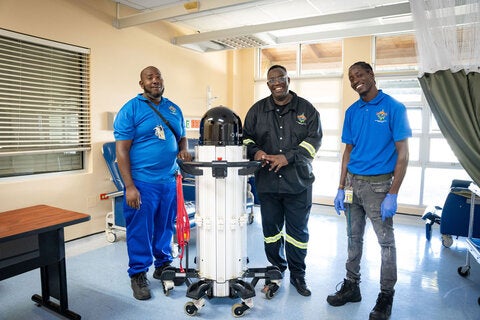
PAHO advanced digital transformation through capacity-building on a humanoid health service robot delivered with the University of Trinidad and Tobago. Cybersecurity and artificial intelligence readiness assessments strengthened protection of digital systems. Delivery of telehealth kits and computers expanded remote care capacity and connectivity. Continued engagement between the Ministry of Health and PAHO supported strategic planning for future investments.
Boosting capacity to address climate change and health
Climate and health action advanced through vulnerability and adaptation assessments led and guided by PAHO, translating risk evidence into practical measures. Multisectoral workshops in Trinidad and Tobago, Aruba, and Curaçao identified climate-sensitive health risks and agreed on coordinated responses. These efforts will inform national adaptation plans, and produced outputs such as Curaçao’s Climate and Health Country Profile, strengthening institutional capacity and climate-resilient planning.
Dutch Caribbean
Empowering frontline clinicians: Advancing mental health care in Curaçao
General practitioners in Curaçao increased their capacity to assess and manage common mental health conditions through a three-day Mental Health Gap Action Programme workshop led by PAHO technical teams. Fourteen clinicians participated in interactive sessions combining role play, clinical vignettes, and assessments, demonstrating measurable improvement in knowledge and confidence.
The training was accredited for continuing medical education credits and included commitment from local partners for ongoing clinical support, bolstering the continuum of care and expanding access to quality services.
Advancing strategic health planning
Strategic health planning across the Dutch Caribbean was strengthened through sustained high-level technical engagement and formal cooperation frameworks with PAHO. In Saba and Sint Eustatius, targeted collaboration translated health system assessments into prioritized, actionable reforms aligned with national and regional objectives to support service delivery improvements in areas like mental health, substance use, and climate resilience.
Aruba finalized its Country Cooperation Strategy (2025–2030), establishing a clear framework for tackling NCDs and advancing health system performance, equity, and resilience. In Sint Maarten, multi-stakeholder consultations advanced development of its Country Cooperation Strategy, reinforcing national ownership and alignment with regional commitments.
Collectively, these efforts boosted prioritization, coordination, and long-term health system development across the Dutch Caribbean.
Stories from the field
Documenting innovation in action in Trinidad and Tobago
When new health technologies are introduced, their true value is measured not only in terms of equipment installed or systems launched but in the experiences of the people who use them every day. Through collaboration between PAHO and the Ministry of Health of Trinidad and Tobago, supported by the Government of Canada, the Government of India, and the United Nations Office for South-South Cooperation, these innovations are being monitored to ensure they are delivering results for health workers and the communities they serve.
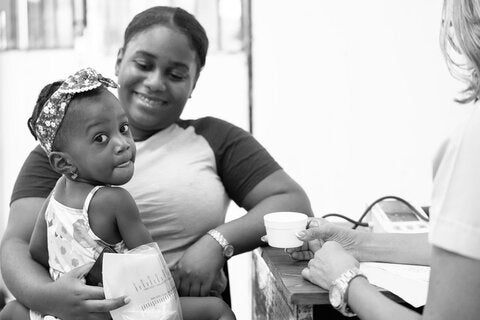
At the Couva Health Centre in central Trinidad, supporting mothers and newborns is central to Sasha Doolarchan’s work. A district health visitor with more than a decade of experience, she provides antenatal support and monitors maternal and child health in her community. As part of a PAHO initiative to document and monitor the impact of health innovations introduced in partnership with the Ministry of Health, Sasha reflected on how the Perinatal Information System (SIP Plus) had improved her daily practice.
Before digitalization, reviewing a patient’s pregnancy history meant searching through paper records, often under time pressure. Identifying high-risk cases required manually piecing together information from multiple visits. Today, SIP Plus allows health workers to see critical information instantly, improving planning and referral. Sasha explains that the system supports “a better outcome for mommy and baby … you’re able now to plan … this patient has had five pregnancies, so we need to send her to a specialist clinic, or this patient has a history of high blood pressure in pregnancy. At a glance you see all of that.”
With clearer visibility of medical histories, health workers can identify risks earlier and ensure timely specialist care. For families, this means safer pregnancies and improved outcomes for newborns. The monitoring initiative also captured how other innovations are enhancing service delivery across Trinidad and Tobago’s health facilities. District health visitor Karen Alleyne reflected on the impact of solar-powered vaccine refrigerators at the primary care level: “When there’s a power interruption, vaccines are at risk. Before, we had to constantly monitor and sometimes move stock quickly to prevent loss. Now, the solar refrigerators give us peace of mind. We know the vaccines are kept at the correct temperature, even if electricity is disrupted.” This reduces stress for staff and safeguards immunization services for children and families.
At the Scarborough General Hospital in Tobago, Anderson McPhee, Manager, Environmental Services, shared how the introduction of a disinfecting health service robot is supporting infection prevention efforts. “It adds another layer of protection for both staff and patients,” he noted. “In areas where exposure risk is higher, having that additional support strengthens our infection control measures.” By capturing these lived experiences, the initiative shows how innovation is felt in clinics, wards, and communities. Monitoring helps ensure these investments translate into stronger systems, safer care, and better outcomes for the people of Trinidad and Tobago.
Turning knowledge into action: Empowering providers to end Hansen’s disease in Trinidad and Tobago through the Elimination Initiative
The Ministry of Health, the Trinidad and Tobago Medical Association, and PAHO have successfully completed the national Hansen’s Disease Continuing Medical Education capacity-building, an impact-driven initiative that measurably boosted frontline capacity to detect, treat, and prevent complications from Hansen’s disease across Trinidad and Tobago, directly advancing the Elimination Initiative.
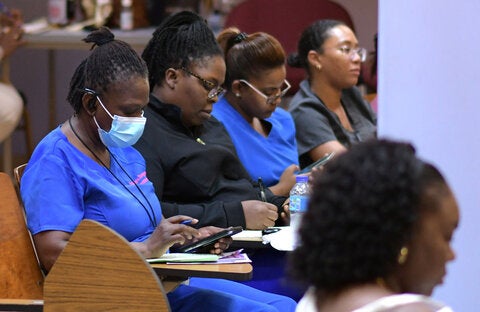
The series focused on building practical clinical readiness to ensure early diagnosis, timely treatment, and reduced disability, which are key pillars of disease elimination. Delivered across all five regions, the program reached 118 public- and private-sector healthcare practitioners between April and July 2025. Sessions emphasized real-world application through small group learning, local case studies, and live digital engagement to reinforce clinical decision-making. Led technically by the Director of the Hansen’s Disease Control Unit, the program achieved demonstrable gains in provider competence, with postlecture assessments averaging 92%, confirming significant improvements in clinical knowledge and readiness to act.
At the closing ceremony, the Hon. Dr. Rishad Seecheran, Minister in the Ministry of Health, noted that “our collaboration with PAHO has been longstanding and impactful, enhancing our ability to respond effectively across all levels of care, from primary health care clinics to national public health strategies.” The Trinidad and Tobago Medical Association reaffirmed its commitment to initiatives that elevate clinical standards nationwide. Participant feedback reflected strong engagement and confidence to apply learning in practice, reinforcing the program’s contribution toward interrupting transmission, preventing lifelong disability, and leaving no one behind.
From evidence to action: Advancing healthy aging through systems change in Sint Maarten
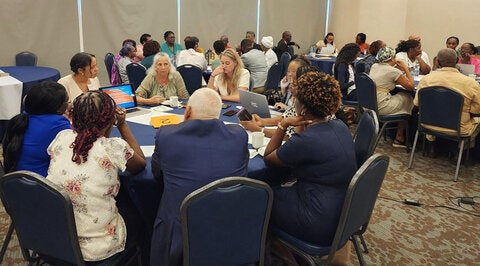
Sint Maarten is confronting a rapid demographic shift, with a growing older population facing rising living costs, chronic disease, mobility challenges, and social isolation. To move beyond fragmented responses, PAHO supported the Government of Sint Maarten to undertake a comprehensive healthy aging baseline assessment – bringing together diverse stakeholders from government and civil society to generate the first integrated picture of aging across health, housing, social protection, and community life. The assessment revealed critical gaps in age-friendly services, while also identifying strong community assets and clear opportunities to integrate primary care, social services, and community support around functional ability and well-being.
Guided by this evidence, PAHO facilitated national dialogue to translate findings into a systems-level road map aligned with the United Nations Decade of Healthy Ageing. This process is shifting Sint Maarten from isolated interventions toward integrated, person-centered models, strengthening linkages between primary care and social services, improving navigation of benefits, promoting mobility and social connection, and embedding healthy aging priorities into policy and planning. As one government stakeholder acknowledged, older adults had long been overlooked, and elders were often treated as a forgotten group. This reality is now being actively addressed through coordinated reform.
The urgency of this transformation is voiced directly by an older resident interviewed during the assessment: “The older people, they need help. The pensioners, they need help. They’re crying.” By convening sectors, providing standardized frameworks, and grounding action in local evidence, PAHO is helping Sint Maarten move from fragmented services to an age-responsive system that prioritizes functional ability, dignity, and inclusion.
Trinidad and Tobago
- Breastfeeding Association of Trinidad and Tobago. Breastfeeding advocacy and infant nutrition.
- Caribbean Public Health Agency. Collaboration partner.
- Environmental Management Authority. Air quality and climate change partner.
- High Commission of Canada to Trinidad and Tobago. Immunization funding and partner.
- Ministry of Agriculture. Collaborator for One Health and the Pandemic Fund project.
- Ministry of Health and Regional Health Authorities. Collaboration partners.
- Ministry of Planning. Climate change and health collaboration partner.
- National AIDS Coordination Committee. HIV/AIDs collaboration partner.
- Trinidad and Tobago Medical Association. Nongovernmental organization stakeholder.
- University of Trinidad and Tobago. Digital health partner.
- University of the West Indies, St Augustine Campus. Collaboration partner.
Dutch Caribbean
- European Union. Disaster preparedness collaboration partner and funder.
- Ministry of Health, Environment & Nature, Curaçao. Collaboration partner.
- Ministry of Public Health, Social Affairs and Elderly Care and Addiction Care, Aruba. Collaboration partner.
- Ministry of Public Health, Social Development and Labor, Sint Maarten. Collaboration partner.
- National Climate Resilience Council, Aruba. Climate and health stakeholder collaboration.
Other
- India-UN Development Partnership Fund. Digital health funding.
- Inter-American Development Bank. Collaboration partner.
- United Nations Office for South-South Cooperation. Collaboration partner.
- United Nations agencies, programs, and funds. Collaboration partners.

Making health
a commitment for all
2025 Country Annual Reports
of the Pan American Health Organization