• Mom happy with baby

Diphtheria

Diphtheria is an infectious disease caused by the bacterium Corynebacterium diphtheriae. While it primarily infects the throat and upper airways, it can also affect the skin and other mucous membranes. The bacterium produces a toxin that affects different organs. The illness has an acute onset and the main characteristics are sore throat, mild fever, and the toxin can, in severe cases, cause myocarditis or peripheral neuropathy. Swelling in the neck can happen when neck tissues become inflamed and lymph nodes enlarge. In severe cases, this swelling can lead to a life-threatening airway obstruction and difficulty breathing

The diphtheria toxin causes a membrane of dead tissue to build up over the throat and tonsils, making breathing and swallowing difficult. The disease is spread through direct physical contact or from breathing in the aerosolized secretions from coughs or sneezes of infected individuals.

Key facts

Vaccination against diphtheria has reduced the mortality and morbidity of diphtheria dramatically, however diphtheria is still a significant child health problem in countries with poor vaccination coverage.

In countries endemic for diphtheria, the disease occurs mostly as sporadic cases or in small outbreaks. Diphtheria is fatal in 5 - 10% of cases, with a higher mortality rate in young children. Treatment involves administering diphtheria antitoxin to neutralize the effects of the toxin, as well as antibiotics to kill the bacteria.

Diphtheria vaccine is a bacterial toxoid, ie. a toxin whose toxicity has been inactivated. The vaccine is normally given in combination with other vaccines as DTwP/DTaP vaccine or pentavalent vaccine. For adolescents and adults the diphtheria toxoid is frequently combined with tetanus toxoid in lower concentration (Td vaccine).

 

PAHO Response
WHO logo position papers

WHO position papers on diphtheria vaccine

View more

Children vaccinated showing vaccine card

Diphtheria, tetanus, and pertussis (DTP) vaccine

View more

Happy baby in vaccination service

People infected with diphtheria may or may not show symptoms but can carry the bacteria and spread it to others. Most people with diphtheria will have a respiratory tract infection, sore throat, and mild fever in the first few days of the illness. Mild cases of the illness will not develop further symptoms. However, if the disease is more severe, a dense membrane will develop, which could be local—for example, just on the tonsils or pharynx—or could cover a wide area of the patient’s respiratory tract. More severe cases can develop a swollen “bull’s neck” appearance. In tropical regions, diphtheria can cause cutaneous symptoms affecting the skin. Lesions appear on the skin, forming ulcers covered in a grey membrane that does not heal. Although uncommon, complications can arise in organs such as the heart, kidneys, and peripheral nerves.

Though respiratory droplets, like from coughing or sneezing. It may also be spread by contaminated clothing and objects.

Suspected diphtheria cases are identified by upper respiratory symptoms (pharyngitis, nasopharyngitis, tonsillitis, laryngitis) and a greyish membrane (pseudomembrane) covering the throat. Laboratory confirmation of diphtheria requires isolation of toxigenic Corynebacterium diphtheriae through culture, regardless of symptoms. The Elek test confirms toxigenicity, and PCR may be employed as an additional surveillance tool.

Diphtheria infection is treated with the administration of a diphtheria antitoxin (DAT), administered intravenously or through an intramuscular injection. Antibiotics (prioritizing azithromycin and erythromycin over penicillin) are also given to eliminate the bacteria, stop toxin production, and prevent transmission to others.

For severe cases of diphtheria, it's crucial to provide supportive care, including airway management and cardiac monitoring. Patients with diphtheria, regardless of how sick they are, must be placed in isolation to prevent the infection from spreading.

Vaccination against diphtheria has reduced the mortality and morbidity of diphtheria dramatically. However, diphtheria is still a significant child health problem in countries with poor routine childhood immunization coverage. In countries endemic to diphtheria, the disease occurs mainly in sporadic cases or small outbreaks. Diphtheria is fatal in 5 - 10% of cases, with a higher mortality rate in young children.

Diphtheria vaccine is a bacterial toxoid, i.e., a toxin whose toxicity has been inactivated. The vaccine is usually given in combination with other vaccines, including tetanus and pertussis, and others (e.g., DTwP/DTaP, pentavalent vaccine, hexavalent vaccine). For adolescents and adults, the diphtheria toxoid is frequently combined with tetanus toxoid in lower concentration (Td vaccine).
PAHO/WHO recommends a 3-dose primary vaccination series with diphtheria-containing vaccine followed by three booster doses. The primary series should begin as early as six weeks of age, with subsequent doses with a minimum interval of four weeks between doses. The three booster doses should preferably be given during the second year of life (12-23 months), at 4-7 years, and 9-15 years of age. Ideally, there should be at least four years between booster doses.

Documents

All

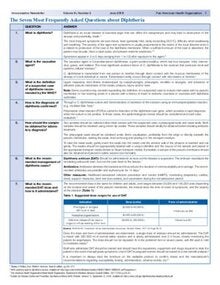
Communication Materials

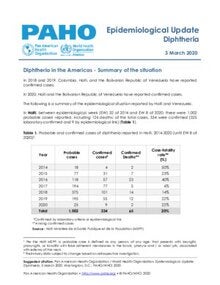
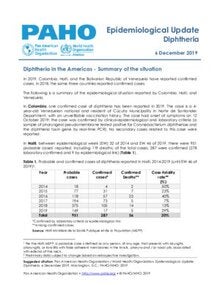
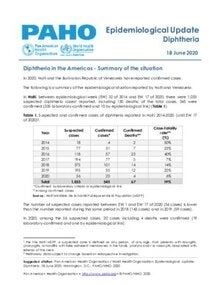
Epidemiological Updates and Alerts