This area of work aims to ensure that all countries of the Region have capabilities for all hazards health emergency and disaster risk management, including the core capacities needed to fulfill their responsibilities under the IHR 2005. The goal is to ensure that each Member State builds its own standing capacity to prevent, prepare for, respond to and recover from humanitarian emergencies and large outbreaks.
Major action lines include the institutionalization of a national health emergency management, the development and implementation of health multihazard preparedness and response plan, and regional IHR secretariat activities. These are complemented by efforts in IHR core capacity building, assessment, monitoring and evaluation, as well as the development of guidelines, learning materials and standard operating procedures. Additional priorities involve the Implementation of the Emergency Medical Teams initiative and the Identification and training of multidisciplinary health response teams.
Areas of work
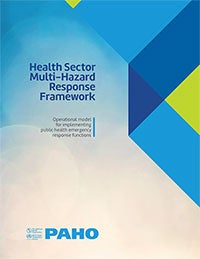
Multi-Hazard Response Framework
The main aim of the Health Sector Multi-Hazard Response Framework (MRF) is to improve the capacity of countries to manage their response to emergencies and disasters in a more efficient and timely manner.
Read more +
Between 1970 and 2018, the Region of the Americas experienced over 4,500 disasters that killed 569,184 people and injured more than 3 million people. Additionally, emergencies and disasters of any kind can cause multimillion-dollar economic losses and can significantly undermine the performance of health systems. Today, more than ever, it is necessary for countries to improve their preparedness and response to health emergencies and disasters—a need expressed by the Member States of the Pan American Health Organization.
The MRF facilitates an operational model that makes it possible to identify response activities, taking into account all existing hazards and to carry out those activities within a national framework based on the organization of the health sector. The MRF is designed mainly for health sector authorities and managers responsible for emergency and disaster risk management, guiding them in the process of updating or developing response planning. This ranges from describing the operational model to implementing emergency functions involving various actors, identifying preparedness tools in the health sector, and developing standardized operating procedures, organizational analysis, and specific contingency plans. Implementation of this framework will provide countries with adequate response planning based on a multi-hazard approach. This will lead to better use of available resources and greater flexibility to deal with any type of event.

International Health Regulations (IHR)
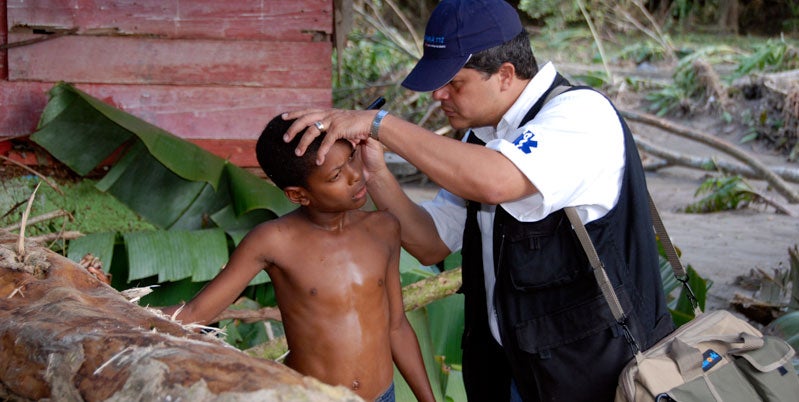
The International Health Regulations (IHR) are an international legal instrument that covers measures for preventing the transnational spread of infectious diseases. Meeting the requirements in the IHR is a challenge that requires time, commitment and the willingness to change. The goal of country implementation is to limit the spread of health risks to neighboring countries and to prevent unwarranted travel and trade restrictions.
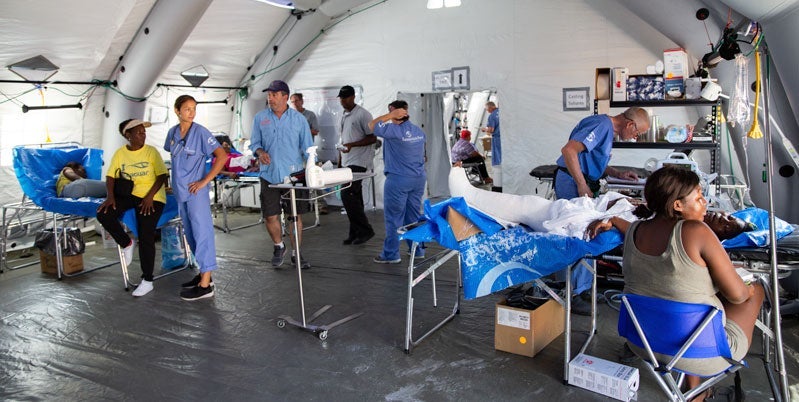
Emergency Medical Teams (EMT)
Through the EMT Americas initiative, we help build national emergency medical teams' capacity and ensure access to essential, quality, life-saving health services through effective, scalable, interoperable, and rapidly deployable teams that are fully integrated into local health service networks.
Resources

Health and Migration: Regional strategic lines of action on health and migration
By the end of the course, participants will be able to identify priority migrants´ health needs and apply their knowledge to advocate for people-centered interventions using global and regional frameworks, and other key instruments.

Virtual Course - Medical Coordination and Information Cells (CICOM)
This Medical Coordination and Information Cells (CICOM) virtual course offers tools to Emergency Medical Teams (EMTs) and Alternative Medical Care Sites (AMCSs) coordination staff for swift and timely preparation and response.

Essential Services in Health Emergencies and Disaster Situations
The purpose of this course is to sensitize authorities and health personnel on the importance of maintaining the continuity of essential services in health emergencies and disasters and to describe the strategies that could be applied to maintain the continuity of these services.
(*Available in Spanish)