Welcome to the Regional Data Portal for the Better Care for NCDs Initiative, a user-friendly platform designed to enhance primary healthcare efforts in the prevention, management, treatment, and control of noncommunicable diseases. This portal serves as a comprehensive resource, compiling regional data to effectively monitor progress in managing chronic health conditions at the primary health care.
The data portal comprises three main sections. The first section focuses on indicators related to the epidemiological context of chronic non-communicable diseases and their risk factors. The second section aims to present regional evidence on the response structured by primary health care to the challenge posed by chronic non-communicable diseases. The third section provides evidence on monitoring the implementation of the PAHO Better Care Initiative and the impact assessment of its impact on reducing the burden of NCDs and their risk factors.
Scan the following QR code to access this page from your phone:

Section 1 – Epidemiological Context
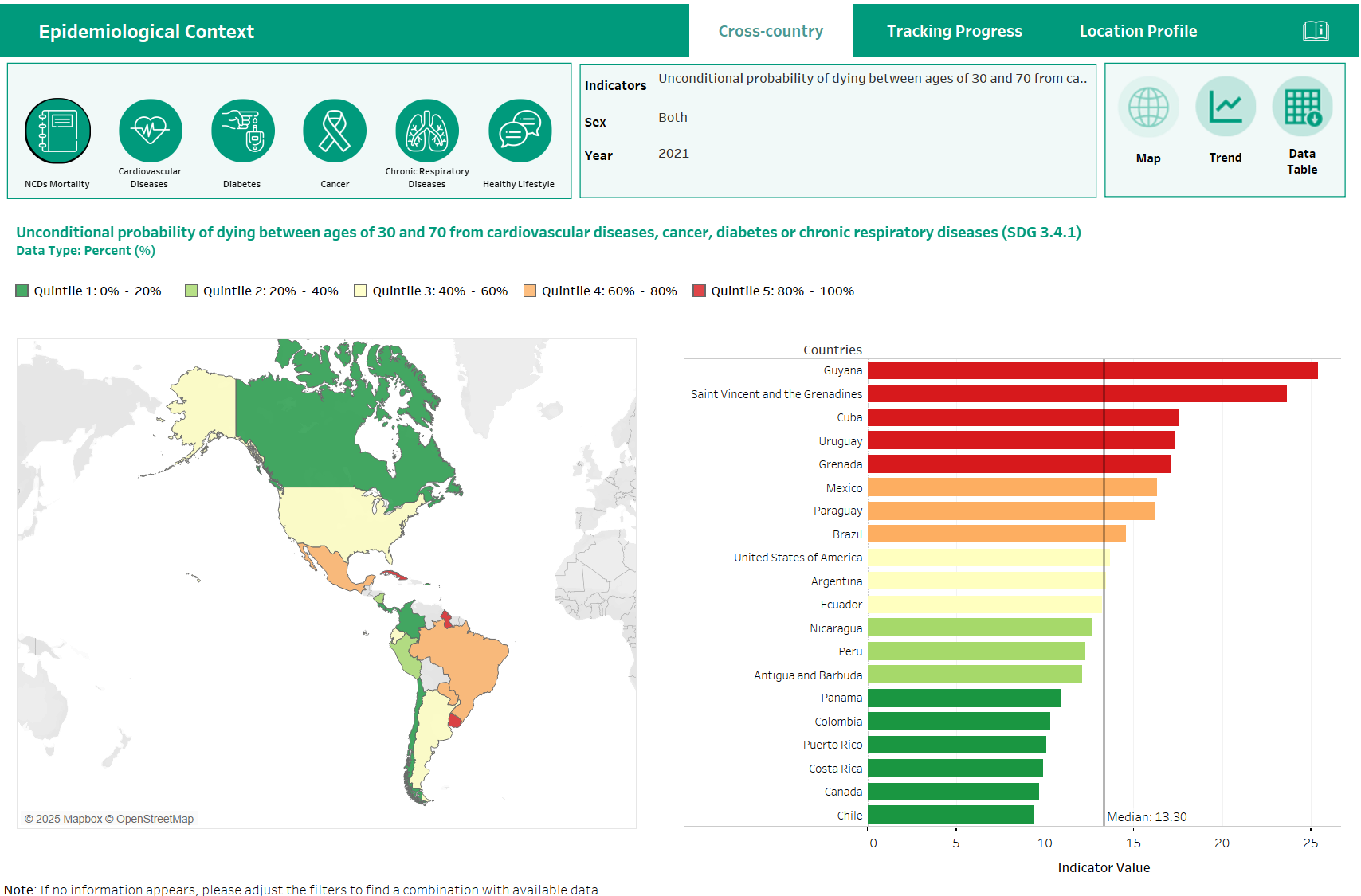
This section focuses on the levels and trends of mortality from noncommunicable diseases, cardiovascular diseases, cancer, diabetes, and chronic respiratory diseases at the regional and national levels.
Section 1 comprises one dashboard, which can be accessed below.
The epidemiological context of the noncommunicable diseases dashboard:
This dashboard allows users to examine data on mortality from chronic non-communicable diseases and evidence on care related to diabetes, cancer, respiratory, and cardiovascular diseases. In addition, users can analyze evidence on healthy lifestyle indicators. The indicators have been structured to enable comparisons between countries, monitoring progress towards the strategic objectives set for the region, and analyzing the epidemiological profile of each country, sub-region, and the Americas as a whole. In this way, it is possible to get evidence regarding the different levels of progress across the region, aiming to mitigate the impact of the challenges posed by chronic noncommunicable diseases.
Section 2 – Response Capacity and Maturity Indicators
This section presents data related to the response capacity of primary care systems in facing the challenges posed by noncommunicable diseases. It addresses structural and operational aspects that help assess how well health systems in the Americas are prepared to respond effectively and equitably to the growing needs of a population affected by these conditions.
It includes three dashboards: 1) Georeferenced Access Information, 2) Avoidable Hospitalizations, and 3) Clinical Guidelines and Protocols.
Georeferenced Access Information Dashboard:
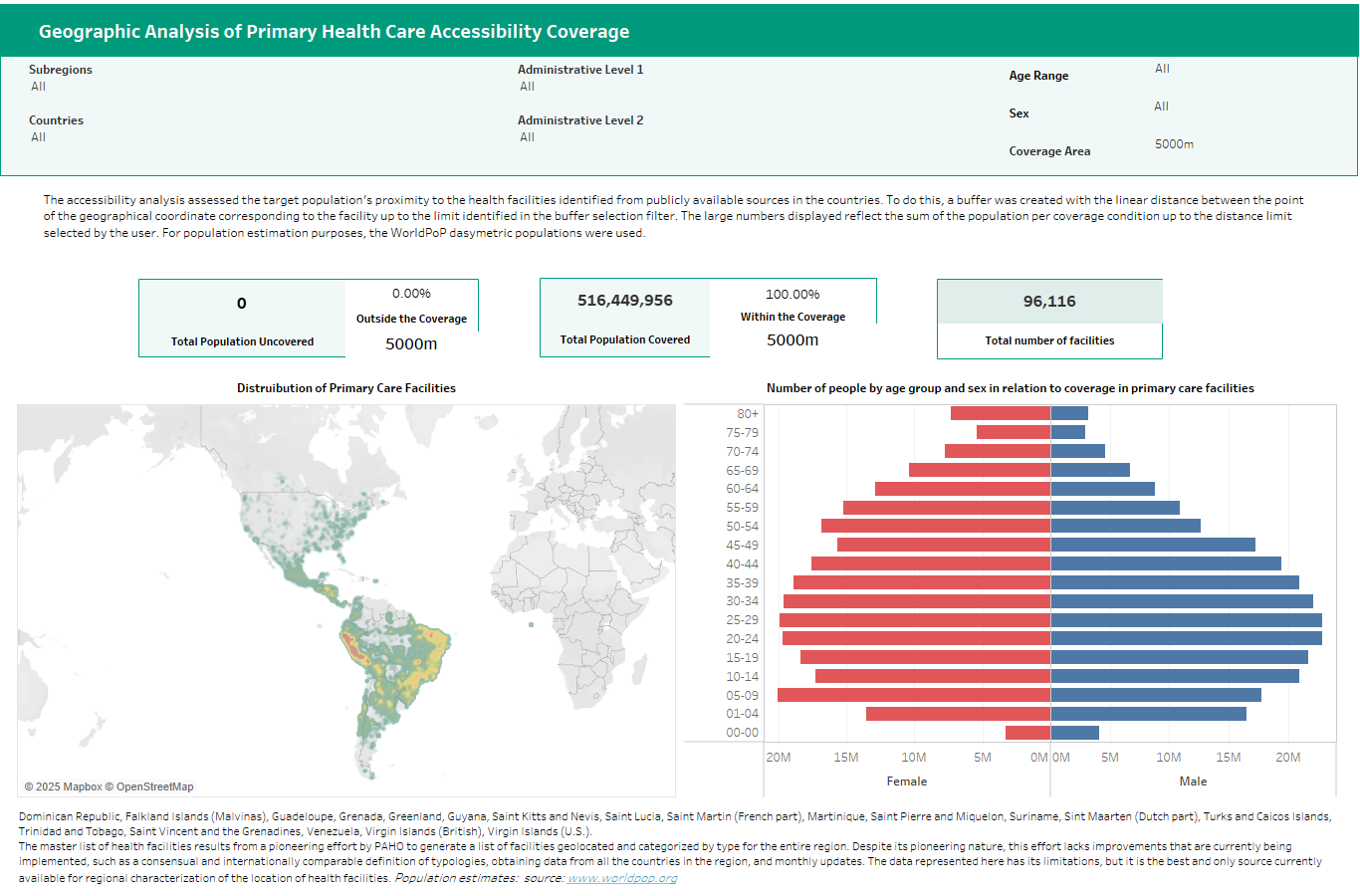
The Georeferenced Access Information dashboard allows users to explore estimates of the population with potential geographic access to primary care facilities across 25 countries in the Americas. The resulting data are disaggregated by subregion, country, administrative levels (levels 1 and 2), age groups, and sex, enabling a detailed and comparable view of primary care territorial coverage.
Avoidable Hospitalizations Dashboard:
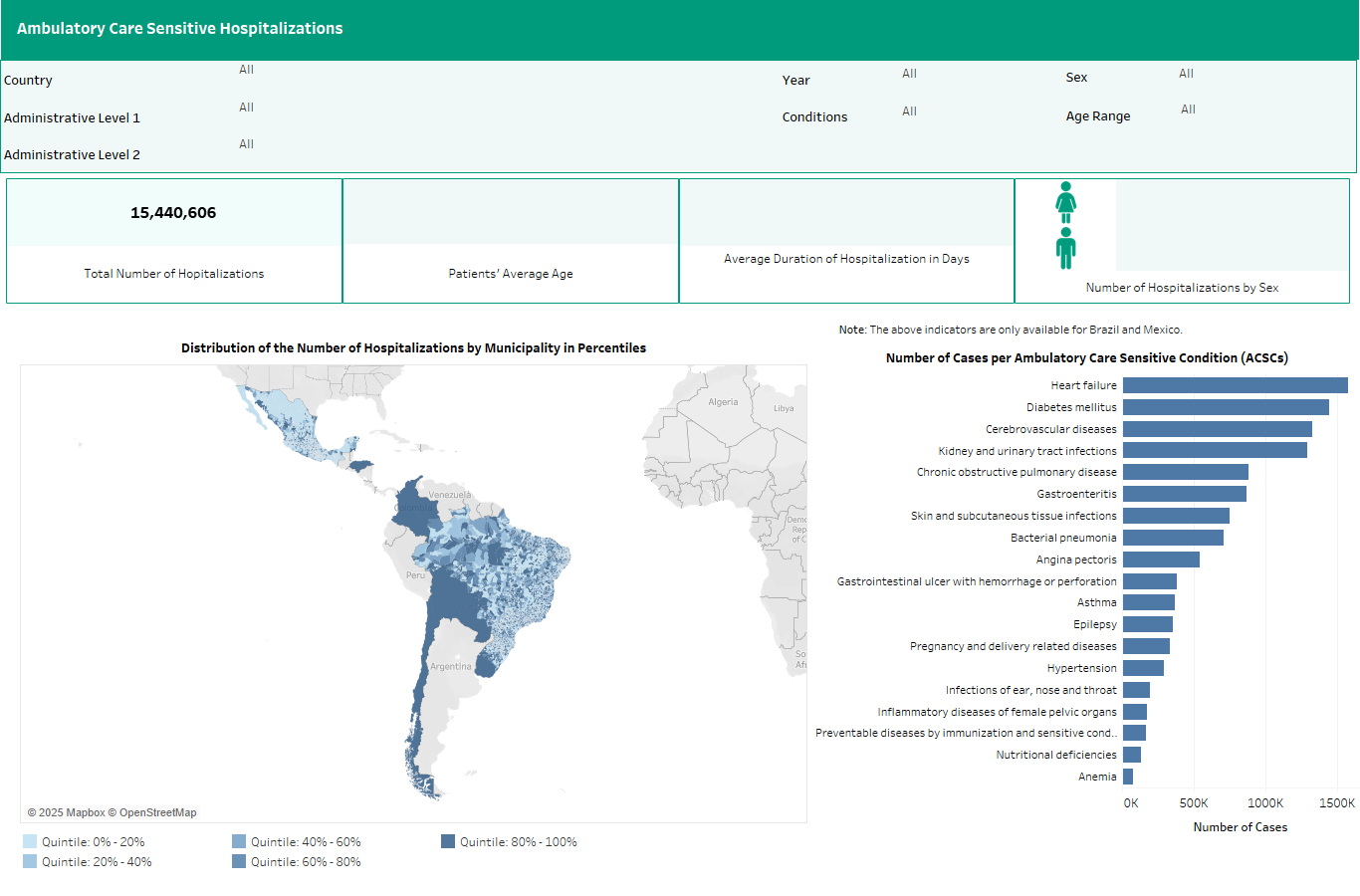
The Avoidable Hospitalizations dashboard displays the number of hospital interactions related to ambulatory care sensitive conditions (ACSCs), which are those that, in principle, could be prevented or managed at the primary care level, thus avoiding the need for inpatient care.
Clinical Guidelines and Protocols Dashboard:
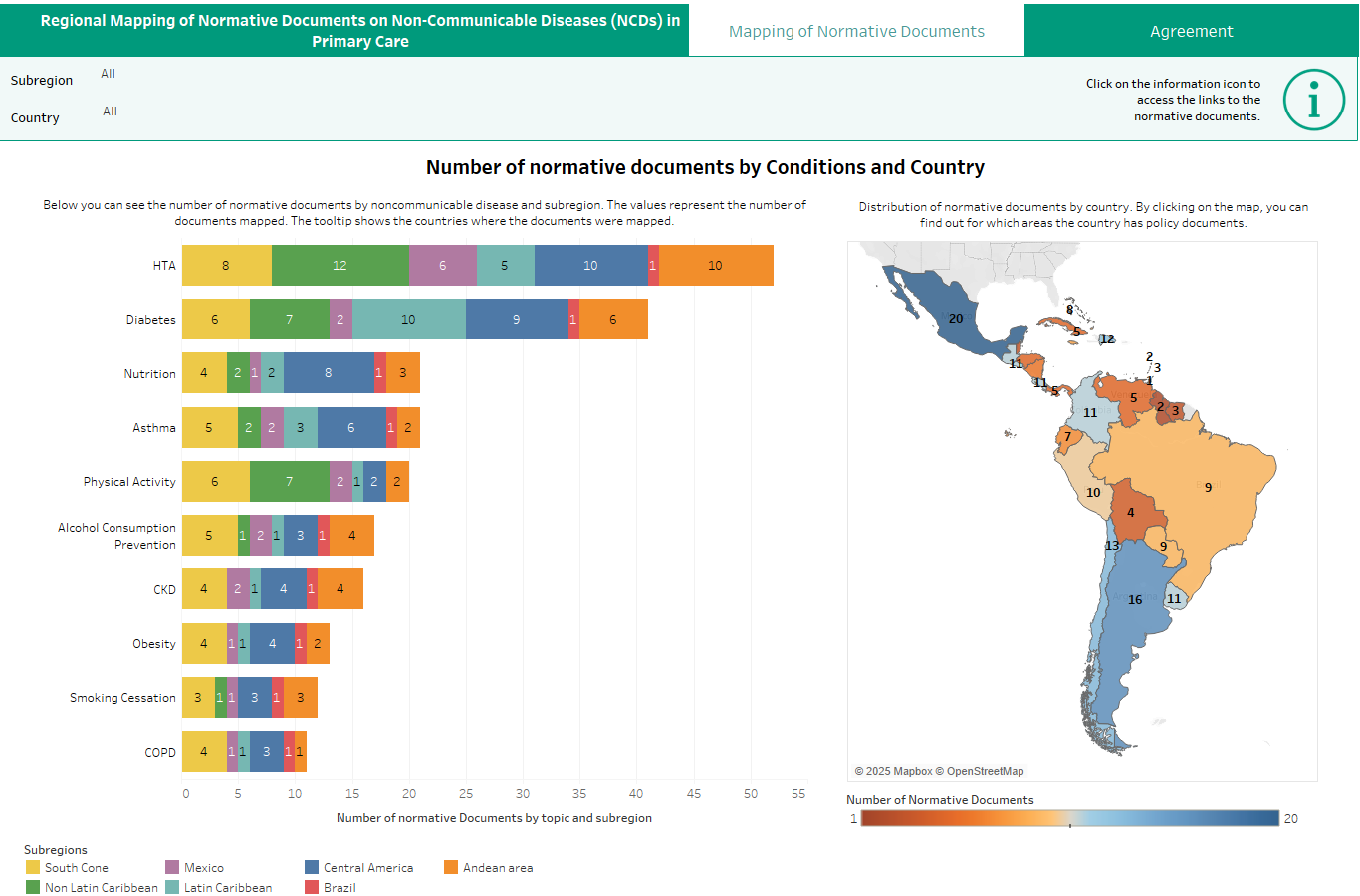
The Clinical Guidelines and Protocols dashboard maps official recommendations from PAHO and WHO, compiling 129 guideline documents from 22 countries published between 2020 and 2024. These guidelines range from clinical flowcharts for managing patients with diabetes, hypertension, and respiratory diseases to recommendations for integrated care of multiple comorbidities in primary care.