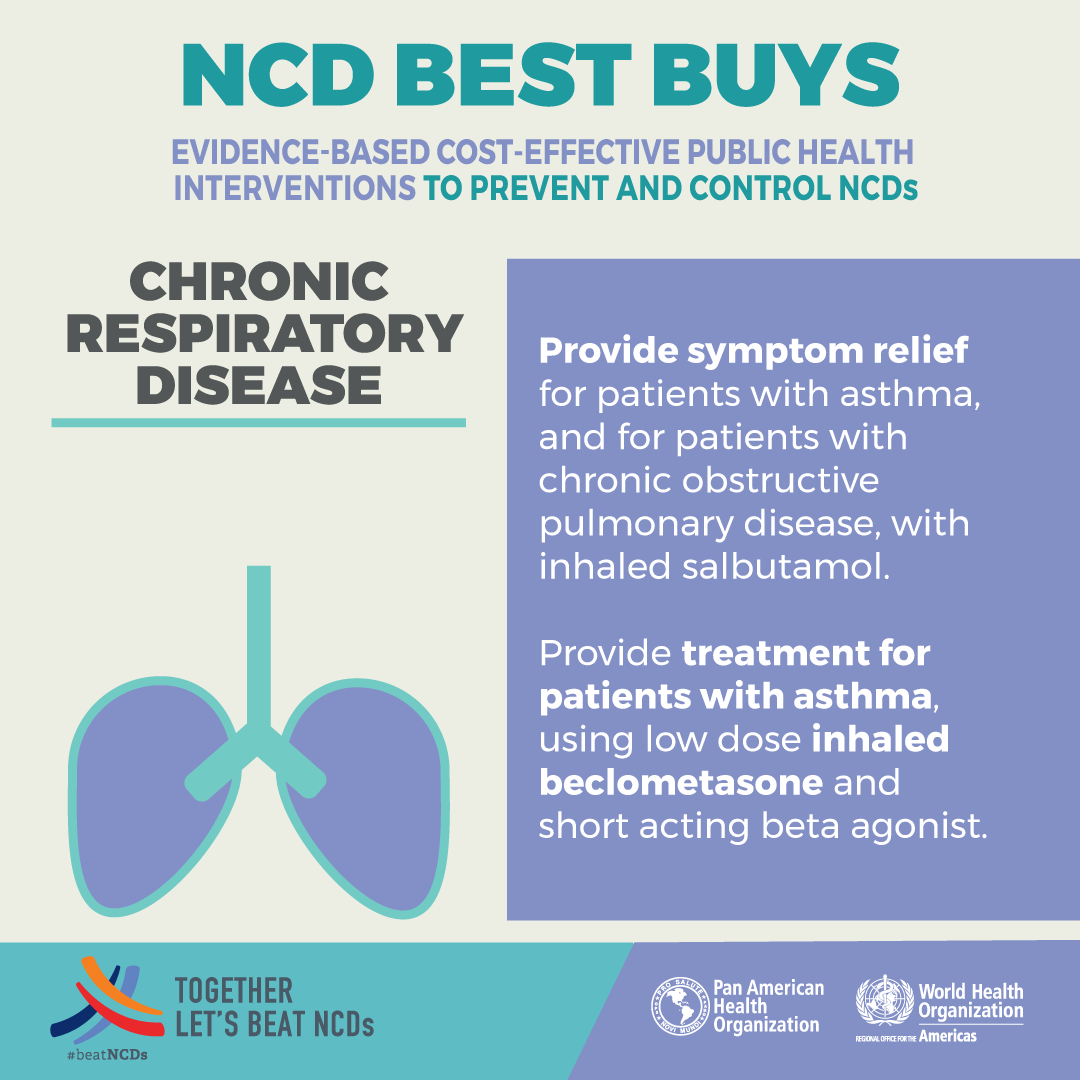
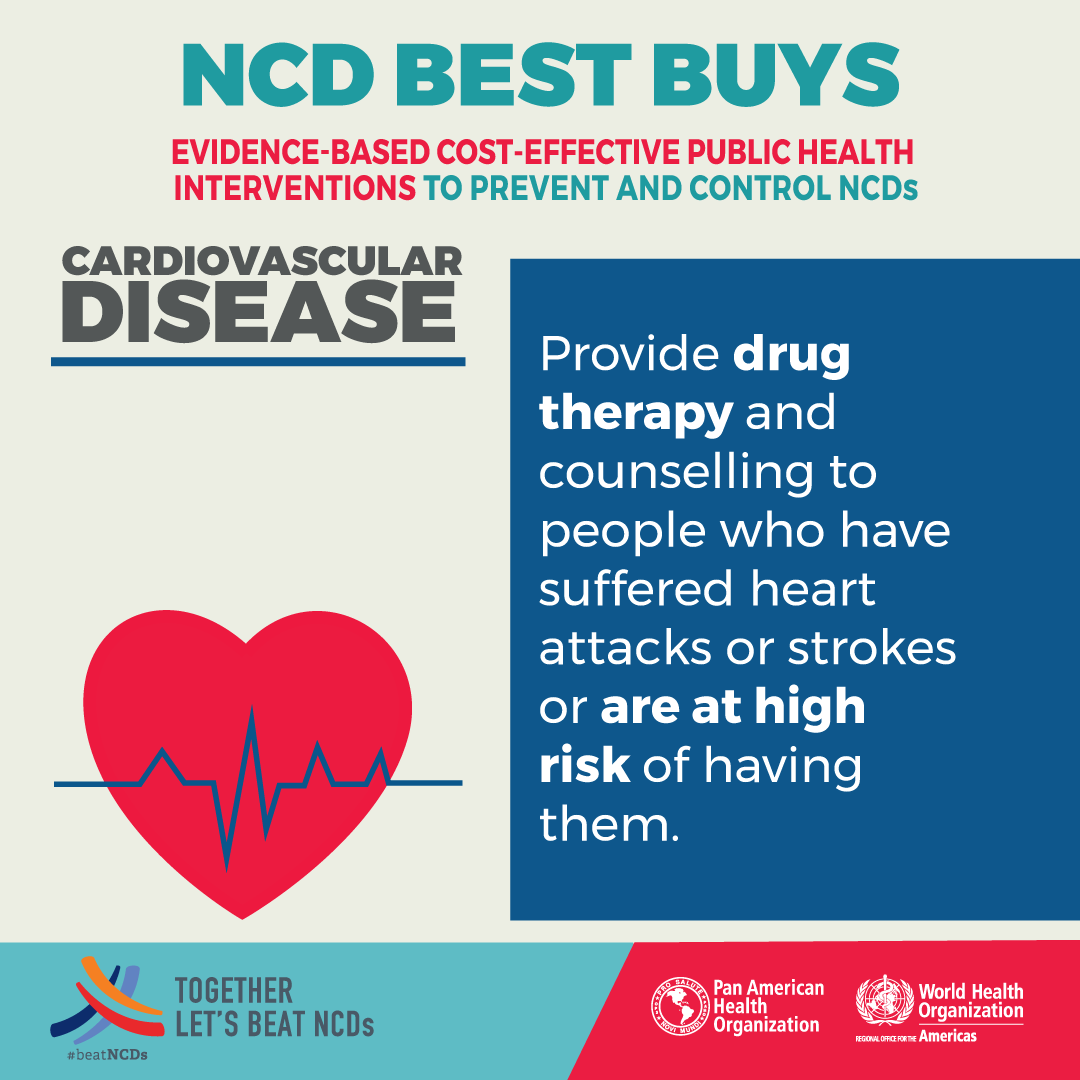
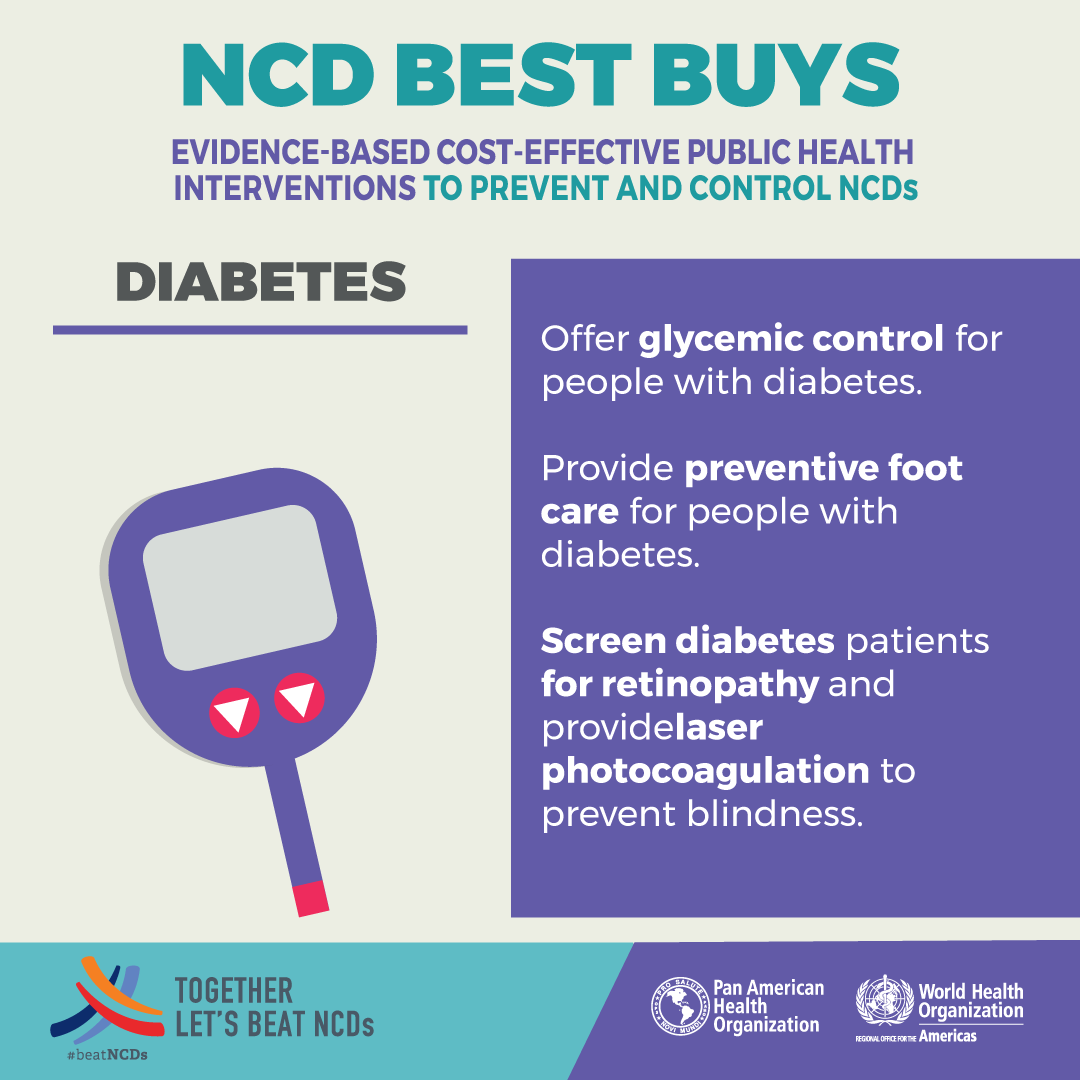
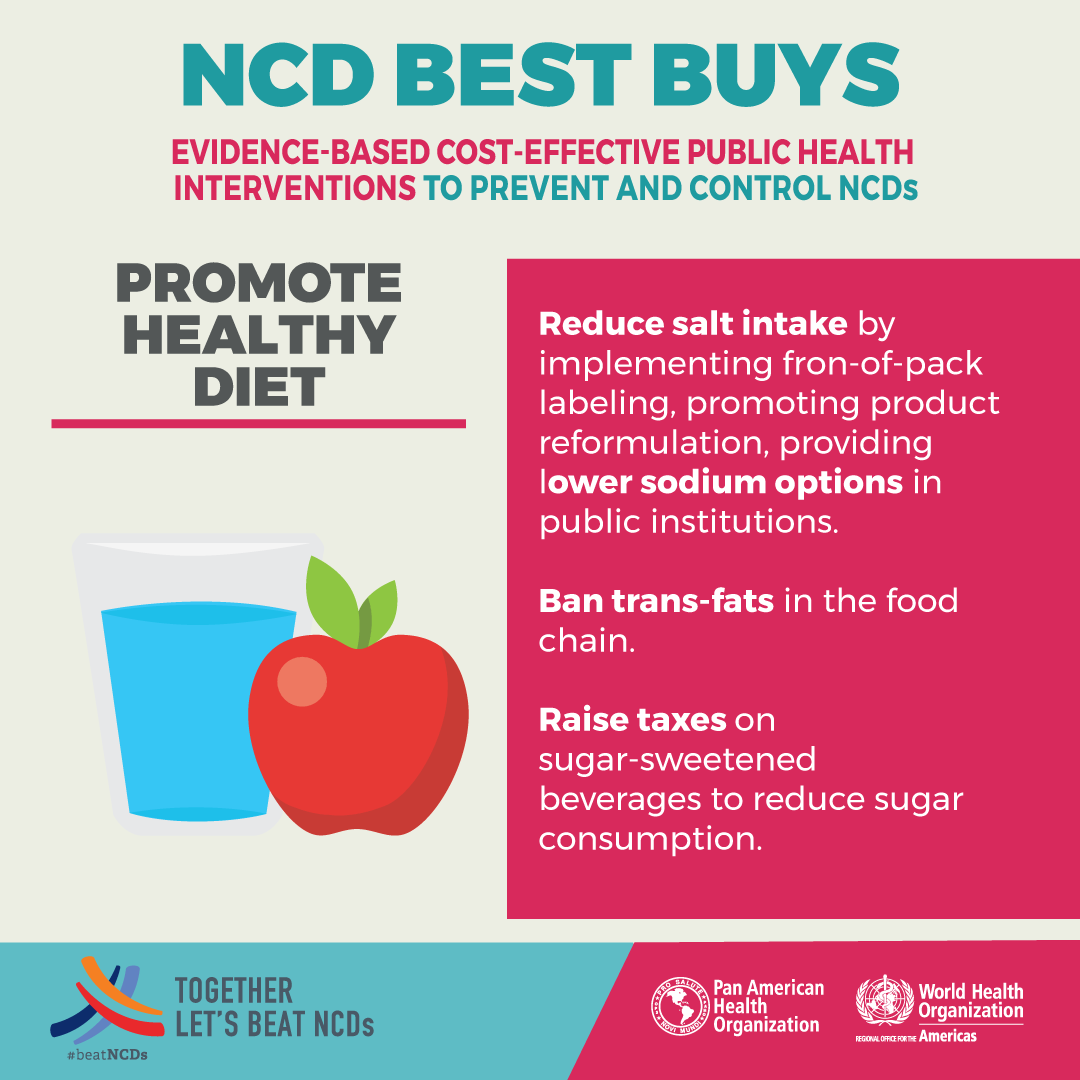
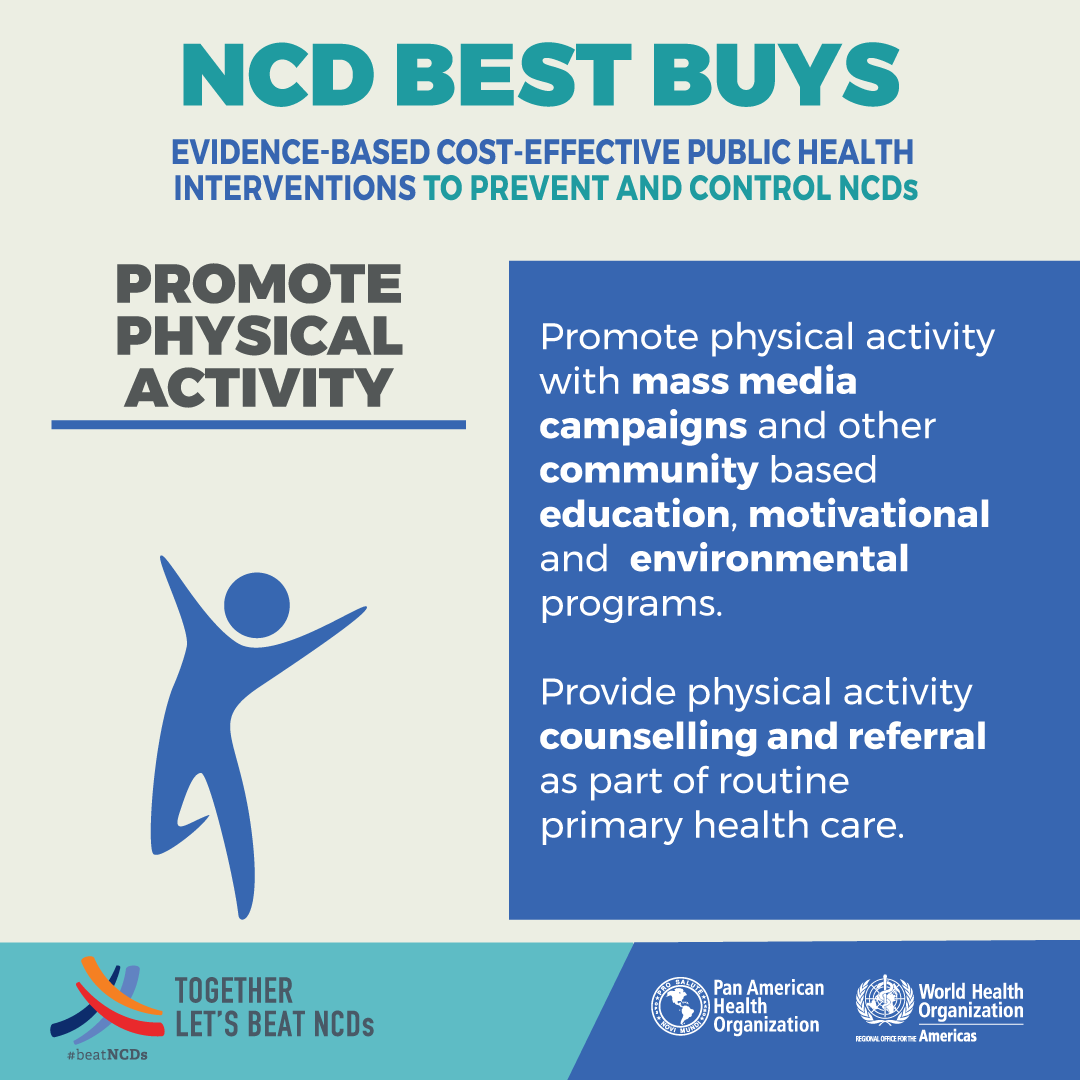
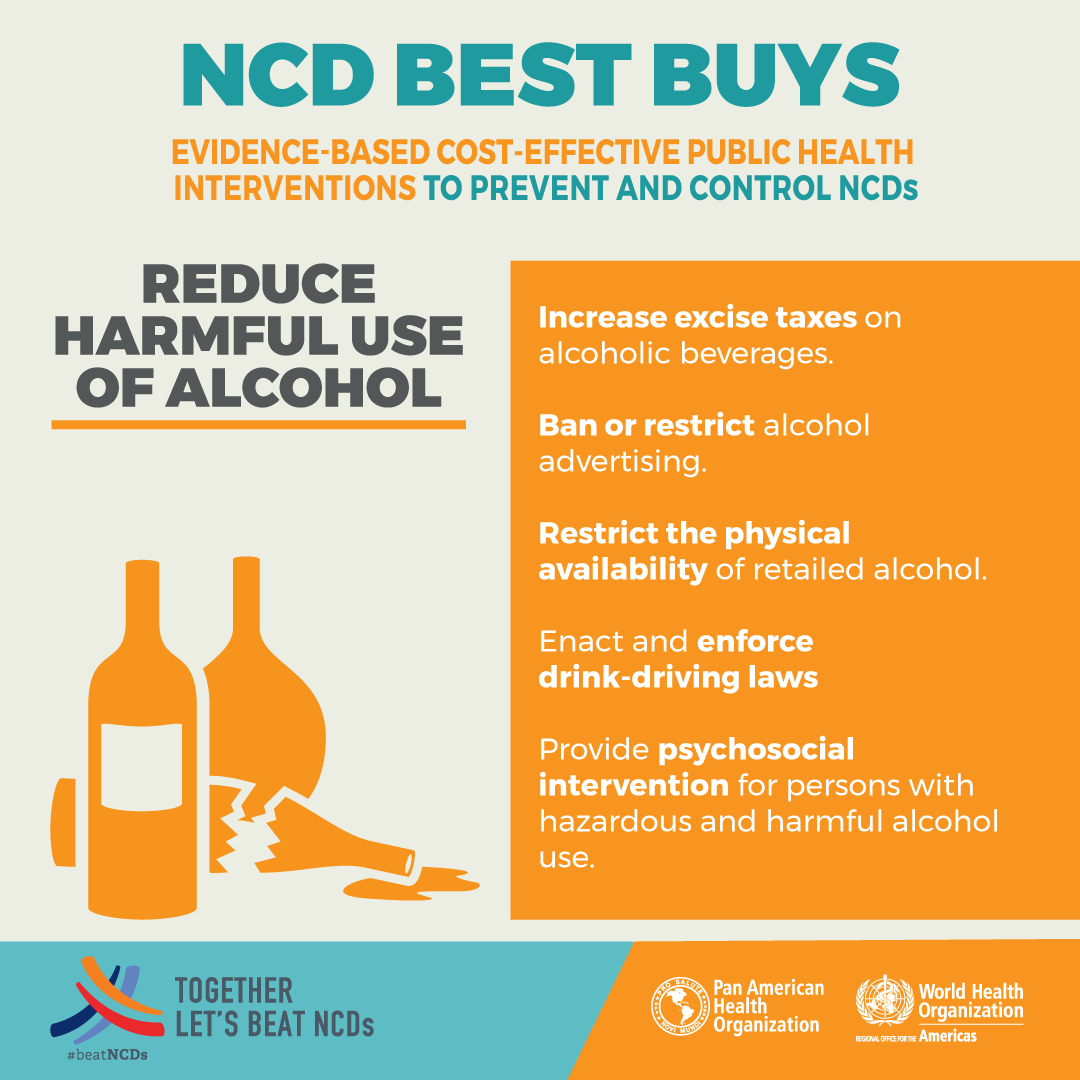
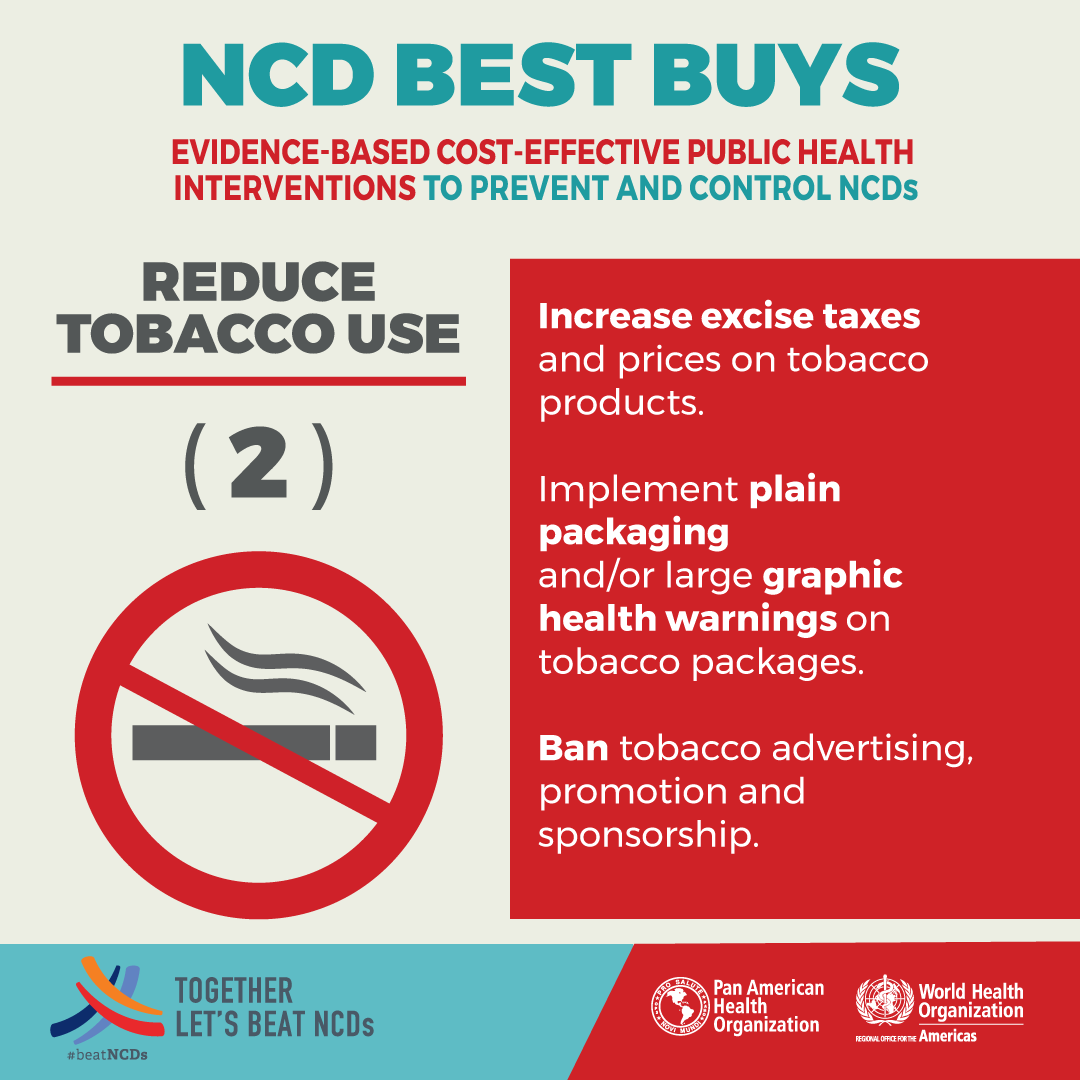
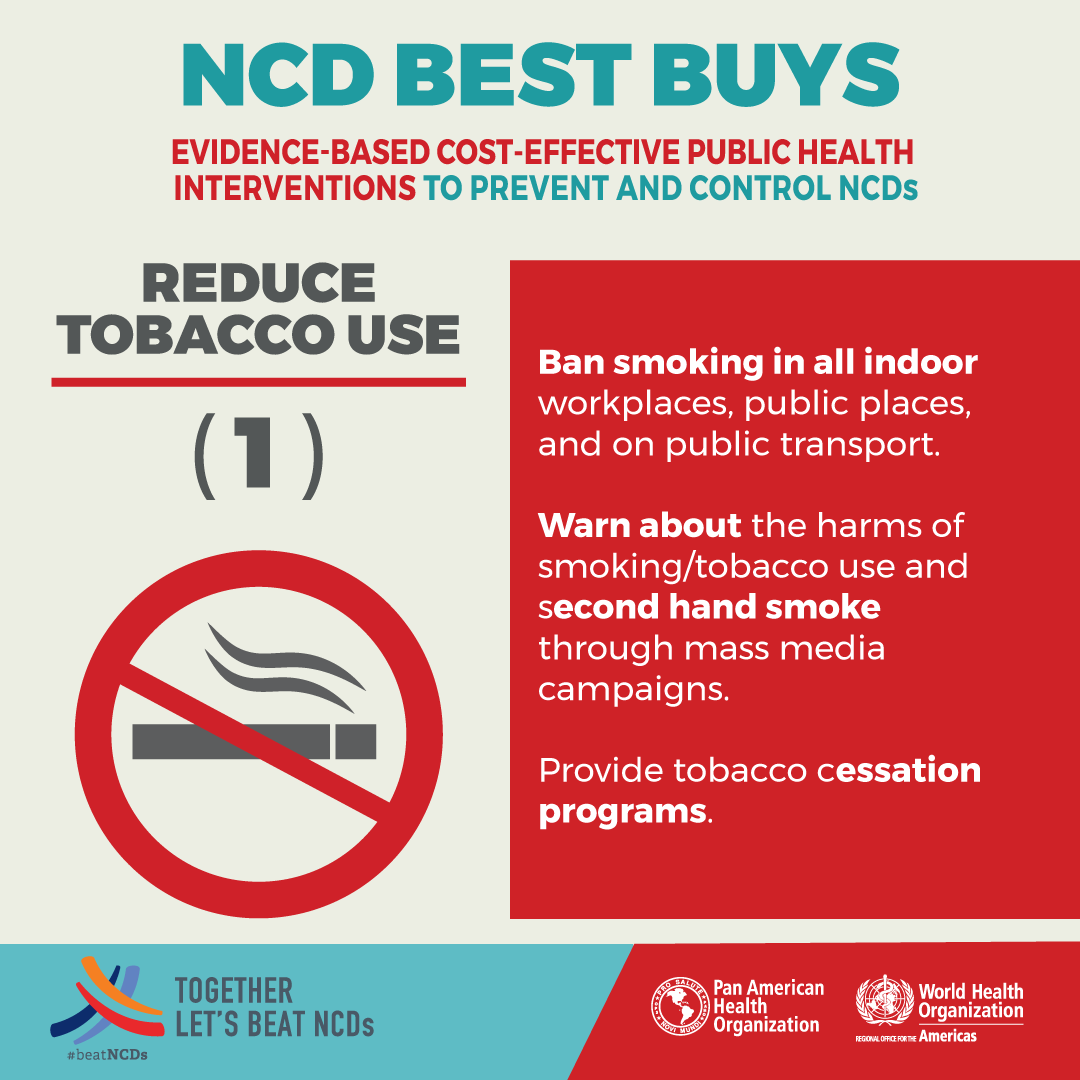
The NCD Best buys are based on the Appendix 3 of the Global action plan for the prevention and control of noncommunicable diseases 2013–2020, updated in 2022 and endorsed by the Seventy-sixth World Health Assembly in 2023. The Appendix 3 addresses objectives 3 and 4 of the Global action plan, by presenting a menu of policy options, cost-effective and recommended interventions for each of the four key risk factors for NCDs (tobacco, harmful use of alcohol, unhealthy diet and physical inactivity) and for four disease areas (cardiovascular disease, diabetes, chronic respiratory disease and cancer).
The interventions were assessed for cost-effectiveness using WHO-CHOICE methodology, as well as for feasibility and non-economic considerations (such as effectiveness and health impact, acceptability, sustainability, scalability, health equity, ethics, multisectoral actions, training needs, suitability of existing facilities, and monitoring).
The 2022 update of Appendix 3 contains 90 interventions and 22 overarching/enabling policy actions, with relevant options listed for each of the four key risk factors and four NCDs.Cost-effectiveness was examined for 58 of the 90 interventions. Of the 58 interventions, 28 were considered to be the most cost-effective and feasible for implementation by countries in all settings (the “best buys”), with an average cost-effectiveness ratio of ≤ I$100 per healthy life year (HLY) gained in low-income and lower middle-income countries.
The 28 interventions identified as best buys in this report are considered the most cost-effective and feasible for implementation.