Virtual Health Library
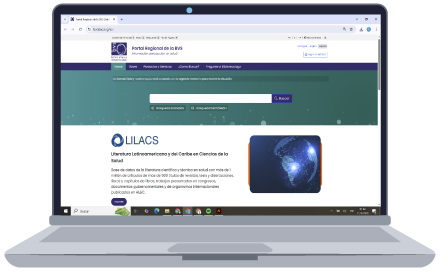
The VHL is a collaborative product coordinated by BIREME/PAHO/WHO. The VHL is also a Network of Networks. It is developed, in principle, in a decentralized and collaborative manner with institutions and information professionals from Latin American and Caribbean countries that are part of the VHL Network, also known as the Latin American and Caribbean Network on Health Sciences Information. This network collaborates with more than 50 databases and over 70 national, thematic, and institutional VHL instances. The Regional VHL Portal is developed and operated by BIREME in four languages (English, Portuguese, Spanish, and French).
Virtual Campus
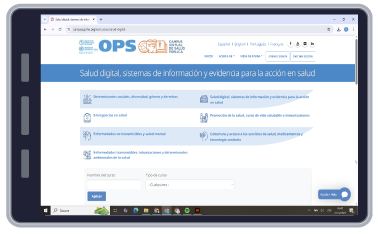
The Virtual Campus is a space to create, share, develop, and contribute to the skills and competencies of health workers.
Other Relevant Sites
Links to international reference organizations that contribute to knowledge management in CRVS:
Links to other thematic libraries on identity, Civil Registration, and Vital Statistics:
Reference Documents
Selected Bibliography on CRVS
Principles and Recommendations for a Vital Statistics System
The third revision of the Principles and Recommendations for a Vital Statistics System, published in 2014, is the latest in a series of updates since the first publication in 1953.
Guidelines on the Legislative Framework for Civil Registration, Vital Statistics, and Identity Management
These Guidelines complement the Principles and Recommendations for a Vital Statistics System, Revision 3 and replace the 1998 manual on the preparation of a legal framework.
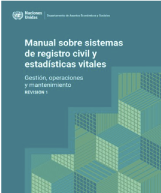
Manual on Civil Registration and Vital Statistics Systems: Management, Operation, and Maintenance
Complementary manual to the Principles and Recommendations that reviews and updates the 1998 manual with information and examples to establish or improve the management of CRVS and Identity systems.
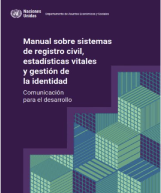
Manual on Civil Registration, Vital Statistics, and Identity Management Systems: Communication for Development
Complementary manual to the Principles and Recommendations, offering guidance on the design and strategic development of communication activities for the improvement of CRVS-ID systems. This is the first revision of the original 1998 publication.
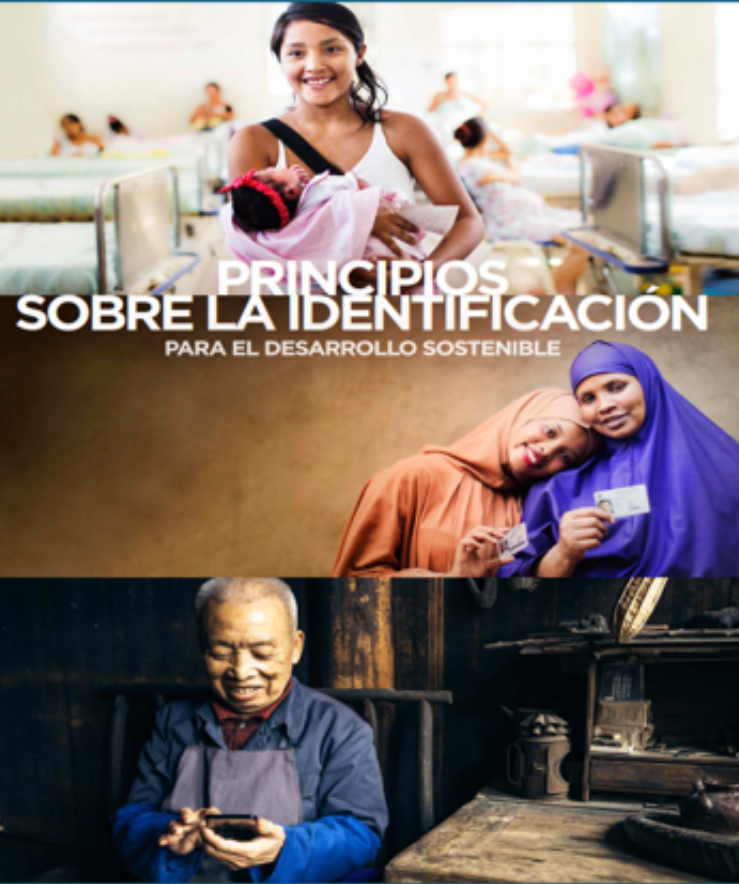
Principles on Identification for Sustainable Development: Toward the Digital Age
The Principles of the Identification for Development (ID4D) Initiative, published in 2017, adhere to a set of shared values aimed at ensuring that identification systems are inclusive, protect personal data and rights, and are designed to foster development outcomes.
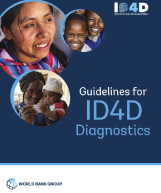
Guidelines for ID4D Diagnostics. World Bank
ID4D engagement at the national and regional levels often begins with a diagnostic exercise of existing and planned identification systems. The ID4D diagnostic methodology offers a holistic approach to a country’s identity ecosystem, including institutions, technology, laws, policies, and practices related to identification.

ID4D Practitioner’ Guide: Version 1.0
This Guide, created by the World Bank Group’s Identification for Development (ID4D) Initiative, helps practitioners design and implement identification (ID) systems that are inclusive and reliable, in line with the ten Principles on Identification for Sustainable Development and other international standards and best practices.
Technical Documents
Methodological guides, manuals, reports, and standards
SCORE for Health Data Technical Package: Tools and Standards for Essential SCORE Interventions
The SCORE for Health Data Technical Package brings together, for the first time, a set of the most effective interventions and tools to fill critical data gaps and strengthen the health data of countries, which are essential for planning and monitoring priorities.
Implementing Civil Registration of Births and Deaths in the CRVS - System Strengthening Civil Registration and Vital Statistics (CRVS) Systems - Guide 1
The Guides for Strengthening CRVS Systems provide guidance on best practices based on international standards and concepts, offering practical and operational advice for strategic planning aimed at the specific improvement of CRVS systems.
Legal and Regulatory Review Toolkit for CRVSID (Spanish)
This toolkit provides guidance for analyzing existing CRVS laws to identify legal barriers and opportunities. It consists of 13 chapters for the comprehensive legal review of a country’s CRVSID systems.
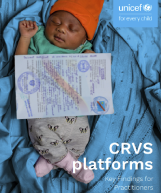
CRVS Platforms: Key findings for practitioner. UNICEF
This publication is intended for those seeking to understand and implement digitalized Civil Registration and Vital Statistics (CRVS) programs. The findings highlight a selection of CRVS platforms among existing CRVS offerings.