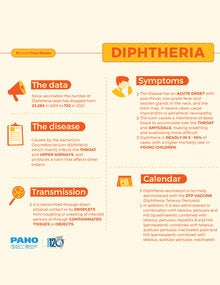
The DTP vaccine is a combination of three vaccines that immunize against three diseases caused by bacteria: Corynebacterium diphtheriae (diphtheria), Bordetella pertussis (pertussis or whooping cough), and Clostridium tetani (tetanus).
There are two main types of vaccines against Bordetella pertussis: whole-cell vaccines and acellular vaccines. Whole-cell vaccines are abbreviated as Pe (Pertussis whole) or Pw (Pertussis whole-cell), which is the vaccine used in DTPe or DTPw vaccines. Acellular vaccines are abbreviated as Pa (Pertussis acellular).
The whole-cell vaccine (Pe or Pw) is composed of suspensions of Bordetella pertussis inactivated by heat, formaldehyde, or glutaraldehyde and subsequently adsorbed onto aluminum hydroxide or phosphate. The acellular vaccine (Pa) is composed of protein fragments from the bacterium that induce an immune response. The vaccine may contain pertussis toxin (TP), pertactin (PER), filamentous hemagglutinin (HAF), and fimbriae 2 and 3, purified and inactivated.
The DT vaccine is used for active immunization against diphtheria and tetanus. It is used in people who are contraindicated for the pertussis vaccine. The dose is 0.5 mL with 30 Lf of diphtheria toxoid and 25 Lf of tetanus toxoid, adsorbed in aluminum salt gel. It is administered by deep intramuscular injection.
The Td (tetanus, diphtheria) vaccine is used for active immunization against diphtheria and tetanus. It is used in individuals over seven years of age who receive booster doses every 5 to 10 years and in pregnant women. The dose is 0.5 mL with 3-5 Lf of diphtheria toxoid and 20 Lf of tetanus toxoid adsorbed in aluminum salt gel. It is administered by deep intramuscular injection.
Types of vaccines used in the Americas region as reported by countries to PAHO
Vaccine acronym | Vaccine content | Population |
| DT | Diphtheria, tetanus | General population/routine, risk group(s), children catching up |
| DTaP | Diphtheria, tetanus, and acellular pertussis | General/routine, risk group(s) |
DTaP-HepB-IPV
| Diphtheria, tetanus, acellular pertussis (aP), hepatitis B (HepB), inactivated polio vaccine (IPV) | General population/routine |
DTaP-Hib-HepB-IPV
| Diphtheria, tetanus, acellular pertussis, Haemophilus influenzae type b (Hib), hepatitis B (HepB), inactivated polio vaccine (IPV) | General population/routine, risk group(s) |
DTaP-Hib-IPV
| Diphtheria, tetanus, acellular pertussis (aP), Haemophilus influenzae type b (Hib), inactivated polio vaccine (IPV) | General population/routine |
| DTaP-IPV | Diphtheria, tetanus, acellular pertussis (aP), inactivated polio vaccine (IPV) | General population/routine, risk group(s) |
| DT-IPV | Tetanus, diphtheria, and inactivated polio vaccine (IPV) | General population/routine |
| DTwP | Whole-cell diphtheria, tetanus, pertussis (wP) | General population/routine, risk group(s) |
| DTwP-Hib | Diphtheria, tetanus, whole-cell pertussis (wP), Haemophilus influenzae type b (Hib) | General population/routine |
| DTwP-Hib-HepB | Diphtheria, tetanus, whole-cell pertussis (wP), Haemophilus influenzae type b (Hib), hepatitis B (HepB) | General population/routine |
| Td | Tetanus and diphtheria toxoid | General population/routine (older children and adults), pregnant women, travelers, risk groups, children and adults catching up on vaccinations, healthcare workers |
| Tdap | Tetanus, diphtheria, and acellular pertussis (aP) | General population/routine (older children and adults), pregnant women, travelers, risk group(s), healthcare workers |
| Tdap-IPV | Tetanus, diphtheria, acellular pertussis (aP), and inactivated polio vaccine (IPV) | General population/routine (older children and adults), children catching up on vaccinations |
Vaccination is recommended for infants, young children, and preschool and school-aged children.
In addition, pregnant women should receive the vaccine. This is the best way to protect their newborns, as they pass on antibodies before birth.
In addition, Tdap vaccination is recommended for healthcare workers, especially those in maternity wards and caregivers of infants under one year of age.
PAHO/WHO recommends a series of three primary doses of vaccination followed by three booster doses. The primary series should begin at six weeks of age, and subsequent doses should be administered at least four weeks apart. The three booster doses should preferably be given during the second year of life (12–23 months), at 4–7 years, and at 9–15 years. Ideally, at least four years should elapse between booster doses.