
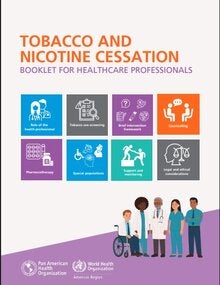
Tobacco and nicotine cessation: Booklet for healthcare professionals
|
OverviewTobacco use remains the leading preventable cause of premature death worldwide, responsible for over 7 million deaths each year, including 1.6 million due to secondhand smoke exposure. The burden of tobacco-related disease is vast, encompassing cardiovascular disease, chronic respiratory illnesses, diabetes, and numerous forms of cancer. Beyond its devastating health effects, tobacco use also inflicts significant socioeconomic and environmental harm, increasing healthcare costs, reducing productivity, and contributing to environmental degradation. The urgency of addressing tobacco use has been further underscored by recent global health crises, such as the COVID-19 pandemic, which has revealed that smokers are at greater risk for severe outcomes. In response to this ongoing challenge, the Pan American Health Organization has developed this evidence-based booklet to equip primary care professionals with practical tools, grounded in World Health Organization recommendations, to make tobacco cessation a routine part of clinical care. The publication details quick and effective strategies, including the 5As (ask, advise, assess, assist, and arrange) and 5Rs (relevance, risks, rewards, roadblocks, and repetition) models, motivational interviewing techniques, cognitive–behavioral approaches, and guidance on first-line pharmacotherapies. It also provides practical advice on integrating tobacco use screening into clinical workflows, documenting interventions, and leveraging team-based care models to maximize impact. A key strength of the booklet is its focus on adapting interventions for special populations, such as pregnant women, adolescents, individuals with chronic diseases or mental health conditions, and marginalized groups. Structured follow-up plans are included to prevent relapse, and the resource highlights the use of technology—such as electronic health records, telehealth, and mobile apps—to support ongoing cessation efforts and improve patient engagement. Healthcare professionals are positioned as pivotal agents of change. By incorporating these evidence-based practices into routine care, healthcare teams can expand access to cessation support, save lives, and reduce the burden of tobacco-related diseases, ultimately advancing health equity and improving outcomes across diverse populations. |