
Pandemic influenza continues to pose a global public health threat. To strengthen surveillance and response capacities across the region, the Pan American Health Organization (PAHO) recently held a virtual seminar to present progress, country experiences, and proposals related to the use of the Pandemic Influenza Severity Assessment (PISA) tool.
Opening and objectives of the seminar
The event was opened by Dr. Andrea Vicari from PAHO's Health Emergencies Department, who emphasized the comprehensive approach of PISA in evaluating not only virus transmissibility, but also disease severity, impact, and stress on health systems. She expressed gratitude to international experts and national representatives for their participation.
Dr. Aspen Hammond and Dr. Cédric Van Beneden from WHO’s Global Influenza Program provided an overview of PISA's evolution since its first release in 2017 and the most recent update in 2024. They highlighted how the tool has been adapted to incorporate lessons from the COVID-19 pandemic, including the need to monitor healthcare system capacity.
Technical advances and applications
The experts explained that PISA enables both weekly and end-of-season assessments of influenza severity by comparing current data with historical surveillance thresholds. Key indicators include transmissibility, disease seriousness, morbidity and mortality, and healthcare system impact.
Examples of countries already using the methodology were shared, and the flexibility of the tool to adapt to various data sources—such as syndromic surveillance, hospitalization rates, and positivity trends—was emphasized.
Regional experience and implementation in Chile
Representatives from PAHO’s regional team and the Chilean Ministry of Health presented the country’s experience with PISA implementation. Dr. Paola Rodríguez Ferrari described how Chile integrated specific indicators into its national surveillance system, applying PISA not only for influenza but also for other respiratory viruses like RSV and SARS-CoV-2.
Chile uses the tool weekly as part of its national “Winter Campaign,” a health strategy that guides planning, resource prioritization, and decision-making at both national and regional levels. Age-disaggregated data has proven essential to identifying vulnerable populations and adapting interventions accordingly.
Proposals and future perspectives
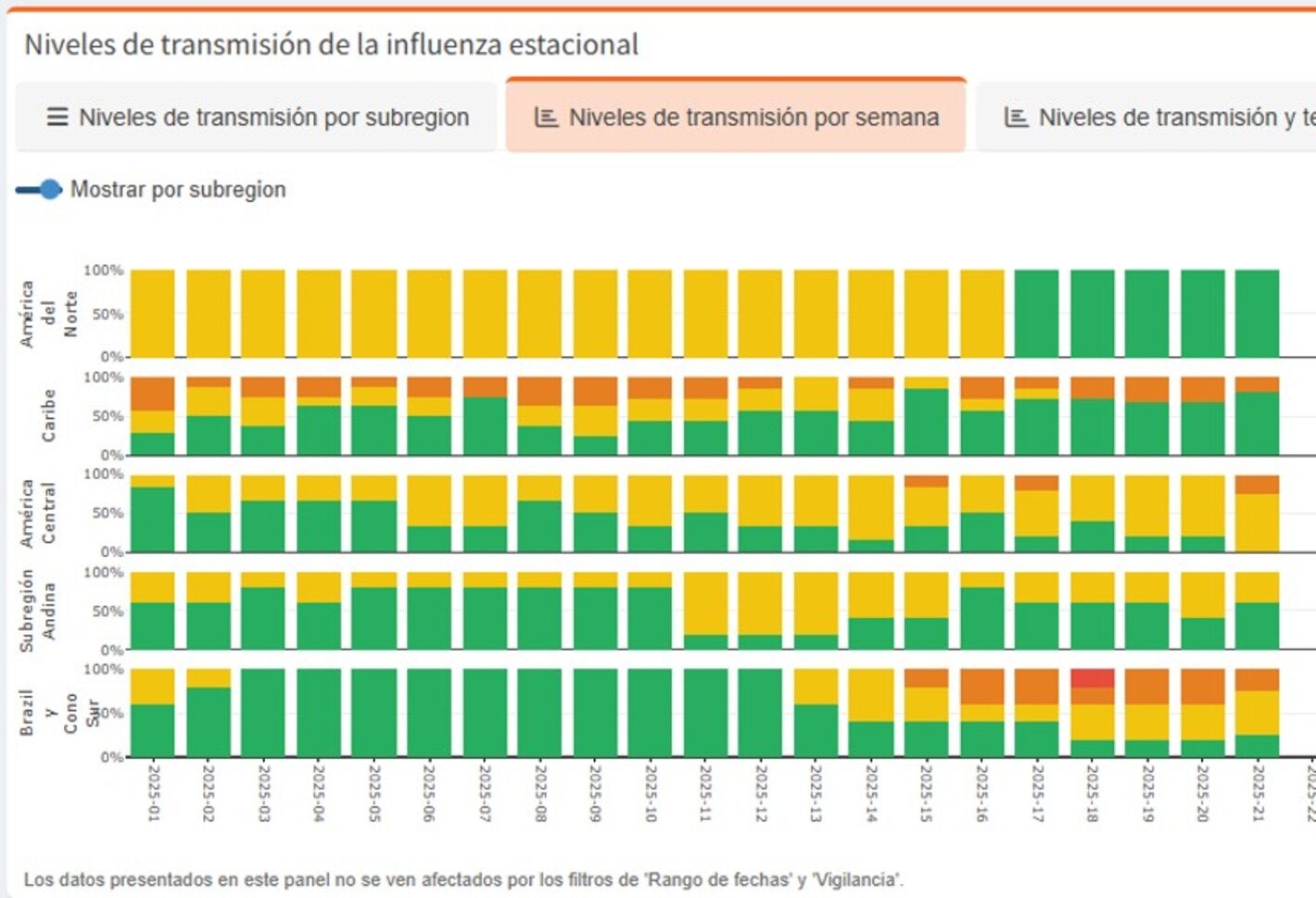
During the seminar, PAHO proposed expanding the use of PISA among countries that do not yet report regularly, by streamlining data processing and generating indicators that can feed into regional and global platforms. Dashboards displaying transmission levels by subregion and epidemiological week were presented to support real-time risk assessments.
PAHO reaffirmed its commitment to providing technical assistance, training, and tools to facilitate the adoption of PISA as a core component of respiratory virus surveillance across the Americas.
The seminar highlighted that the PISA framework helps countries assess influenza and respiratory diseases by combining historical and real-time data. It can use single or multiple indicators to evaluate transmissibility, severity, and healthcare impact. Updates from COVID-19 include extra metrics and flexible thresholds, making data more accessible and adaptable globally. Adoption is growing, with more countries integrating PISA into their surveillance systems.