
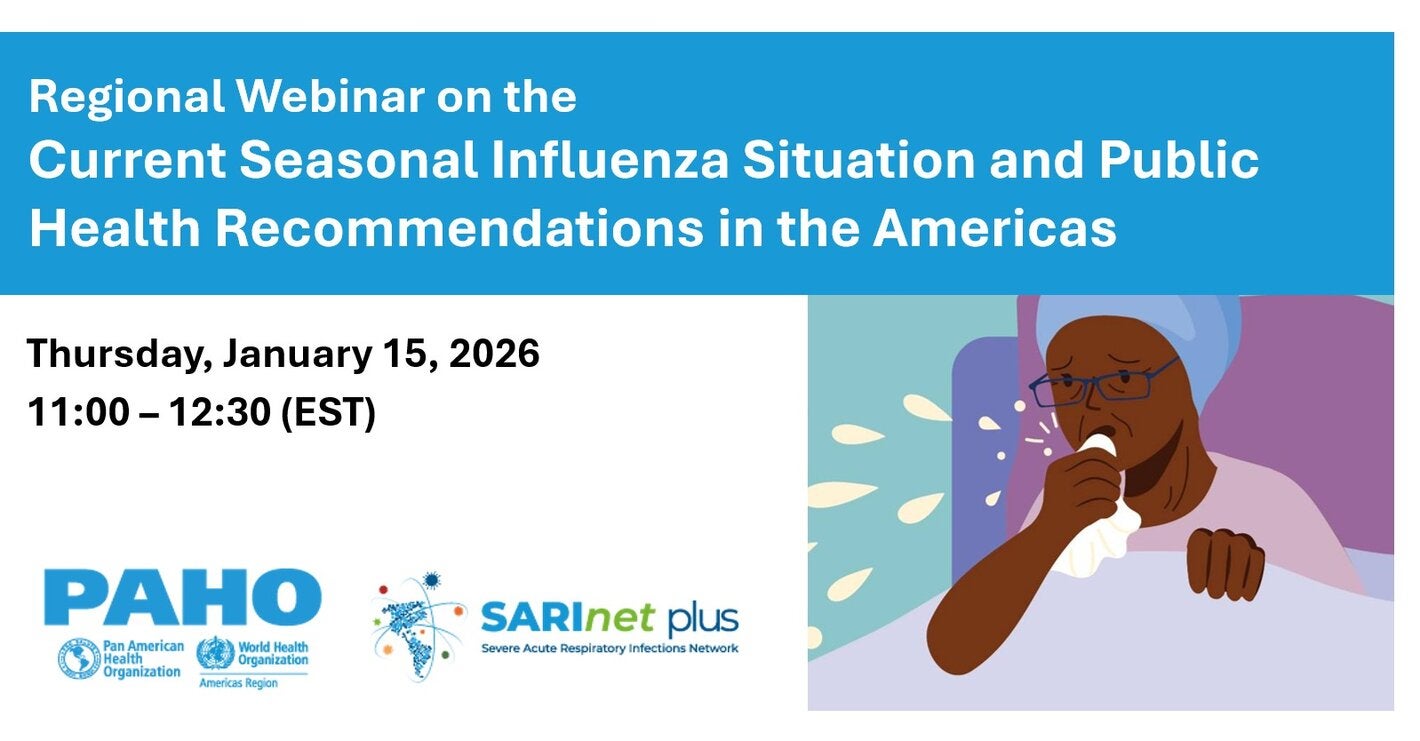
With the aim of supporting ministries of health in making timely decisions regarding the circulation of respiratory viruses, the Pan American Health Organization/World Health Organization (PAHO/WHO), through its respiratory virus team, recently held a regional webinar to provide an update on the epidemiological situation of seasonal influenza and respiratory syncytial virus (RSV) in the Americas, as well as to review key public health recommendations for the remainder of the 2025-2026 season.
During the opening, the relevance of this technical space was highlighted as part of the regional priorities for surveillance, preparedness, and response, in a context marked by a significant increase in influenza activity in several subregions since the end of 2025. The data presented show an early start to the season, accelerated transmission, and the predominance of the influenza A(H3N2) subtype in multiple countries in the Region.
The regional overview, presented by PAHO specialists, showed a sustained increase in laboratory test positivity, accompanied by an increase in outpatient visits and hospitalizations associated with influenza. These impacts have been particularly noticeable among high-risk groups, such as older adults and young children. The trends observed in the Americas are consistent with those recorded in other regions of the world, which are facing an early and intense influenza season, but with no warning signs in terms of hospitalization rates.
The webinar analyzed the concurrent circulation of other respiratory viruses, particularly respiratory syncytial virus (RSV), in the context of the respiratory season in the Region. Available data were reviewed and considerations were exchanged on how this co-circulation may be reflected in the demand for health services, especially in pediatric care, as well as the importance of surveillance and health planning to support countries' responses.
The exchange of national perspectives was another key achievement of the activity. Representatives from surveillance teams in Spain and Barbados shared current data from their respiratory virus surveillance systems, as well as the impact this has on their health services. This space allowed for the identification of commonalities and specific needs, fostering learning among countries and regional technical cooperation.
In response to the epidemiological situation, PAHO/WHO recalled the epidemiological alerts issued in December 2025 and January 2026, urging Member States to comprehensively strengthen virological and epidemiological surveillance, health service preparedness, influenza vaccination, appropriate clinical management of cases, and clear and timely risk communication.
Through these types of activities, PAHO continues to support countries in the Region in their efforts to mitigate the impact of respiratory viruses, protect the most vulnerable populations, and move toward more resilient health systems that are better prepared to face seasonal and emerging threats.