
Extreme hydrometeorological events, such as hurricanes, torrential rainfall and resulting floods and landslides, are a constant threat to the region. According to data from the Center for Research on the Epidemiology of Disasters (CERD), these events have led to 57% of emergencies in the Americas, affecting more than 175 million people. Although 2023 could present a below-average hurricane…
Webinars
-
Watch the recording:
Download the presentations
-
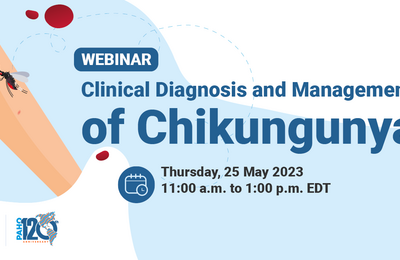
Date and time
Thursday, 25 May 2023.
11:00 a.m. to 1:00 p.m. Washington D.C. time
-
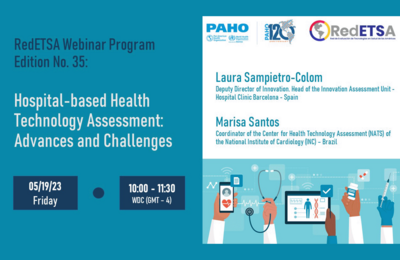
The Pan American Health Organization and the Health Technology Assessment Network of the Americas (RedETSA), invite you to a new edition of the RedETSA Webinar Program entitled "Health Technology Assessment in Hospitals: Advances and Challenges" to be held on Friday, May 19, from 10:00 a.m. to 11:30 a.m. (EDT/WDC). There will be simultaneous interpretation in Spanish, English and Portuguese.…
-
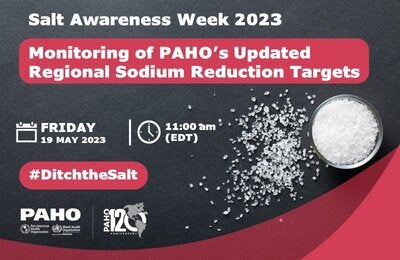
Join us on Friday, 19 May, in the webinar "Monitoring of PAHO’s Updated Regional Sodium Reduction Targets" as part of the activities of the Salt Awareness Week 2023 (15-21 May) #Ditch the Salt. The event will be broadcasted vía Zoom from 11:00 am to 1:00 pm (Washington DC time) and will have simultaneous translation in English, Spanish and…
-
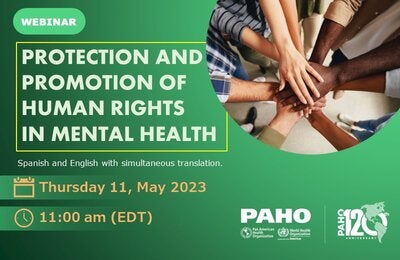
Join us on Thursday, 11 May, in the webinar "Protection and promotion of Human Rights in Mental Health". The event will be broadcasted vía Zoom from 11:00 am to 12:00 pm (Washington DC time) and will have simultaneous translation in English and Spanish.
-
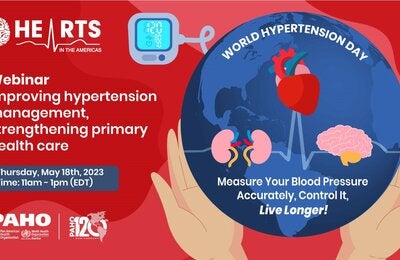
In observance of World Hypertension Day 2023 - commemorated every May 17th, the Pan American Health Organization (PAHO), through the HEARTS in the Americas Initiative, kindly invites you to attend the webinar on Thursday, May 18th, 2023.
-
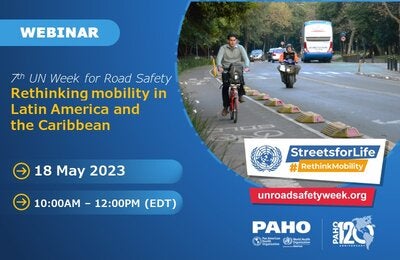
Join us on Thursday, 18 May, in the webinar "Rethinking mobility in Latin America and the Caribbean", hosted by PAHO as part of the activities of the 7th UN Road Safety Week (15-21 May). The event will be broadcasted vía Zoom from 10:00 am to 12:00 pm (Washington DC time) and will have simultaneous translation in English, Spanish and Portuguese…
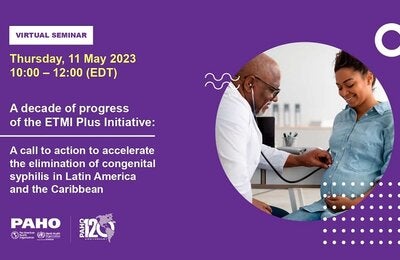
The ETMI Plus Initiative aims to achieve and sustain the elimination of mother-to-child transmission (MTCT) of HIV, syphilis, hepatitis B, and Chagas disease as a public health problem.
-
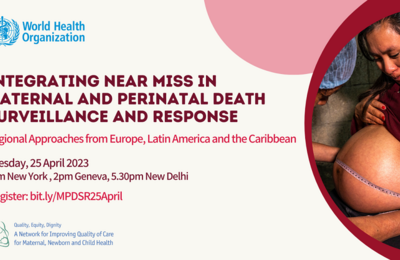
Date: April 25 | Time: 8:00 am (WDC)