
The HEARTS technical package brings a consistent, proven treatment methodology for hypertensive patients. Countries are choosing and adapting the appropriate protocol from HEARTS for their local context. The use of standardized treatment protocols and essential medications may improve hypertension control in primary health care across the Region of the Americas

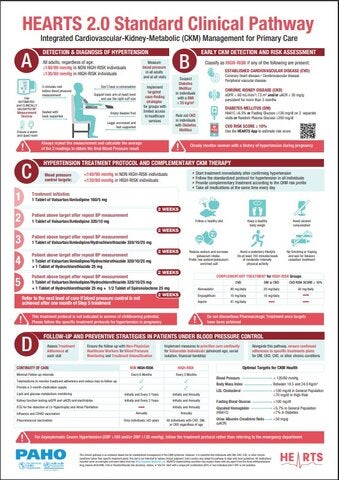
HEARTS 2.0 Clinical Pathway
The HEARTS 2.0 Clinical Pathway represents the evolution of HEARTS in the Americas toward a comprehensive approach to hypertension and cardio-reno-metabolic prevention. Building upon the previous version, this new implementation tool maintains hypertension control as the entry point to preventive care, while expanding its recommendations to strengthen the management of related conditions, such as diabetes and chronic kidney disease. Thus, HEARTS 2.0 incorporates the best evidence from leading global clinical practice guidelines and operationalizes it into a practical tool designed to enhance the quality of care in Primary Health Care.

1. AMLODIPINE (5 mg)
2. CHLORTHALIDONE (12.5 mg; 25 mg)
3. LISINOPRIL (20 mg; 40 mg)
4. LISINOPRIL + AMLODIPINE (10 mg + 5 mg; 20 mg + 5 mg; 20 mg + 10 mg)
5. LISINOPRIL + HYDROCHLOROTHIAZIDE (10 mg + 12.5 mg; 20 mg + 12.5 mg; 20 mg + 25 mg)
6. TELMISARTAN (40 mg; 80 mg)
7. TELMISARTAN + AMLODIPINE (40 mg + 5 mg; 80 mg + 5 mg; 80 mg + 10 mg)
8. TELMISARTAN + HYDROCHLOROTHIAZIDE (40 mg + 12.5 mg; 80 mg + 12.5 mg; 80 mg + 25 mg)