The Organization will support improvements in health technologies and critical infrastructure, while providing technical cooperation to support Grenada's efforts to review and modernize key public health laws.
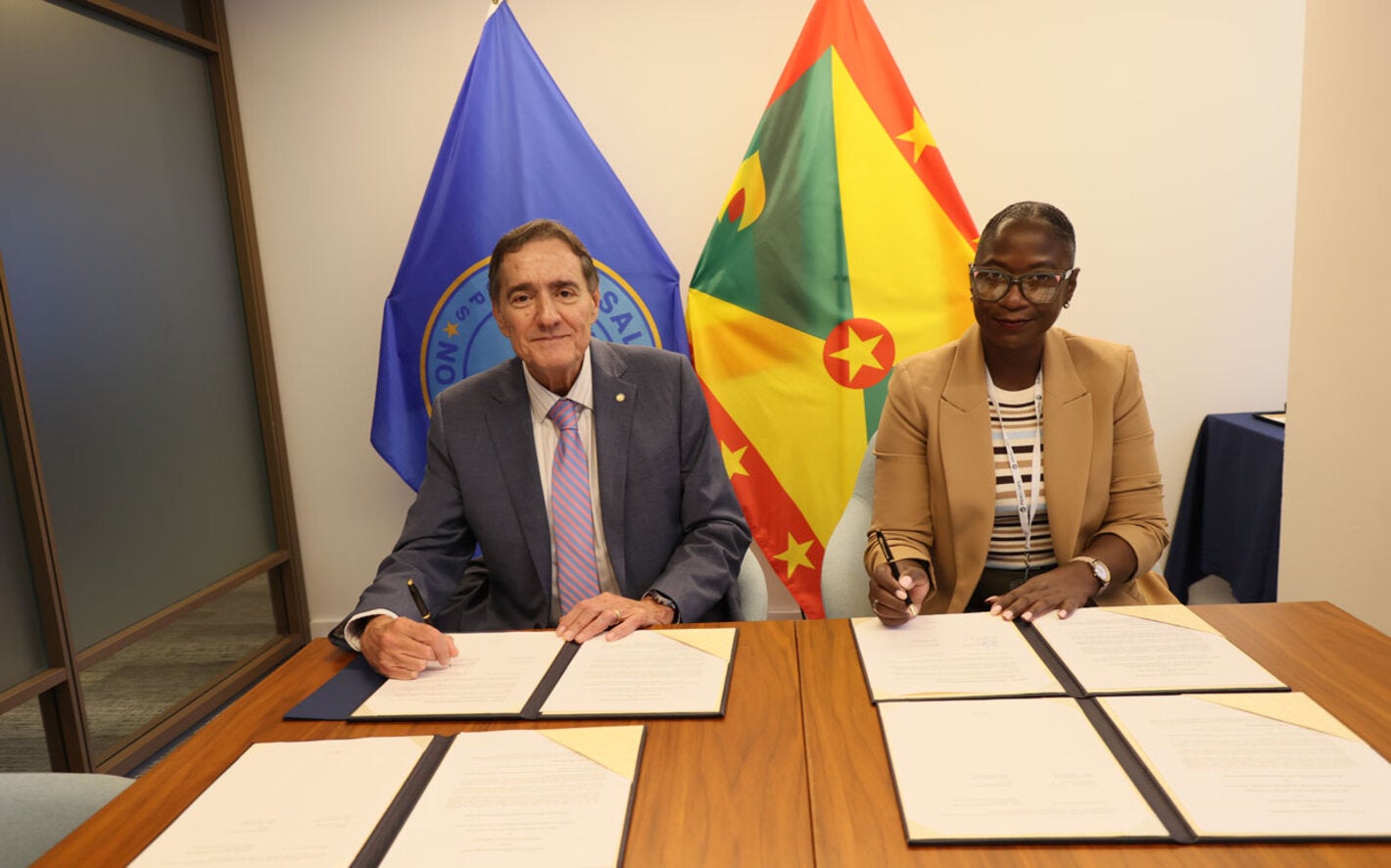
Washington, D.C., 1 October 2026 (PAHO) – The Pan American Health Organization (PAHO) and the Government of Grenada have signed new cooperation agreements aimed at strengthening the country's health system through improvements in health technology management and support for Grenada's efforts to review and modernize key public health legislation.
The agreements were signed during a meeting held alongside the 63rd Directing Council of PAHO and reflect a shared commitment to building more resilient, efficient, and people-centered health systems capable of responding to current and emerging public health challenges.
“Strong health systems depend not only on qualified health workers and modern infrastructure, but also on effective governance and legislation that enable countries to respond to evolving health challenges,” said Dr. Jarbas Barbosa, Director of PAHO. “Through this cooperation, we are supporting Grenada in strengthening health technologies and advancing the policy and legal frameworks needed to protect and improve people’s health.”
Under the agreements, PAHO will support Grenada in strengthening the management of medical equipment, oxygen systems, and critical hospital infrastructure, while helping to build local technical expertise and modernize systems used to manage healthcare technologies.
The initiative seeks to enhance the reliability and safety of health services by improving the management of healthcare technologies throughout their lifecycle, from procurement and maintenance to monitoring and long-term planning.
Activities will include technical assessments, workforce development, strengthening clinical engineering capacities, and modernization of critical systems that support the delivery of care.
The cooperation will also support Grenada in strengthening the integration of technical teams responsible for infrastructure, medical gases, and biomedical engineering, helping to move from a maintenance-focused approach toward comprehensive health technology management. This includes strengthening systems for asset inventories, technical documentation, digital management, preventive maintenance, and planning.
A second component of the cooperation will provide technical support to Grenada's ongoing efforts to review and modernize key health legislation, including the Public Health Act, Quarantine Act, Immunization Act, and Pharmacy Act. The process aims to align the country's legal framework with contemporary public health practice, international and regional standards, and national development priorities.
The legislative modernization effort aims to strengthen preparedness for public health emergencies, improve immunization governance and outbreak readiness, enhance access to safe and effective medicines and health technologies, and support progress toward universal access to health and universal health coverage.
The cooperation will support a comprehensive review of existing legislation and related policies and regulations, development of policy recommendations, preparation of technical inputs for the reform process, and the design of implementation and transition plans. The process will involve relevant government institutions and stakeholders to ensure that any proposed reforms are practical, coordinated and responsive to the country's needs.
Grenada, like many small island developing states in the Caribbean, faces a complex health landscape shaped by population health needs, climate-related risks, the growing burden of noncommunicable diseases, and the continued need for preparedness against infectious disease outbreaks and other health emergencies.
By addressing both the operational and regulatory dimensions of the health sector, the cooperation agreements seek to ensure that health services are supported by modern infrastructure, effective technologies, and legislation that enables timely, equitable, and evidence-based public health action.
The agreements form part of PAHO's ongoing technical cooperation with Grenada and its broader commitment to supporting countries of the Americas in building stronger, more resilient health systems and advancing universal health.