The Brasília Charter marks a first step toward creating a regional alliance, setting out shared priorities for cooperation in hospital management, research, workforce development and emergency preparedness.
Brasília, Brazil, 13 November 2026 (PAHO) – Representatives of public university hospitals and health authorities from across the Americas are advancing the creation of a regional alliance aimed at strengthening health systems through greater cooperation in specialized care, health workforce training, research and innovation.
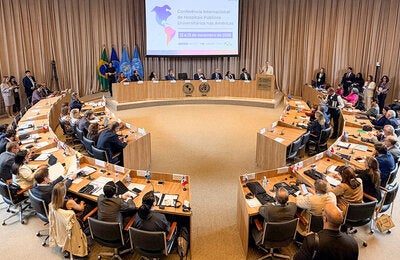
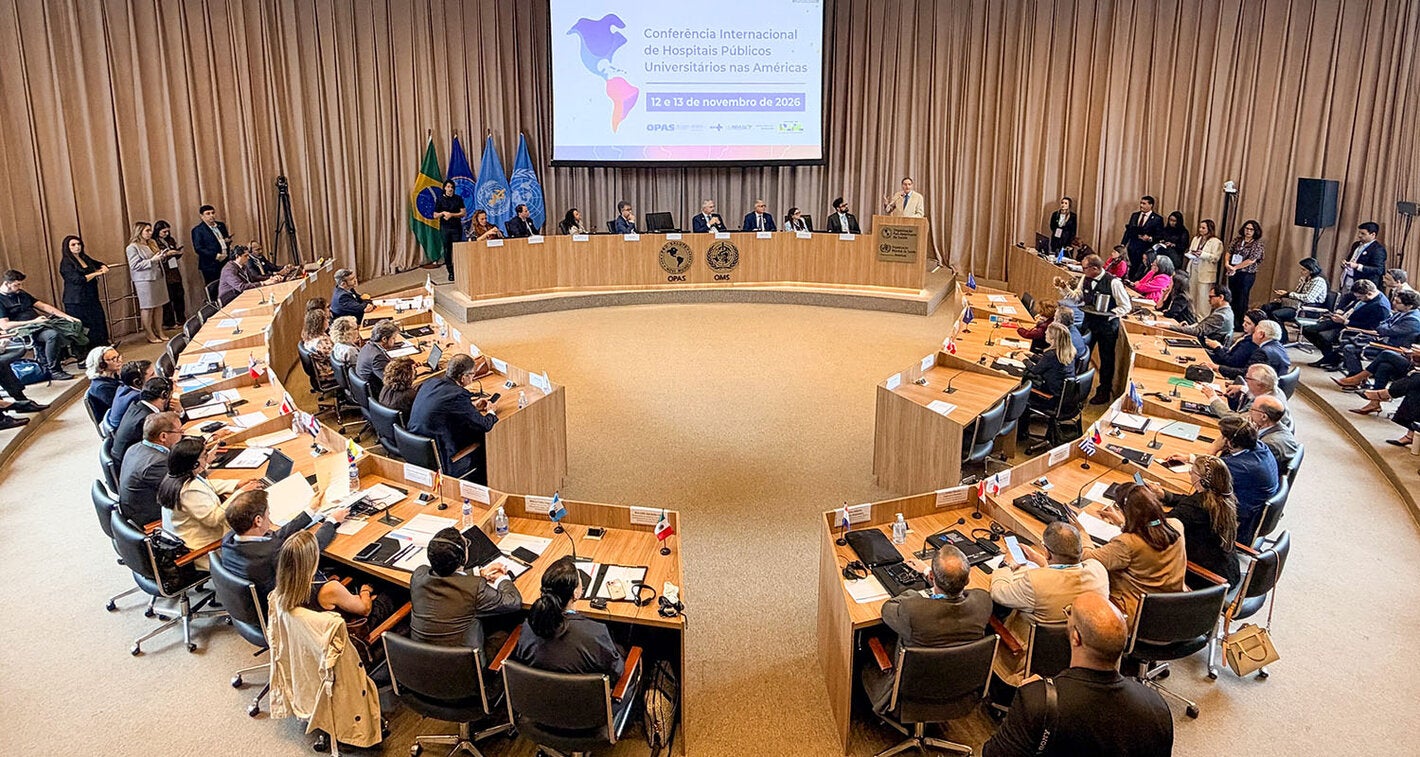
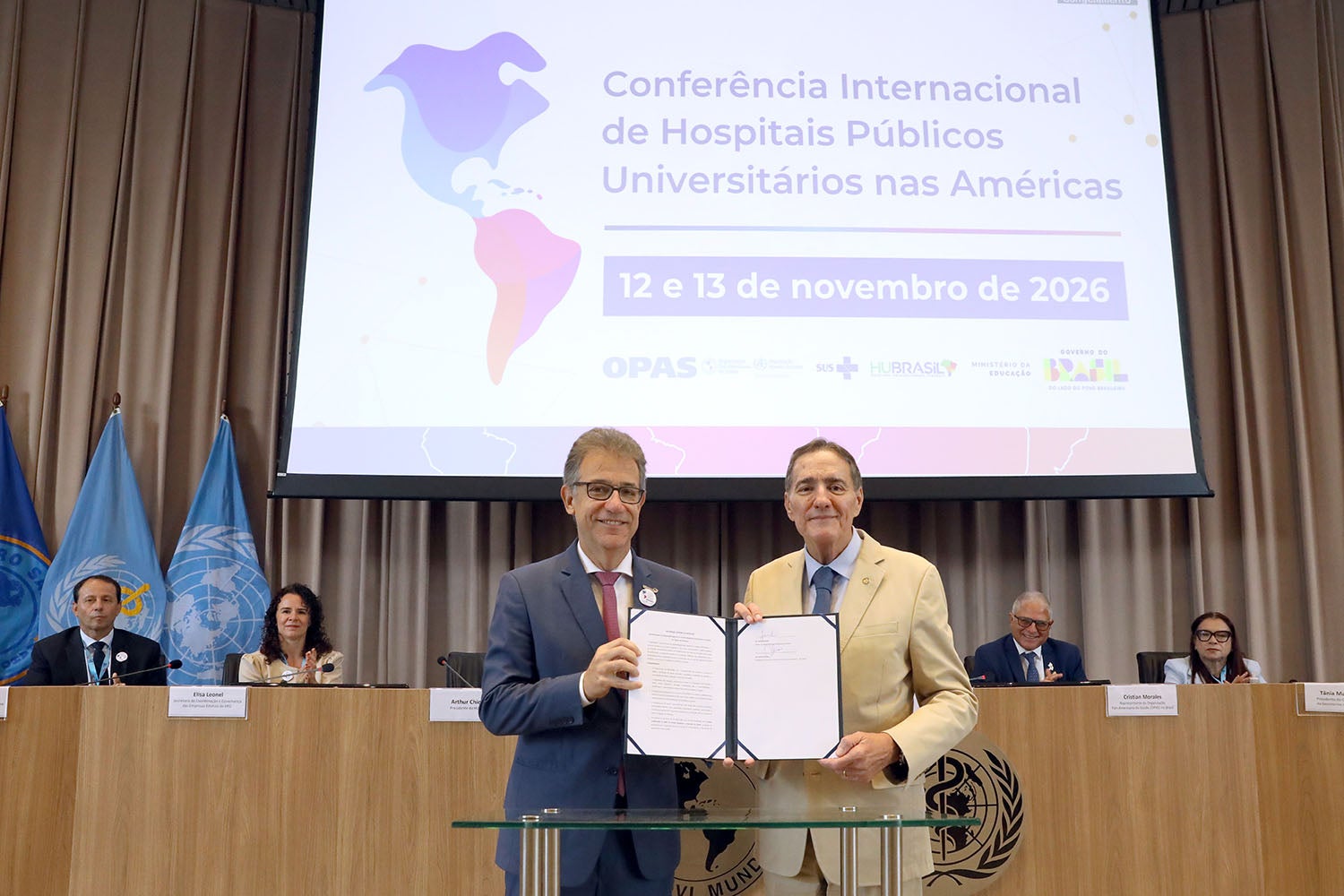
The commitment was formalized in the Brasília Charter, adopted during the International Conference of Public University Hospitals in the Americas, which brought together representatives from 16 countries across the region in Brasília on 12–13 November. The conference was organized by the Pan American Health Organization (PAHO) and HU Brasil, the public company that manages Brazil's federal university hospitals.
The Charter outlines a shared vision and priorities to guide the creation of the proposed Alliance of Public University Hospitals in the Americas. These include cooperation in hospital management, joint clinical research, health workforce training, digital innovation and emergency preparedness. It also calls for coordinated action to strengthen the role of public university hospitals in shaping health, education, science and technology policies.
Public university hospitals play a unique role in health systems. In addition to providing specialized care for patients with complex medical needs, they train future doctors, nurses and other health professionals and conduct research to improve diagnosis and treatment. By bringing these three functions together, they help strengthen the quality of care and health systems’ capacity to respond to population needs.
As referral centers within integrated health service networks, university hospitals can support primary health care providers through specialist consultations, shared clinical guidelines and continuing education. Yet many face fragmented financing, growing demand for complex care, and limited integration with other health services.
These challenges are particularly pressing as populations age and the burden of chronic diseases increases across the region.
According to a 2025 PAHO report, 14 of 39 countries in the Americas face shortages of doctors, nurses and midwives. Without further action, the region could face a shortfall of between 600,000 and 2 million health workers by 2030.
“For decades we have defined university hospitals by their threefold mission of care, teaching and research. That is no longer enough. University Hospitals must assume a central role within Integrated Health Services Networks, while building strategic partnerships locally, nationally and internationally,” said PAHO Director Dr. Jarbas Barbosa.
“The integration of hospitals into health service networks to provide integrated, comprehensive, and high-quality care is essential. We will not improve our health systems if we treat hospitals, and university hospitals in particular, as isolated entities within these networks,” said Arthur Chioro, President of HU Brasil.
Strengthening cooperation and addressing shared challenges
During the two-day conference, participants examined challenges related to hospital governance, sustainable financing and integration with national health systems, as well as the need to better align specialist training with population health needs, particularly in underserved areas.
Governance arrangements vary considerably across the region, often involving complex relationships between health and education authorities. In Argentina, Chile, and Paraguay, hospitals operate under university ownership. In Brazil, HU Brasil manages a network of 45 federal university hospitals, providing specialized care through the country's Unified Health System while supporting education and research. In Colombia, university hospital status is tied to quality accreditation, while in Cuba medical education and health care operate under a single health authority.
In Uruguay, a 2025 agreement between public health authorities and the University of the Republic strengthened the integration of Hospital de Clínicas, the country's only university hospital, into the national health system, with the aim of improving access to specialized care for approximately 350,000 public health system users.
PAHO will support the alliance’s work through technical cooperation in health services and workforce development, including efforts to strengthen integrated health service networks and improve health workforce capacity development.
The Brasília Charter also invites other university hospitals, governments and international organizations across the Americas to join the initiative, expanding the alliance and creating further opportunities for collaboration among institutions facing shared health system challenges.