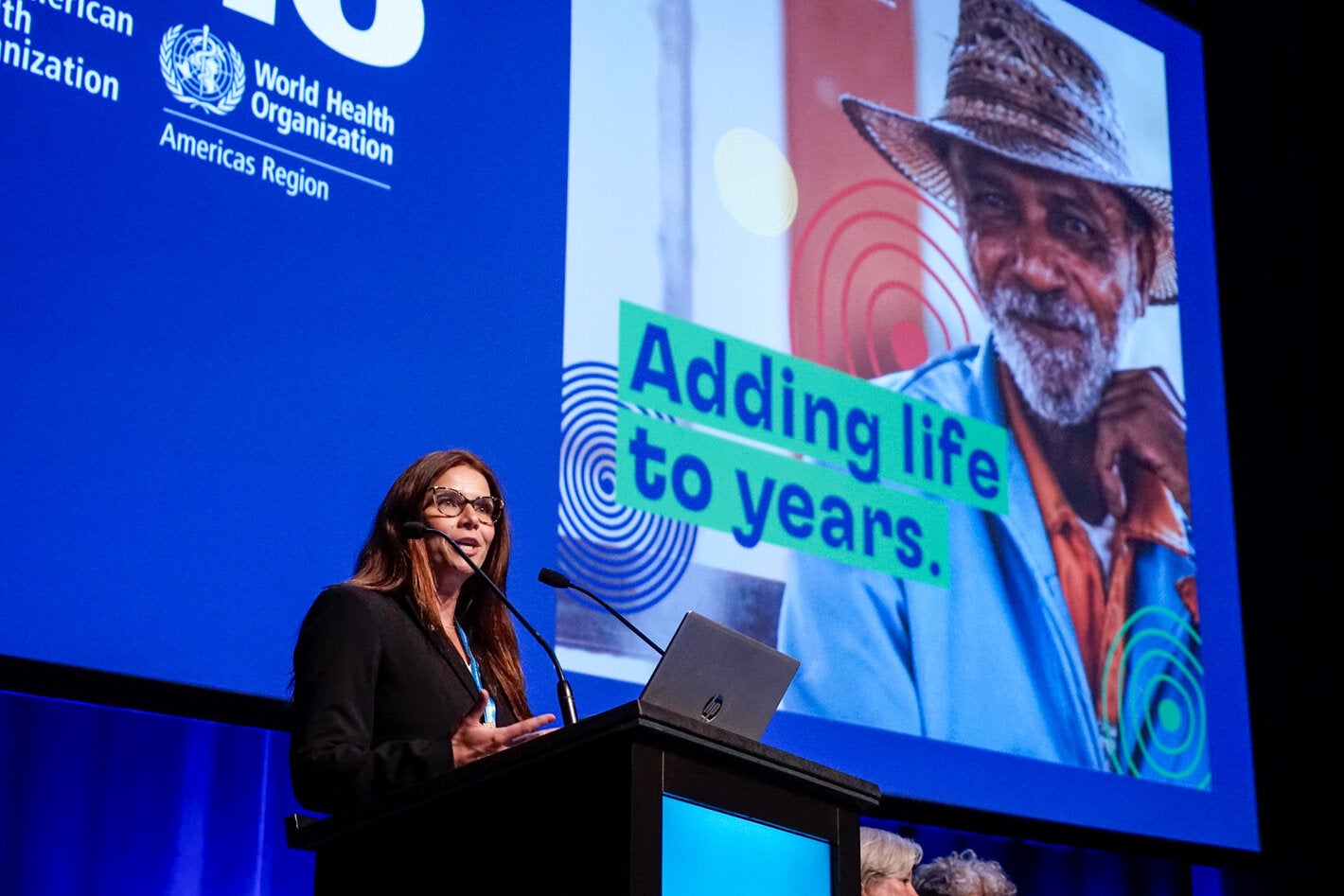
San Sebastián, Spain, 16–18 June 2026 - Countries from across the Region of the Americas actively participated in the 3rd World Congress of Age-Friendly Cities and Communities, reaffirming their commitment to advancing environments that promote healthy and inclusive aging.
The Congress brought together representatives from more than 60 countries to exchange experiences, strengthen collaboration, and showcase progress in building communities that support people of all ages.
Participants from the Region included national and subnational authorities, such as the Ministry of Health of Costa Rica; the Governments of Paraná and São Paulo in Brazil; and representatives from Mexico, including the state of Nuevo León and the municipality of Zapopan, as well as participants from Chile and Colombia. This reflects the growing engagement of the Americas in the Global Network of Age-Friendly Cities and Communities.
A key highlight of the participation from the Region was the recognition of Costa Rica’s commitment to the initiative, including the presentation of a certificate of affiliation to their Ministry of Health of the WHO Global Network for Age-Friendly Cities and Communities, underscoring the country’s sustained efforts to integrate healthy aging into national and local public health strategies.
“Communities are diverse, with different realities and priorities, but the Age‑Friendly Cities and Communities program adapts to older people’s needs in each context, enabling tailored and effective local responses”, stated Dr. Patricia Morsch, Regional Advisor on Healthy Aging at PAHO, who presented during the second Plenary of the Congress.
PAHO continues to support countries and territories of the Region in advancing the Age-Friendly Cities and Communities network through technical cooperation and capacity-building. The initiative remains flexible and inclusive, welcoming not only cities but also rural communities, municipalities, and other subnational entities committed to creating environments that support healthy aging across the life course.
Through sustained collaboration and regional leadership, countries of the Americas continue to play an active role in shaping global efforts to ensure that all people can age in supportive, inclusive, and age-friendly environments. The Region stands out as the one with the largest number of members in the Global Network of Age Friendly Cities and Communities, reaching the milestone of over 1,000 members in 2025.
For more information on age-friendly cities and communities in the Region of the Americas, please visit: https://www.paho.org/en/topics/age-friendly-cities-and-communities