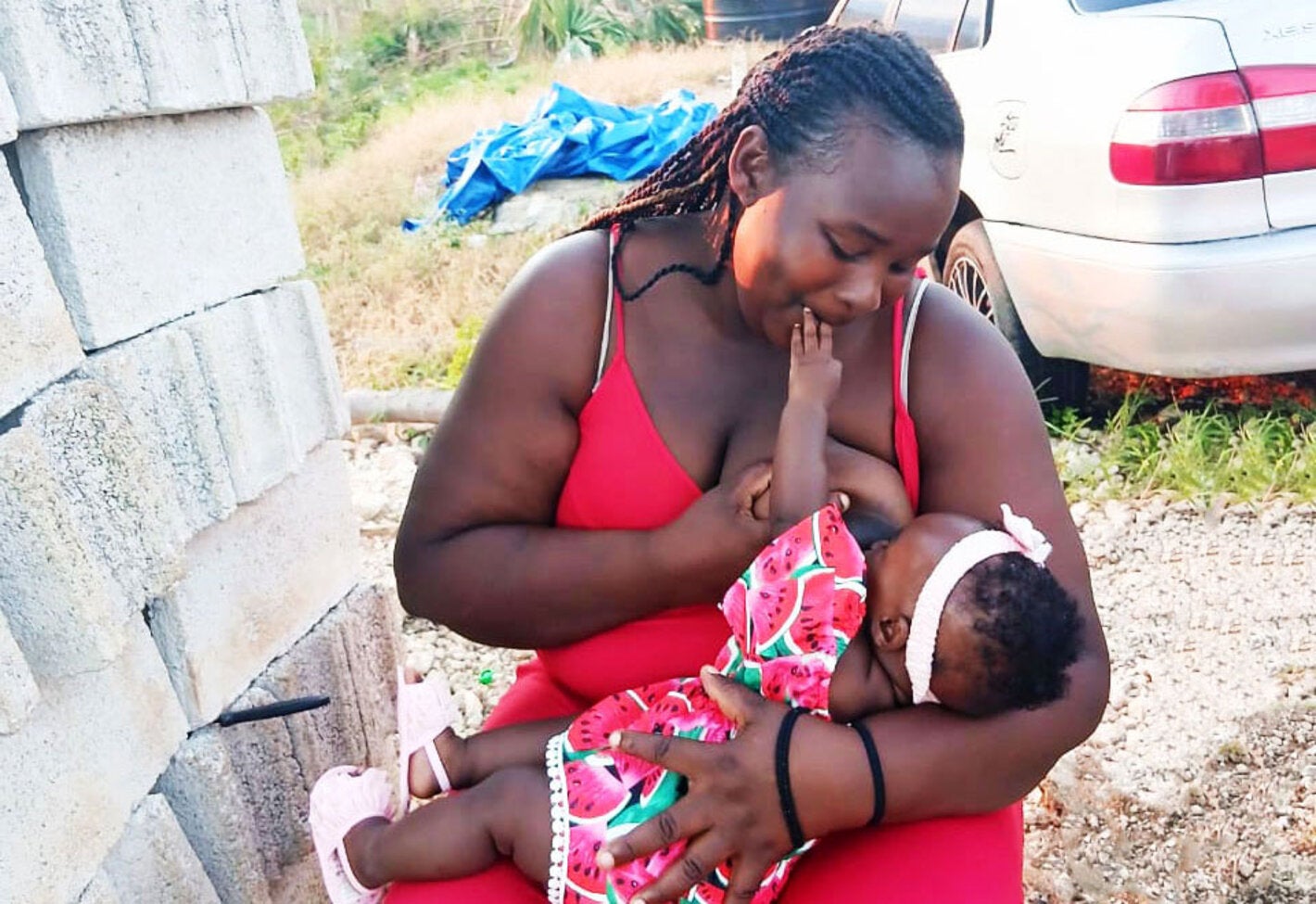
Kingston, Jamaica, 10 December 2025 (PAHO/WHO) - In the days leading up to Hurricane Melissa, Niesha Smith, a mother in Lacovia, St. Elizabeth, did what many other Jamaicans did: she stocked up on non-perishable items such as dry food and tinned goods. She filled her pantry with enough to keep her household fed for several days. But when she looked at her six-month-old daughter, Daniela, she felt a quiet sense of relief. Feeding her baby would not be another worry.
Since the storm, Niesha has been without electricity and running water. Like many in her community, she faces daily challenges such as getting her phone charged, keeping food safe, accessing clean water, and coming to terms with the devastation around her. “For us adults, you just work with it,” she says, “but when you have a baby, every little thing matters.”
Mothers in Niesha’s situation face similar challenges across Jamaica, and breastfeeding has proven to be the safest and most reliable solution for infants in emergency conditions. For Niesha, concerns about her baby’s welfare are less overwhelming because Daniela is still breastfeeding. Because breastmilk is always ready and safe, Niesha does not have to worry about spoiled formula or unsafe water.
“Breastfeeding really helps me care for and nourish my daughter, even more now with the disruption caused by the hurricane. Life is a bit more difficult as we try to pick up the pieces after the storm. For me, breastfeeding is convenient because it is ready to go. Water has been a major challenge since the hurricane, and the cost has gone up significantly, along with transportation. It doesn’t cost me anything to breastfeed my baby, and it’s more nutritious,” she explains.
The simplicity of breastfeeding gives Niesha peace of mind despite the challenges brought on by Hurricane Melissa. “I am not worried at all about feeding Daniela because breastmilk is clean, it is always ready, and I don’t have to depend on anything else.”

Limited access to safe water increases the risk of waterborne diseases, such as leptospirosis, making breastfeeding even more critical in emergencies. For mothers who cannot breastfeed, authorities recommend using bottled or otherwise safe water to prepare formula, carefully sterilizing feeding equipment, and following instructions closely to protect infants from illness.
“Breastfeeding is very important. As a matter of fact, even more important than before the storm because some water might not be safe for drinking or preparing feeds,” she adds.
For Niesha, breastfeeding is more than convenience; it has also given her peace of mind, especially with warnings about contaminated water sources and now leptospirosis and other diseases. “Even though everything is upside down, at least I know she is getting good nutrition and staying healthy,” she says. Each day, as she nurses Daniela, she does so knowing that her baby is receiving all the nutrients she needs.
Niesha’s experience reflects the best practices for breastfeeding.
The Pan American Health Organization (PAHO) and UNICEF recommend that in emergency situations, breastfeeding is especially critical, as it provides a safe, sustained source of nutrition and essential protection against infection in unsanitary conditions or where access to clean water is limited.
Exclusive breastfeeding provides all the nutrients, including water, that a baby needs for the first six months of life. Breastfeeding not only gives children the best start in life, but it also benefits maternal health, helps protect against non-communicable diseases (NCDs), and supports environmental sustainability.