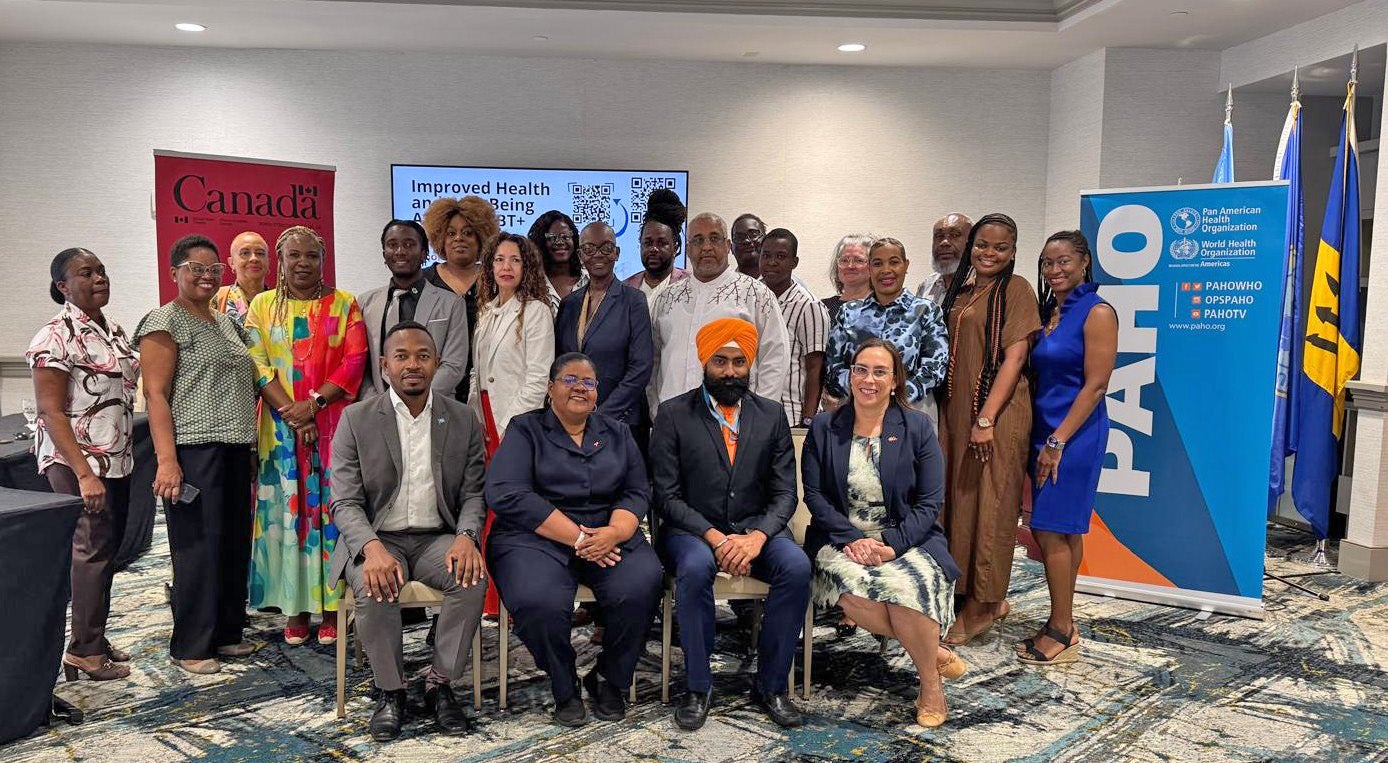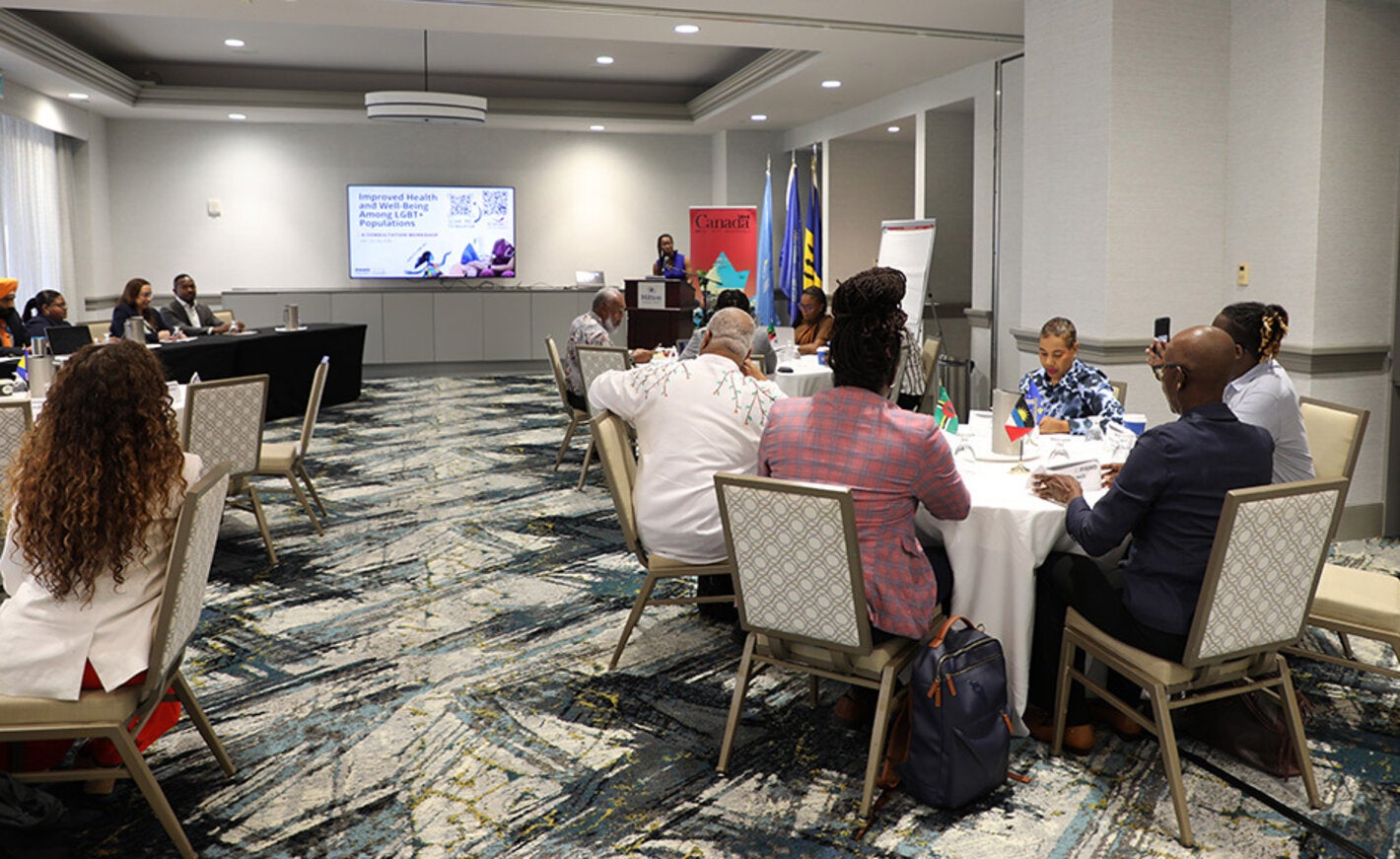
Bridgetown, Barbados, 10 July 2025 (PAHO) - A two-day consultation, ‘Improved Health and Well-Being among LGBT+ Populations’, provided communities from Barbados and the Eastern Caribbean Countries with a safe space to share, learn and chart the way forward.
Through the support of Global Health Canada, approximately 20 individuals from Barbados, St. Vincent and the Grenadines, Antigua and Barbuda, St. Kitts and Nevis, Dominica and St Lucia, gathered to:
- Identify health and social protection inequalities experienced by LGBT+ people through a participatory process.
- Prioritize the needs, most affected populations, and existing inequalities from the perspective of LGBT+ populations.
- Generate recommendations from the perspective of participants
PAHO Regional Gender and Health Advisor Aysa Saleh chatted with the gathering about Discrimination in the Caribbean and introduced the ‘Progress Report PAHO Resolution: Addressing the Causes of Disparities in Access to and Use of Health Services by Lesbian, Gay, Bisexual, and Trans People.’
Interactive group sessions engaged participants in discussions on the challenges, causes and effects of discrimination, identifying the most affected individuals, inequalities, needs and recommendations.
During the opening ceremony, various representatives delivered remarks to encourage the LGBT+ community to continue advocating for equity.
Dr. Dale Babb, Acting Senior Medical Officer of Health, Ministry of Health and Wellness, Barbados, lamented: “Too many members of the LGBT+ community still face social exclusion, discrimination, and barriers to care. These inequities not only affect individual health outcomes, but they also erode trust in the health system and compromise our broader goals for health equity and social justice.”
She added that the Ministry of Health and Wellness is proud to support initiatives and partnerships, as can be seen in the current collaborative ventures with relevant civil society organizations such as Equals and CEED.
Her Excellency Brenda Wills, High Commissioner of Canada to Barbados and the Eastern Caribbean, declared that no one should be subjected to discrimination or violence, or have to live in fear because of who they are or who they love.
While acknowledging that progress has been made in the Caribbean in terms of High Court rulings, government policies, training of security forces, and incremental societal shifts, the High Commissioner said more must be done in an increasingly polarized world.
She stated that Canada plays a major role in funding Women’s Rights and LGBT+ rights. The audience heard that Canada’s LGBTQ2I International Assistance Program recently achieved its commitment to spend $30 million over five years to advance human rights and socio-economic outcomes for LGBT+ communities. Wills revealed: “We are now continuing with our commitment to spend $10 million a year on programming starting this year.”
Kenroy Roach, Head of Office, United Nations Resident Coordinating Office, described the meeting as “a reaffirmation of the UN system’s deep and enduring commitment to the human rights, dignity, and inclusion of LBGT+ persons across our Caribbean societies.” He added that at the heart of the 2030 Agenda for Sustainable Development lies the transformative pledge “leave no one behind”.
Acting PAHO/WHO Representative for Barbados and the Eastern Caribbean Countries, Dr. Prabhjot Singh, said advancements have been made across the Caribbean, primarily through the decriminalization of consensual same-sex relations and increased anti-discrimination protections.
Citing instances of stigma and discrimination, Dr. Singh said; “Many LGBT youth are shunned by their families and forced to drop out of school at an early age because of the harassment and violence they experience from students and school staff.”
Due to a lifetime of discrimination, harassment and violence, he added, “LGBT+ elders have a higher risk for disabilities, poor mental health, cardiovascular disease, obesity, and harmful use of tobacco and alcohol than their heterosexual counterparts. In some instances, an LGBT+ older adult may only seek medical care in the event of an emergency, which can be costly, not only to their health but also to their financial security.”
This consultation served as starting point for Barbados and the Eastern Caribbean Countries as part of this regional project aims to strengthen the protection and promotion of the right to health of LGBT+ persons and improve access to quality comprehensive health services.