RCC urges countries to strengthen vaccination, surveillance, and outbreak preparedness to keep the Americas polio-free.
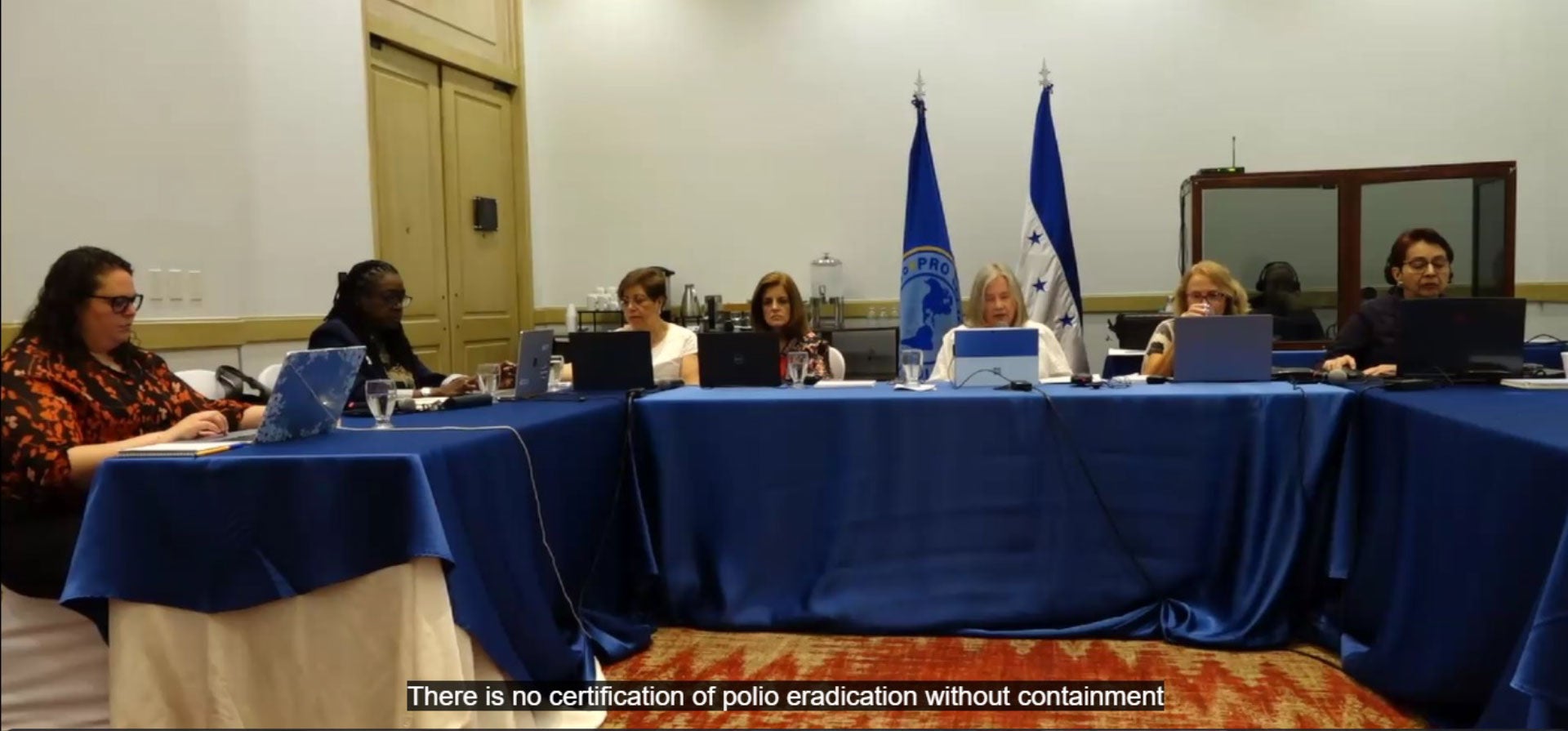
Tegucigalpa, Honduras – The Regional Commission for the Certification of Poliomyelitis Eradication in the Americas (RCC) met in Tegucigalpa, Honduras, from 13 to 17 July 2026. The group's 20th meeting had the following objectives:
- Assess the regional polio situation;
- Review countries' annual reports;
- Formulate recommendations to maintain the poliovirus-free status of the Region;
- Examine progress on containment in countries that have not yet completed Phase I of the Global Action Plan for Poliovirus Containment (GAPIII);
- Conduct the regional polio risk analysis and assess preparedness to respond to potential poliovirus events or outbreaks.
During the meeting, the RCC received and reviewed 25 of the 29 expected annual reports, including the Caribbean subregional report, as well as 2 of the 3 expected reports on facility-based poliovirus containment.
The Commission noted an improvement in regional polio vaccination coverage compared to the previous year in the Americas, reaching:
- 91% coverage for the first dose of polio vaccine.
- 89% coverage for the second dose of IPV (IPV2).
- 87% coverage for the third polio dose (polio3).
In addition, all countries in the Region except one have introduced the recommended second dose of IPV.
However, the RCC noted that many countries continue to fall below the recommended coverage targets of 95% at the national level and 80% across all districts or municipalities, reflecting inconsistent performance on this indicator within countries.
Regarding surveillance, the RCC expressed concern over the decline in regional performance. In 2025, the regional rate of acute flaccid paralysis (AFP) was 1.11 cases per 100,000 children under 15 years of age, reaching at least 1 case per that denominator (the target established to assess the sensitivity of polio surveillance systems).
In addition, the most recent data indicate that the regional indicator for adequate stool sample collection stands at 73%, below the established target of 80%. The Commission noted that gaps in surveillance persist at both the national and subnational levels, which could obstruct the timely detection of polio cases.
RCC Chair Dr. Arlene King recalled that "there is no certification of polio eradication without containment" and acknowledged the progress made in the Region, while urging countries to continue strengthening their efforts to complete this process.
As part of its functions, the Commission updated the regional risk assessment for poliovirus circulation in the event of an importation or poliovirus emergency.
Among the main recommendations made to countries, the RCC highlighted the need to:
- Strengthen routine immunization programs to achieve and maintain polio vaccination coverage of at least 95% at the national level and 80% across all districts or municipalities;
- Prioritize vaccination of children living in remote, hard-to-reach, or border areas through targeted catch-up strategies and microplanning;
- Strengthen acute flaccid paralysis surveillance, ensuring timely case detection, adequate investigation, sample collection, and active institutional case-finding;
- Disseminate and apply the AFP "hot case" definition at all levels of the health system to ensure a rapid response to potential poliovirus events;
- Keep national inventories of potentially infectious poliovirus materials up to date and document containment activities annually, in accordance with the requirements of the Global Action Plan for Poliovirus Containment;
- Conduct systematic risk assessments at the subnational level and use the results to guide and implement targeted mitigation actions;
- Keep national poliovirus event and outbreak response plans up to date, and conduct periodic simulation exercises to assess and strengthen response capacity;
- Strengthen the role of National Certification Committees through independent technical reviews and systematic follow-up on recommendations issued by the RCC.
The recommendations presented are a summary — the full recommendations will be included in the meeting report.
About the Commission
The Commission is made up of recognized experts in the Region of the Americas in the fields of public health, epidemiology, pediatrics, virology, infectious diseases, and immunology, appointed by the Director of PAHO/WHO.
Responsibilities include:
- Assessing compliance with the certification requirements for polio eradication in the Region of the Americas, as defined by the Global Certification Commission (GCC), with special consideration given to immunization coverage, surveillance, containment, risk assessment, risk mitigation, and outbreak preparedness;
- Defining and updating, as needed, the documentation required from each country in the Region to demonstrate maintenance of polio-free status;
- Annually reviewing each country's updated polio eradication documentation and reporting findings and required actions to the Director of PAHO and each country's National Certification Committee (NCC);
- Conducting country visits, as needed, to review or verify polio-free status (including containment of wild poliovirus, VDPV, and Sabin strains in the laboratory);
- Working closely with NCCs and providing recommendations to meet the requirements for global certification;
- Reviewing and validating national reports and documentation on the containment of all polioviruses in laboratories to assess progress in minimizing risks associated with poliovirus facilities and recommending actions needed to achieve laboratory containment objectives within the Region.
In-Person Attendees
- Dr. Arlene King, RCC Chair, Canada
- María Lourdes García, Mexico
- Ana Cristina Mariño, Colombia
- Cristina Pedreira, Brazil
- Olga Torres, Guatemala
Virtual Attendees
- Ángela Gentile, Argentina
- Beryl Irons, Jamaica
- Steve Oberste, United States of America
- Elia Sánchez, Venezuela
PAHO
- Anne E. Jean Baptiste, Regional Advisor
- Gloria Rey, Regional Advisor
- Emilia Cain, Consultant