Washington, D.C., November 6, 2026 (PAHO/WHO) — From November 2 to 6, the Pan American Health Organization (PAHO) hosted a delegation from Bolivia’s Ministry of Health and Sports at its headquarters in Washington, D.C., as part of a technical exchange aimed at strengthening national capacities for implementing the International Health Regulations (IHR) and enhancing mechanisms for the timely detection, assessment, and notification of events that may pose public health risks.
The Bolivian delegation included Juana del Carmen Arraya Gironda and Javier Ever Zapana Silva, technical professionals from Bolivia’s National IHR Focal Point (NFP), who took part in five days of knowledge exchange and collaborative work with specialists from the Health Emergency Information and Risk Assessment (HIM) Unit of PAHO’s Health Emergencies Department (PHE).
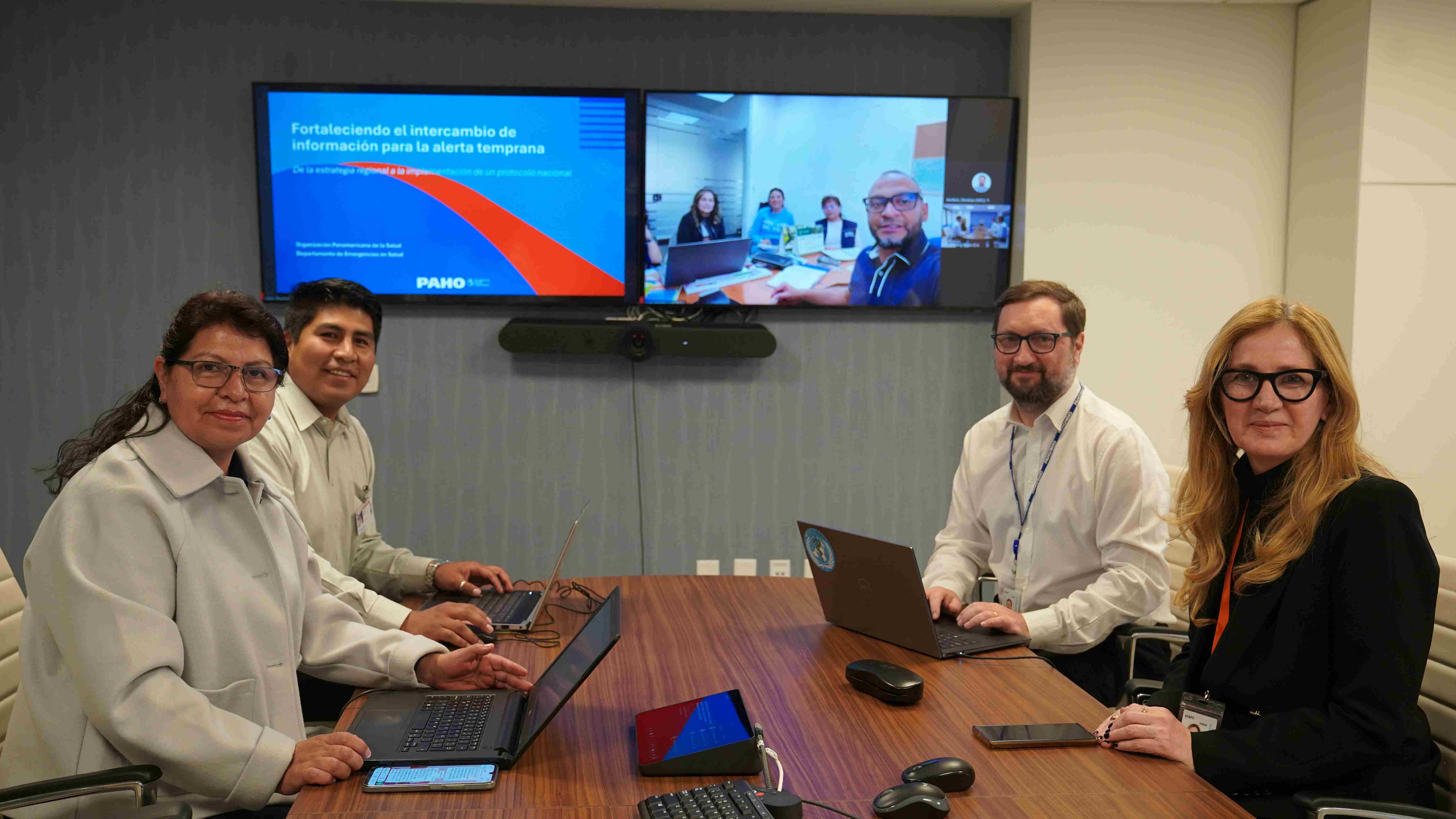
During the visit, the teams reviewed procedures and information flows used to identify, assess, and report unusual public health events, including those detected through disease surveillance and community-based event surveillance. The sessions provided an opportunity to examine practical experiences and explore mechanisms to strengthen coordination between the NFP and the various institutions and sectors involved in public health surveillance and response.
One of the main areas of focus was the application of the IHR Annex 2 decision instrument, which is used to assess whether a public health event should be reported to the World Health Organization (WHO). Through practical exercises and the exchange of experiences, participants discussed the importance of expanding its use among surveillance units, laboratories, and other relevant institutions both within and beyond the health sector. The teams also worked on the development of a national training plan to promote its systematic application across all levels of the health system.
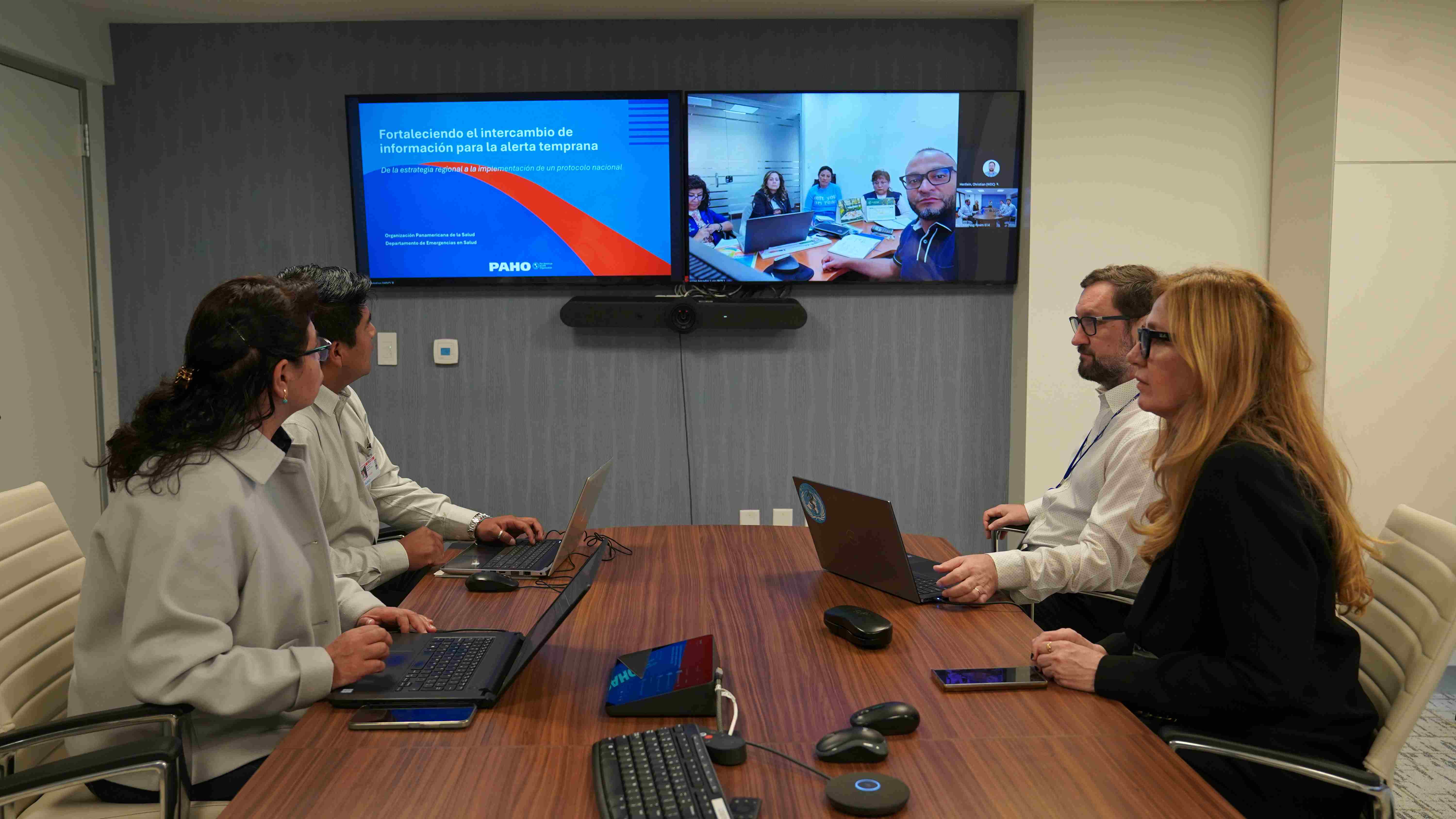
Another key component of the visit was the review of coordination mechanisms among the NFP, the Emergency Contact Point of the International Food Safety Authorities Network (INFOSAN), and the national reference laboratory. This effort focused on adapting a joint communication and notification protocol to facilitate the timely exchange of information and a coordinated response to public health events requiring the involvement of multiple institutions.
The visit also provided an opportunity to review the operational procedures of Bolivia’s NFP in light of WHO guidance, including the roles and responsibilities of National IHR Focal Points, international communication mechanisms, and procedures for receiving, assessing, and communicating information on potential public health emergencies.