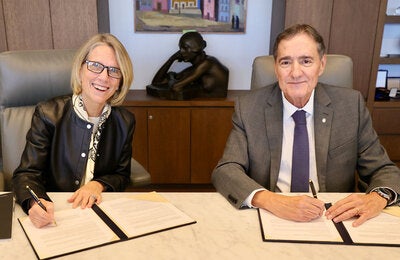
Washington, D.C., 14 September 2026 — PAHO Director Dr. Jarbas Barbosa opened the launch event for Wellness Week 2026 with a call to “strengthen governance, social participation, and intersectoral action” in response to the health challenges facing the Region of the Americas. Among these challenges, Dr. Barbosa highlighted “the persistence of health disparities, climate change and its significant impacts on people’s health, the accelerated demographic transition taking place in Latin America and the Caribbean, the transformation of our cities, and the growing burden of noncommunicable diseases.”
In 2026, Wellness Week marks the 40th anniversary of the Ottawa Charter for Health Promotion (1986), a landmark document that positioned health as the outcome of social, political, environmental, and economic processes that extend beyond the exclusive scope of the health sector. PAHO has celebrated Wellness Week in the Americas since 2011 to promote a positive, comprehensive, and participatory vision of health throughout the Region.
Against this backdrop, the PAHO Director underscored that the Americas have achieved “significant progress” in health promotion through the implementation of the Organization’s Strategy and Plan of Action on Health Promotion. According to Dr. Barbosa, “countries across the Americas have strengthened their policies, expanded healthy settings initiatives, consolidated networks of healthy municipalities and cities, promoted social participation, and reinforced intersectoral action.” Specifically, 19 countries and territories in the Americas have national healthy settings policies; 17 have developed policies or programs to address the social determinants of health and reduce inequities; 14 are implementing specific national health promotion policies; and 18 have integrated health promotion into services based on Primary Health Care.
“To continue making progress, more than investments will be needed: sustained leadership, strong partnerships, and a long-term vision will be essential,” said Dr. Barbosa, reaffirming PAHO’s commitment to “health for all people by strengthening partnerships among governments, civil society, academia, the private sector, and international organizations, with the aim of promoting policies that place people and communities at the center of decision-making, especially those in vulnerable situations.”
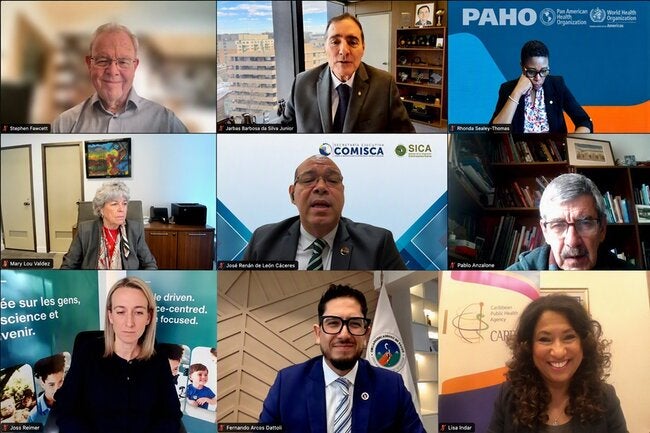
Orielle Solar, Interim Director of PAHO's Department of Social and Environmental Determinants for Health Equity, emphasized that Wellness Week represents an opportunity to strengthen partnerships and accelerate collective action in response to increasingly complex challenges. She noted that health promotion remains “one of the most effective tools for addressing noncommunicable diseases, climate change, and the inequities affecting the Region.”
Empowerment, social determinants, evidence
Lisa Indar, Executive Director of CARPHA, recalled that Wellness Week in the Americas has its roots in the Caribbean-led movement to address the epidemic of noncommunicable diseases. She emphasized that health promotion is not only about raising awareness of healthy behaviors, but also about creating environments that enable healthy and sustainable choices for everyone. “We must empower individuals and communities to take ownership of their own health,” she said, while highlighting the need to strengthen community resilience in the face of current challenges.
Representing the Executive Secretariat of the Council of Ministers of Health of Central America and the Dominican Republic (SE-COMISCA), José Renán de León Cáceres underscored the need to update the health promotion agenda to respond to emerging challenges that extend beyond the health sector. In addition to the social determinants of health, he highlighted the growing influence of digital and commercial determinants, as well as the importance of promoting equitable public policies that protect the well-being of the most vulnerable populations. “Health must be reflected in all policies and in all decisions that affect people’s lives,” he said.
Fernando Araos, Executive Secretary of ORAS-CONHU, focused his remarks on three priorities for advancing healthier societies: “governing for well-being, investing where life faces the greatest obstacles, and measuring what truly matters for people’s health and quality of life.” Araos added that public policies must go beyond traditional economic indicators and be aimed at “ensuring the conditions that allow all people to fully pursue their life goals.” “What is not measured,” he added, “cannot be transformed, and what is not prioritized cannot be corrected,” underscoring the importance of evidence-based decision-making focused on reducing inequalities.