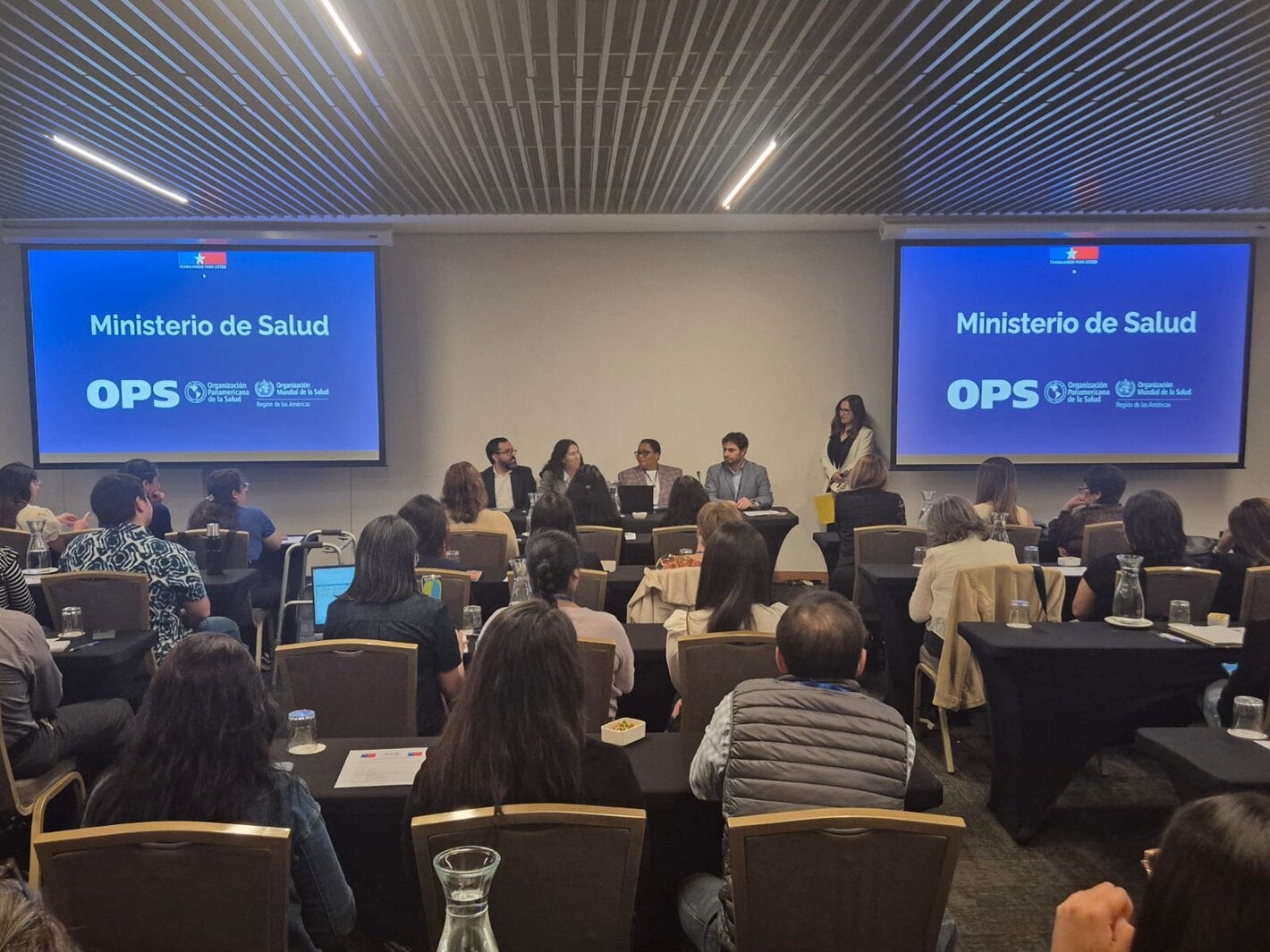
Santiago, Chile, April 14–15, 2026 (PAHO/WHO).- Amid a dynamic public health landscape marked by the persistent circulation and constant evolution of respiratory viruses, Chile has once again turned its attention to one of the most strategic pillars of public health: surveillance. To that end, the Third Conference on Strengthening Surveillance of Influenza and Other Acute Viral Respiratory Diseases was held, bringing together health authorities, representatives of international organizations, and technical teams from the national surveillance network.
Over the course of two days, the conference served as a forum for technical analysis, strategic reflection, and the exchange of experiences among sentinel sites in the National Surveillance Network for Influenza, SARS-CoV-2, and other respiratory viruses, with a clear objective: to reinforce and raise awareness of the importance of epidemiological and virological surveillance, highlighting its achievements, progress, and remaining challenges.
The event took place against a challenging global backdrop, with representation from all 16 regions of Chile, from Arica to Magallanes. Participating teams included epidemiologists, laboratory technicians, and immunization staff. The lessons learned from the COVID-19 pandemic and the constant threat of new epidemics have highlighted the need for robust and timely surveillance systems, with integrated teams capable of anticipating scenarios and supporting public health decision-making.
In this context, PAHO/WHO Chile advisor Olivia Brathwaite highlighted the country’s role in the region and the importance of collaborative work. “Surveillance is not just a technical exercise; it is a tool for protecting people’s health. Chile has demonstrated a sustained commitment to generating high-quality information, which not only has an impact at the national level but also feeds into global surveillance systems and contributes, for example, to the updating of vaccines,” she noted.
One of the central themes of this third session was recognition of the work carried out by regional and local teams, considered the front line of the surveillance system. The participation of hospital and primary care sentinel sites allowed for a joint review of the network’s operations, the identification of regional gaps, and the proposal of improvements to strengthen the quality and representativeness of the data.
“Early detection of respiratory viruses begins at the local level. Without the commitment of local teams and without timely and reliable data, the public health response loses its effectiveness,” Brathwaite emphasized, also highlighting the need to continue investing in training, intersectoral coordination, and the sustainability of surveillance systems.
Chile has been recognized for its consistent contribution of epidemiological and virological information to international monitoring systems—a key input for global processes such as the selection of strains for influenza vaccines, and the assessment of the behavior of new respiratory pathogens. This role reinforces its position as a key player in regional and global public health.
The meeting was organized with technical and logistical support from PAHO/WHO Chile, and included the participation of international experts such as Allison Brown, Regional Advisor for Epidemic and Pandemic Threats for South America, based in Chile, Juliana Leite, Laboratory Specialist, and Paola Couto, PAHO/WHO Epidemiologist for influenza surveillance, along with national experts from the Institute of Public Health, the Epidemiology Team, and the National Immunization Program of the Ministry of Health (MINSAL). The conference is intended to serve as a strategic forum to consolidate national and international efforts, anticipate future challenges, and strengthen the country’s capacity to address one of today’s major public health threats: acute respiratory diseases.