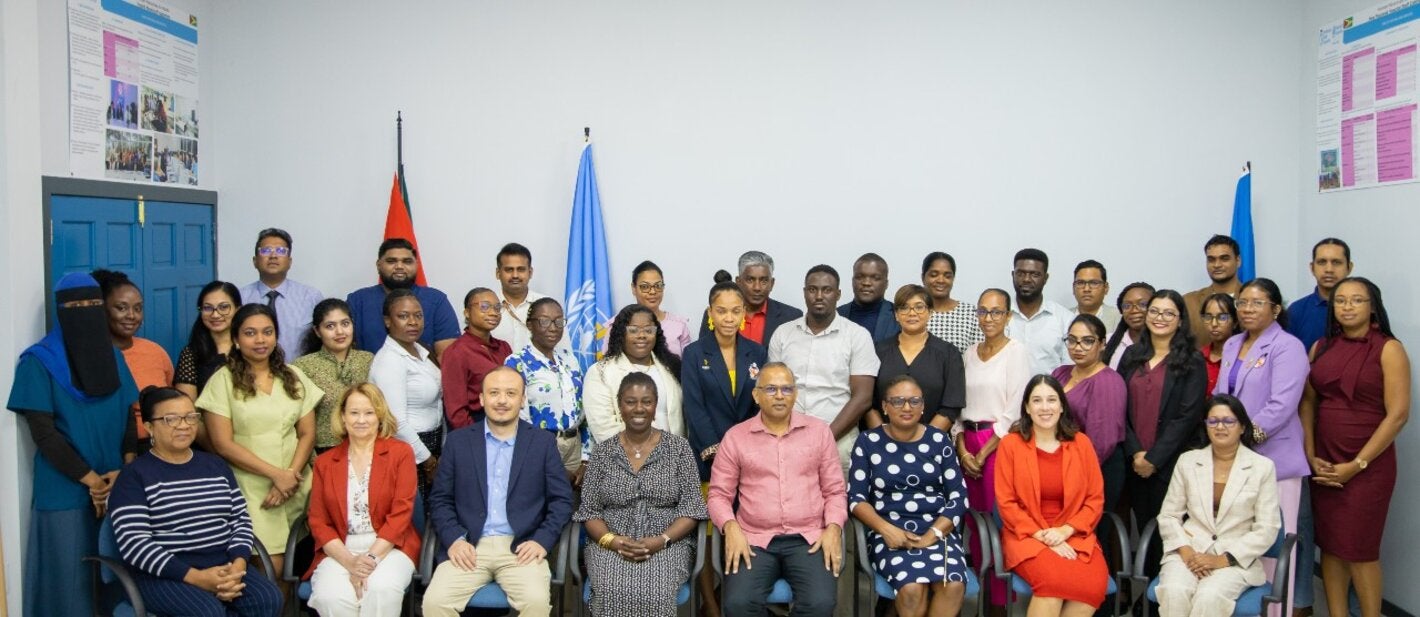
Georgetown, Guyana, July 22 2026.- The Pan American Health Organization (PAHO/WHO) conducted a three-day technical mission to Guyana to support the Ministry of Health and the Government Analyst–Food and Drug Department (GA-FDD) in establishing the country’s National Regulatory System for medicines and vaccines.
These efforts form part of PAHO’s ongoing technical cooperation with Guyana to enhance regulatory capacity, improve access to safe and quality-assured health products, and advance alignment with international regulatory standards. Since 2023, PAHO has supported Guyana through the implementation of the World Health Organization (WHO) Global Benchmarking Tools (GBT), the development of new medicines legislation, and the design of an Institutional Development Plan to strengthen regulatory systems and enhance preparedness for future emergencies.
The mission brought together representatives from the Ministry of Health, GA-FDD, healthcare facilities, quality control laboratory, professional stakeholders, and international experts to accelerate progress in key areas, including pharmacovigilance, and market control and surveillance, as well as strategic planning for regulatory strengthening.
Dr. Frank Anthony, Minister of Health of Guyana, reaffirmed the country’s commitment to building a modern and effective regulatory system. "Pharmacovigilance is not optional. It is essential to what we do. Registering a product is only one part of the process. We must continue monitoring its safety throughout its lifecycle to ensure we are protecting our population," Dr Anthony emphasized.
During this mission, and with the guidance of PAHO experts Robin Rojas Cortés, Catherine Parker and Gabriela Carrasco, national officials worked on strengthening Guyana’s pharmacovigilance services with a focus on the detection, assessment, understanding, and prevention of adverse effects or other product-related problems. Through technical workshops and practical exercises, participants reviewed national reporting mechanisms, identified opportunities to improve coordination among institutions, and worked toward establishing a national notification flow for adverse drug reactions, adverse events following immunization, and even incidents involving substandard or falsified medical products.
Guyana also began the process for the establishment of a National Post-Market Surveillance System, to strengthen its ability to monitor the safety and quality of medicines and vaccines after they enter the market. Effective post-market surveillance is critical to ensuring that products remain safe, effective, and of assured quality throughout their lifecycle and that any safety or quality issues are rapidly identified and addressed.
Another important outcome of the mission was advancing preparations for the implementation of VigiFlow, the internationally recognized pharmacovigilance management system used to collect, manage, and analyze reports of adverse reactions. Through collaboration with the Uppsala Monitoring Centre and national stakeholders, participants reviewed operational requirements and developed implementation pathways that will strengthen Guyana’s contribution to global safety monitoring efforts.