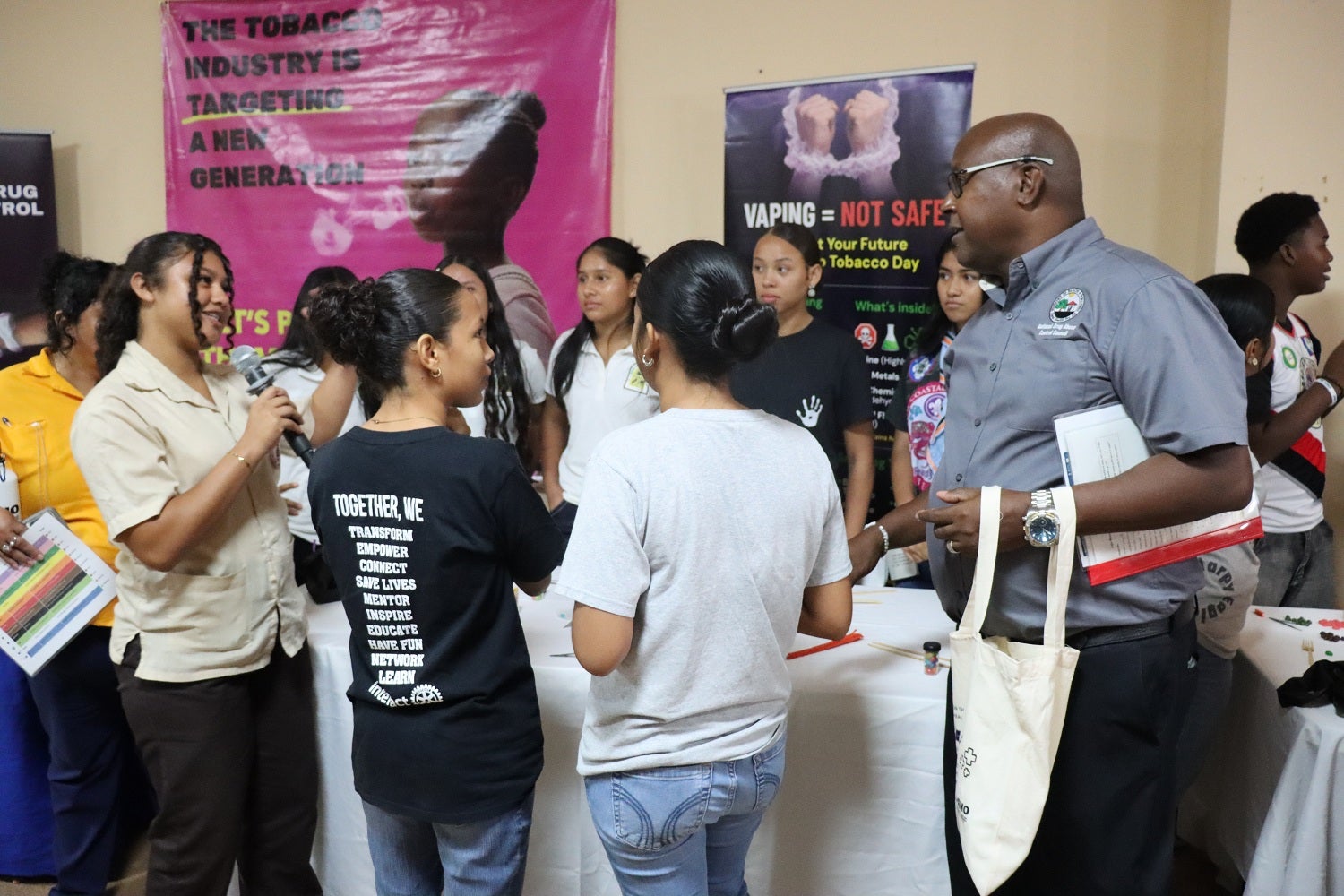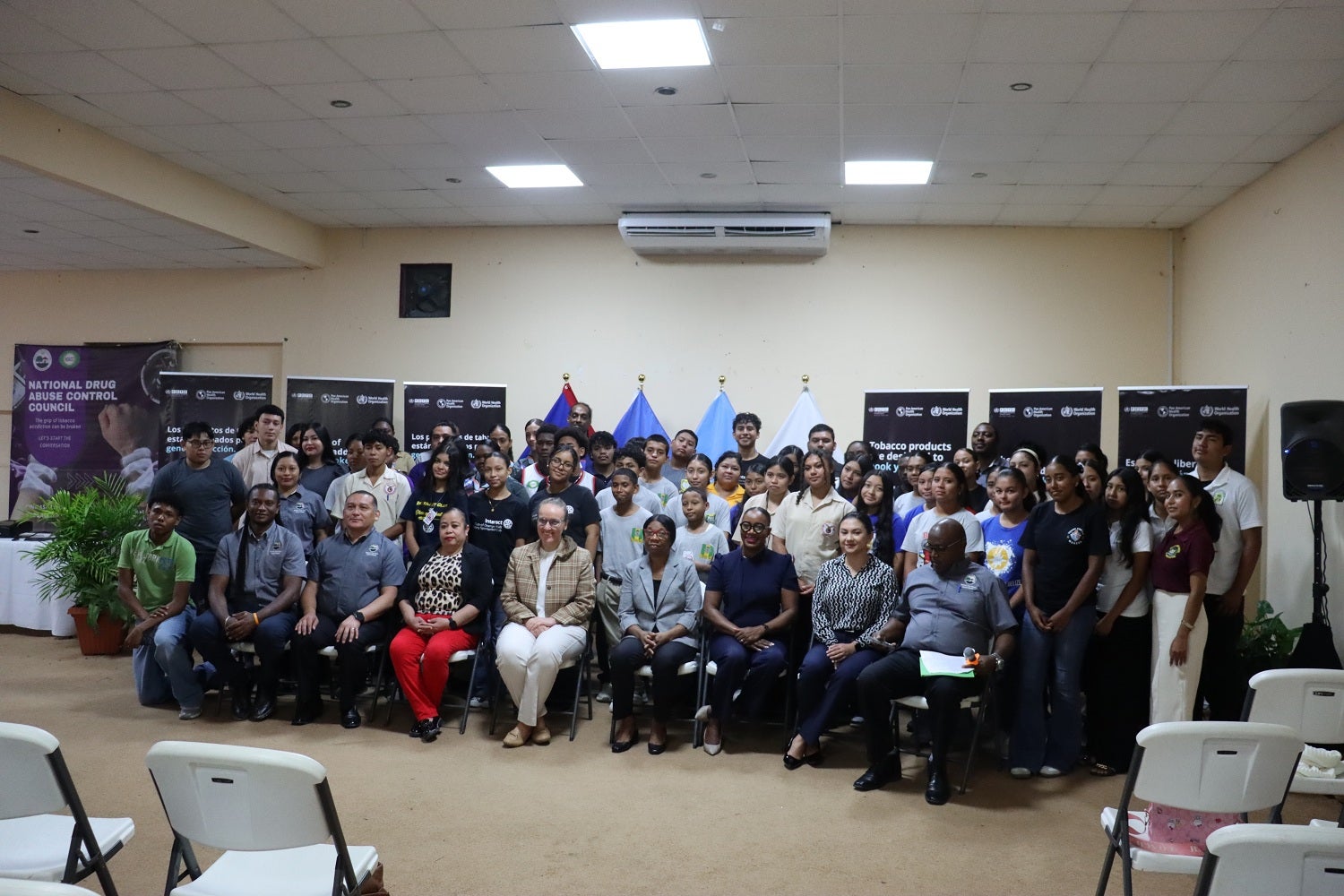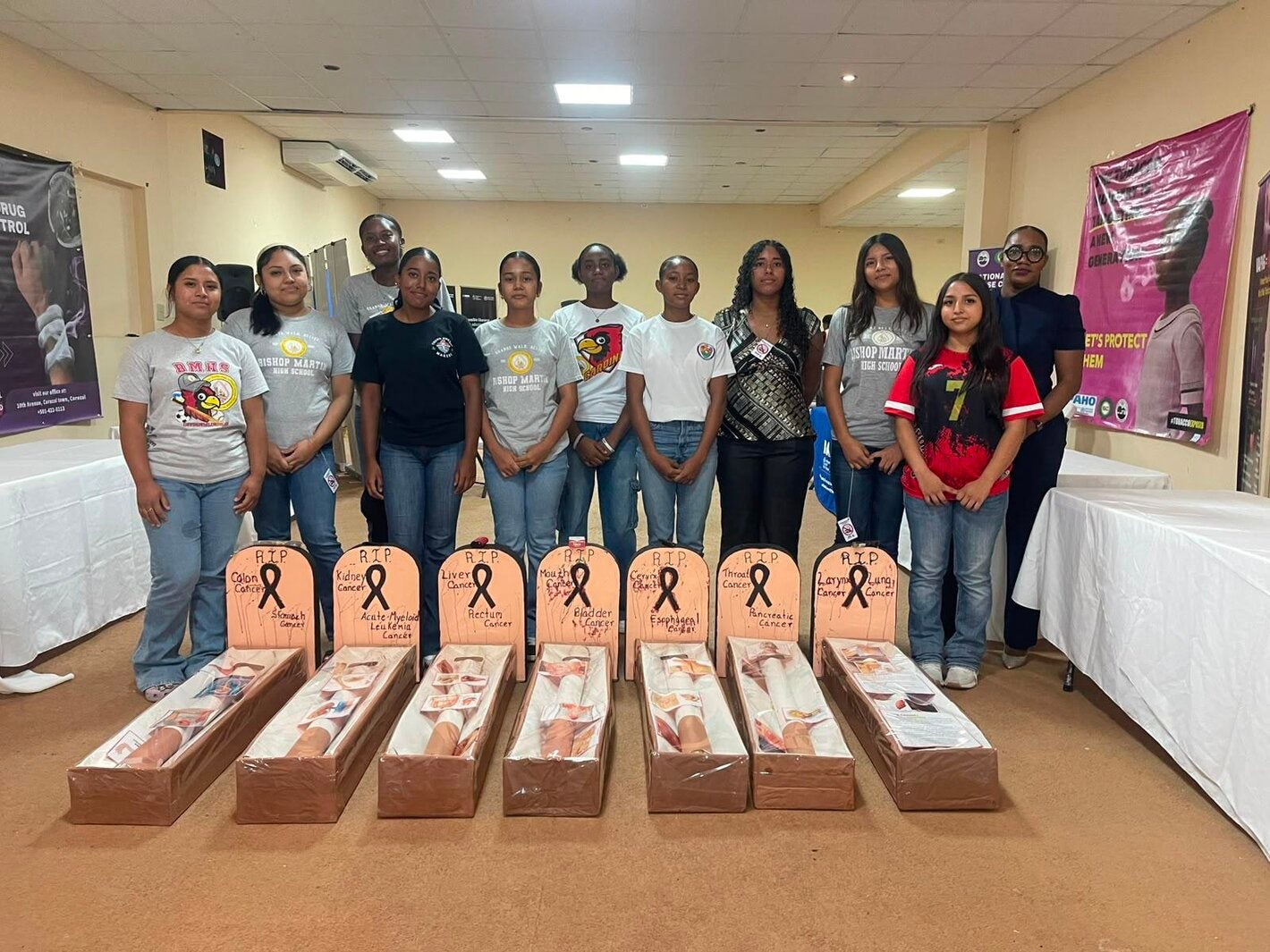
Belize City, Belize, July 6, 2026 (PAHO) – The Pan American Health Organization/World Health Organization (PAHO/WHO), in collaboration with the National Drug Abuse Control Council (NDACC), Ministry of Health and Wellness conducted the Northern Region Tobacco Youth Forums and Orange Walk Community Sensitization Session 2026 under the theme “Unmasking the appeal – countering nicotine and tobacco addiction.”
The activities were held in Corozal and Orange Walk on 24–25 June 2026 and brought together youth participants, school representatives, guidance counsellors, teachers, health professionals, community rehabilitation stakeholders, community leaders, PAHO/WHO, the Ministry of Health and Wellness, and NDACC district offices. The sessions formed part of national public education, youth engagement, and community preparedness efforts to commemorate World No Tobacco Day 2026.
The Corozal Tobacco Youth Forum was held at the St. Francis Xavier Primary School Auditorium in Corozal Town on 24 June, followed by the Orange Walk Tobacco Youth Forum and an Orange Walk Community Sensitization and Preparedness Session held at the D* Victoria Hotel on 25 June. Across the three activities, more than 150 participants and stakeholders engaged in discussions on the dangers of tobacco use, vaping, nicotine addiction, smoke-free spaces, emission-free environments, and the Tobacco Control Bill for Belize.
A formal ceremony was convened to mark the opening of each of the youth forums. Other aspects of the forum included technical presentations on tobacco and vaping risks, youth voices and experiences panels, and youth advocacy call-to-action sessions. During the discussion sessions participants explored how flavours, attractive packaging, social media promotion, misinformation, and peer influence can make nicotine products appear appealing to young people, while also discussing practical ways to support tobacco- and nicotine-free lifestyles in schools and communities.
The Orange Walk Community Sensitization and Preparedness Session expanded the initiative by engaging local leaders on the non-communicable diseases' situation in Belize, the proposed tobacco control legislation, smoke-free spaces, and emission-free environments. Community leaders discussed their role in building public understanding, addressing misinformation, supporting implementation readiness, and encouraging compliance with public health measures.
The activities strengthened collaboration among health, education, youth, community rehabilitation, and community stakeholders and provided young people with platforms to share perspectives on peer pressure, school and community realities, counselling support, and positive role models. Participants were encouraged to share accurate information, support their peers, participate in health promotion activities, and advocate for healthier decision-making.
Tobacco use remains one of the most significant public health challenges globally and in the Region of the Americas. Protecting young people from nicotine addiction and reducing exposure to second-hand smoke require sustained education, strong community partnerships, and supportive environments that make clean air and healthy choices accessible to all.