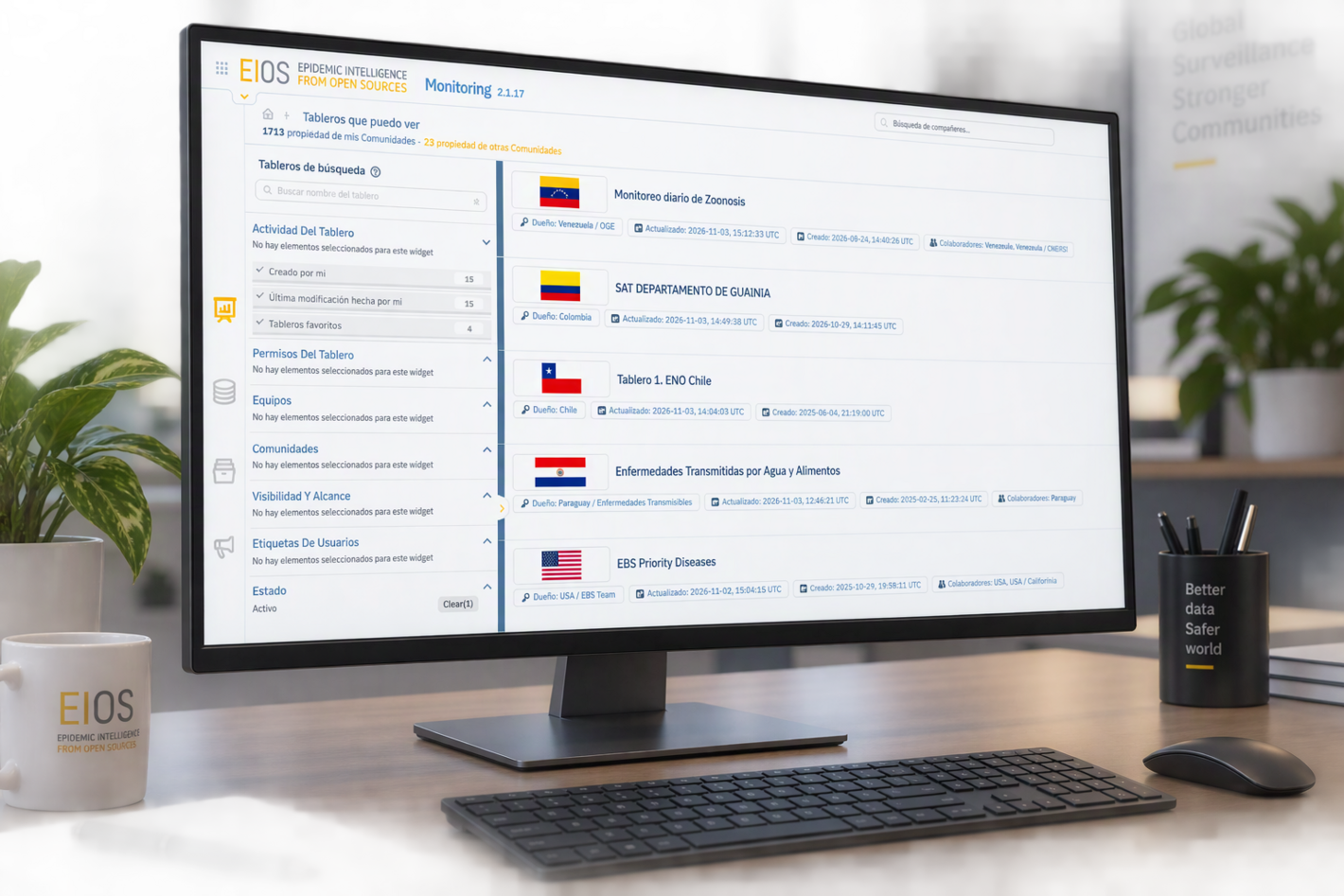
Washington, D.C., 3 November 2026 (PAHO) - A total of 95 surveillance and public health professionals from 16 countries of the Americas participated in a series of training sessions organized by the Department of Health Emergencies of the Pan American Health Organization (PAHO) to strengthen the use of the Epidemic Intelligence from Open Sources (EIOS) system. This platform makes it possible to identify and analyse signals of potential public health threats on the basis of information available in open sources.
The activities carried out between 6 and 29 October 2026 were aimed both at expanding the number of professionals trained in the use of EIOS and at incorporating new artificial intelligence-based functionalities to improve the detection and management of signals relevant for public health.
Early detection is essential to prevent health threats from becoming emergencies of greater magnitude. In this context, the use of digital tools such as EIOS makes it possible to complement traditional epidemiological surveillance systems through the systematic monitoring of open sources, facilitating the identification of signals that require verification and, where appropriate, a timely response by health authorities.
Capacity strengthening in 16 countries
Professionals from Costa Rica, Dominica, Guatemala, Jamaica, Mexico, Nicaragua, Peru and Uruguay participated in the training sessions on the main functions and tools of EIOS, aimed at facilitating their use in national event-based surveillance activities.
Specialized sessions on new artificial intelligence-based functionalities were also held. Representatives from Argentina, Bolivia, Chile, Colombia, El Salvador, Panama, Paraguay and the Dominican Republic participated in these sessions.
Greater capacities for timely early warning
These activities are part of PAHO's technical cooperation to strengthen epidemic intelligence and event-based surveillance in the countries of the Americas, within the framework of the Regional Action Plan for the strategy on epidemic intelligence for strengthening early warning of health emergencies 2024–2029, approved by the Member States of PAHO.
Through these actions, PAHO reaffirms its commitment to supporting countries in strengthening early warning systems that are more sensitive, timely and effective, capable of transforming available information into useful knowledge to anticipate risks and guide decisions that protect the health of the populations of the Americas.