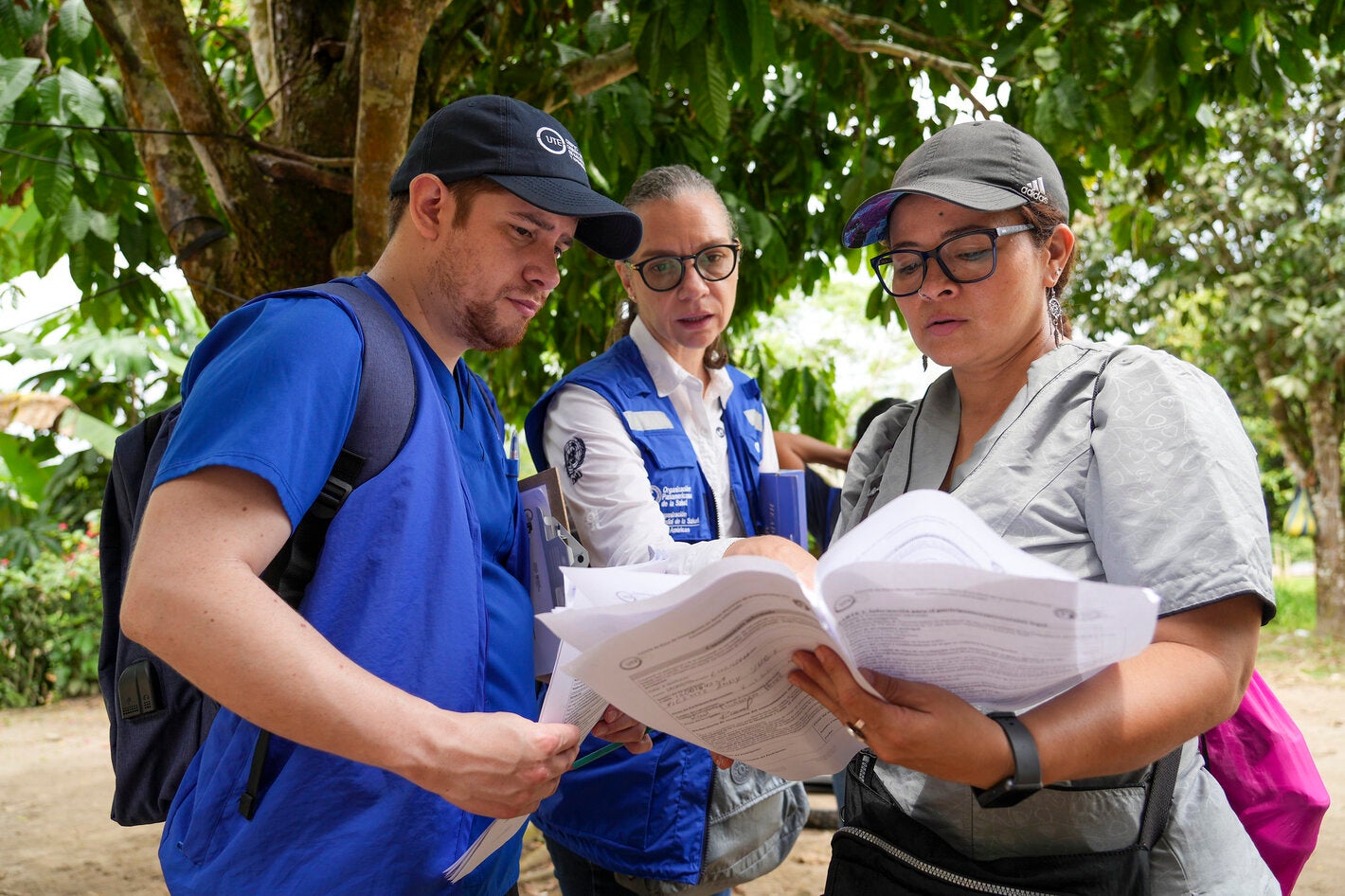
Washington, D.C., February 11, 2026 — The Network on Essential Public Health Functions for strengthening stewardship and governance (RedFESP) convened a virtual workshop to launch the first strategic area of its 2026 Work Plan, focused on institutionalizing the Essential Public Health Functions (EPHF) evaluation and continuous improvement of the EPHF at national and subnational levels. The meeting, held with technical support from the Pan American Health Organization (PAHO), brought together representatives from Bolivia, Colombia, Costa Rica, El Salvador, Mexico, Panama, Peru, the Dominican Republic, and Uruguay.
Opening the workshop, the Presidency of RedFESP, currently held by Mexico, underscored the importance of moving from one-time assessments toward sustainable institutional processes that strengthen stewardship and governance capacities across health systems. PAHO, serving as Technical Secretariat, highlighted that the network’s 2026 work plan aligns with regional mandates adopted by Member States and seeks to consolidate standardized, comparable, and adaptable tools to guide continuous improvement throughout the Region.
In the first session, Mexico and Colombia shared recent experiences implementing subnational EPHF assessments, highlighting their strategic value for strengthening national and subnational governance. Mexico presented its process, led by the National Public Health Service, which applied an adapted subnational tool across all health jurisdictions. In addition to generating strategic findings, the process has served as a mechanism to align priorities and inform institutional decision-making. The results of the assessment are informing targeted action plans to address identified gaps and strengthen management capacity. The experience emphasized the importance of communication, interinstitutional collaboration, and positioning assessment mechanisms as drivers of institutional strengthening and strategic stewardship.
Colombia described how it has used the EPHF framework as a strategic instrument to support health system transformation and governance strengthening at both national and departmental levels, in collaboration with PAHO and academic partners. Findings have guided improvement strategies aimed at reinforcing primary health care, strengthening stewardship and governance functions, and addressing structural challenges related to institutional capacity and workforce development.
In the following session, participants discussed the development and refinement of updated national and subnational assessment tools, as well as the consolidation of regional documentation capturing lessons learned and best practices. RedFESP members noted that institutionalizing evaluations is both a technical and governance process that requires sustained leadership, interinstitutional collaboration, and clear direction from assessment to action.
The workshop concluded with agreements on next steps, including continued technical exchanges, validation of tools, and documentation of country experiences. Through RedFESP, countries will continue working collectively to strengthen stewardship and governance capacities as foundational elements for resilient, equitable, and people-centered health systems in the Americas.
More information on the network can be found here: https://www.paho.org/en/network-essential-public-health-functions-ephf