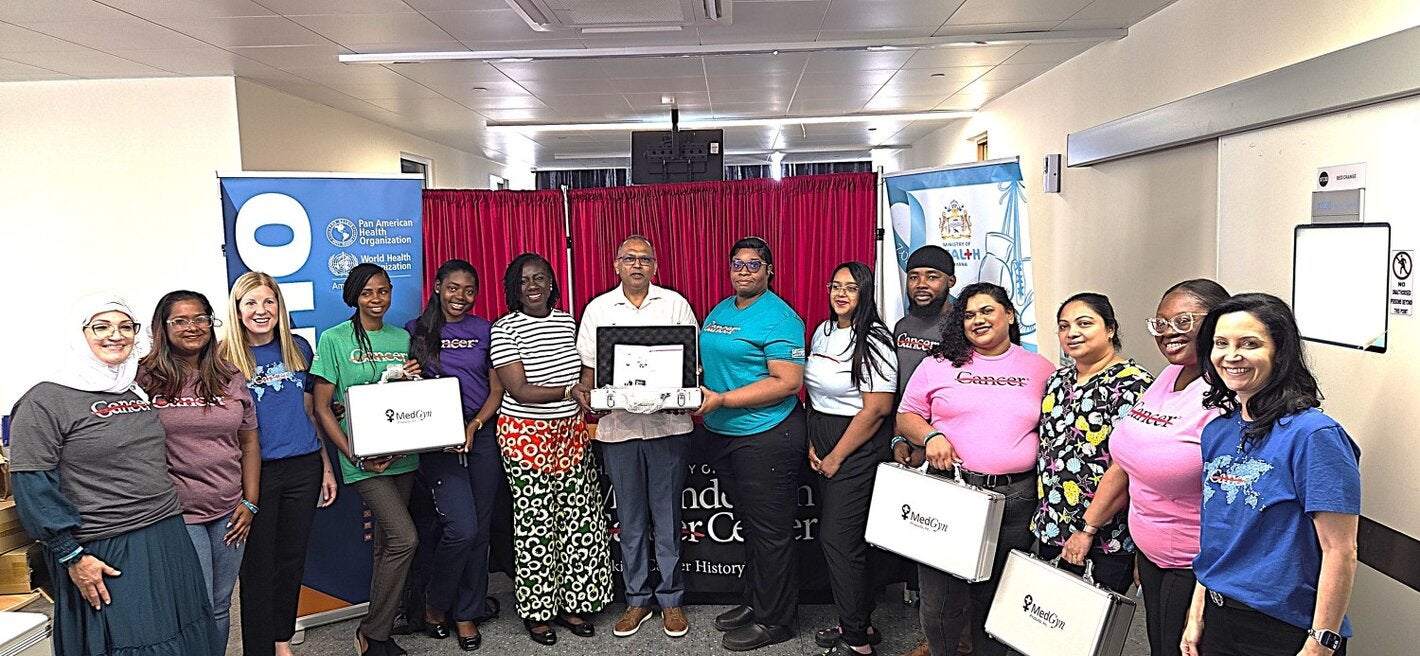
Georgetown, Guyana 27 March 2026- Guyana has taken another major step forward on its journey toward cervical cancer elimination with the successful completion of a five-day in‑country mission of the Pan American Health Organization/World Health Organization (PAHO/WHO), and experts from MD Anderson Cancer Center in support of the Ministry of Health (MOH). The mission, conducted from March 17–21, brought together national program managers, healthcare workers, and international specialists to review current data and capacities, strengthen clinical skills, and chart a practical roadmap for achieving the global 90‑70‑90 targets for cervical cancer elimination.
Cervical cancer remains one of the most significant public health challenges in Guyana and across the Caribbean. Driven mainly by human papillomavirus (HPV), the disease is the second leading cause of cancer deaths among women in Guyana, with a mortality rate of 30.3 per 100,000 women in 2022. With the rollout of the universal HPV DNA testing voucher program in 2024–2025, more women than ever before were able to receive free, high‑quality HPV testing close to home. This initiative resulted in 20,853 women being screened, which reflects growing national awareness and engagement in cervical cancer prevention. Although work continues to reach global targets, these achievements demonstrate a clear, positive shift toward earlier detection, greater equity in access, and improved long‑term health outcomes for women across all regions of Guyana.
A Mission Focused on Strengthening Systems and Building Capacity
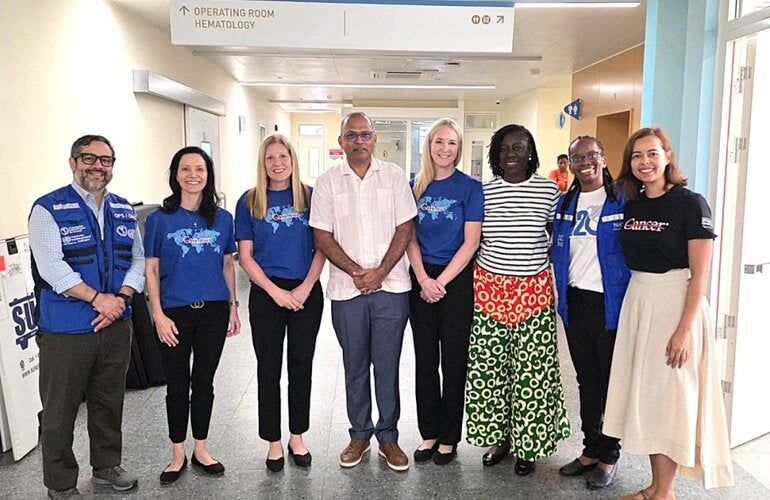
The visiting team, led by Dr. Mauricio Maza, Regional Advisor for Cancer Prevention and Control at PAHO, and experts from MD Anderson Cancer Center—including Dr. Kathleen Schmeler, Dr. Melissa Lopez Varon, Dr. Sarah Berger, Dr. Mila Salcedo, and Program Manager Reina Guerrero—worked side‑by‑side with Senior Ministry of Health Staff and Guyana healthcare Workers to identify gaps and opportunities within the national cervical cancer program.
Throughout the mission, the team conducted high‑level stakeholder meetings, facility assessments, consultations, and hands‑on clinical training sessions. The activities focused on five key areas:
1. Enhancing HPV Vaccination Uptake
Vaccination rates have been steadily increasing over the past 4 years and are currently estimated at 70% for girls aged 9–15 years. Guyana has upgraded the vaccine from the quadrivalent to the nonavalent vaccine in 2025 – this vaccine is provided free of cost to both girls and boys, PAHO supported the MoH to secure the nonvalent vaccine in 2025. The Ministry of health has intensified campaigns in schools and communities aiming to reach the WHO target of 90% by 2030. The mission emphasized strengthening communication, provider training, and community‑based approaches to boost acceptance and completion of the single‑dose schedule.
2. Strengthening HPV Testing as the Primary Screening Tool
Guyana has introduced HPV DNA testing through a universal voucher system, demonstrating commitment to improved access to quality care for all eligible Guyanese women. In 2024 and 2025, 20,853 women were screened, with approximately 50% being between the ages 30-49 years. The team recommended a focus on HPV screening of women ages 30 and above, while younger women could have pap smears. The mission explored strategies to increase uptake, including integrating self-collection, improving community engagement, and optimizing patient follow-up systems.
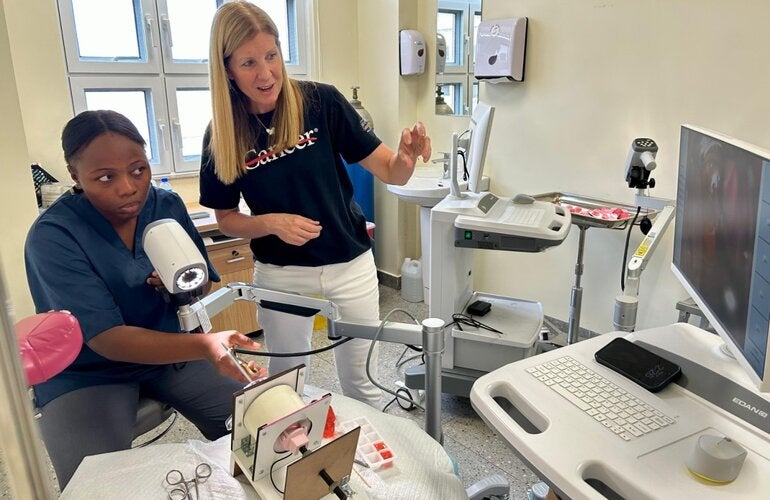
3. Building Clinical Skills in Colposcopy, Thermal Ablation, and LEEP
A highlight of the mission was the hands-on capacity‑building workshop for healthcare providers. Participants received practical training in colposcopy and treatment of pre-cancerous lesions using thermal ablation (TA) and Loop Electrosurgical Excision Procedures (LEEP). This training responds to the country’s urgent need for more skilled providers who can manage high-risk HPV cases and ensure timely treatment. The Government of Guyana had purchased several TA machines to be used in all regions and these were presented to the regional representatives after the training.
4. Reviewing the National Cervical Cancer Elimination Strategy
Strong leadership and political will were demonstrated as stakeholders convened for a comprehensive review of Guyana’s cervical cancer strategy and implementation plan with the Minister of Health also meeting up with the visiting Mission Team. The session focused on updating guidelines to reflect HPV DNA testing as the primary screening method, integrating treatment algorithms, and strengthening referral pathways from screening sites to diagnostic and treatment centers.
5. Improving Data Management for Better Decision-Making
Data collection and systems were reviewed to identify ways better to integrate HPV testing data into national health information systems. Despite the absence of electronic medical records, the Ministry of Health had collated comprehensive data and this was shared to allow the team to assess the program by age and geographic region. Enhancing this information system is essential for tracking patient follow‑up, monitoring program performance, and guiding policy decisions.
Key Outcomes of the Mission
By the end of the week, the mission team and national stakeholders achieved several important outcomes:
- Strategies identified to improve screening of the eligible population and increase HPV testing uptake in both facility‑based and community settings
- A training pathway established for primary and secondary care providers on colposcopy, thermal ablation, and LEEP
- Clear approaches outlined to boost HPV vaccination rates, including improved communication and healthcare worker training
- Delivery of clinical training sessions that enhanced provider competencies in screening and treatment
- Agreement on a data management framework to strengthen monitoring and evaluation
A Strategic Partnership for a Healthier Future
The collaboration between the MOH, PAHO/WHO, and MD Anderson Cancer Center marks a pivotal moment in Guyana’s commitment to eliminating cervical cancer. The mission reinforced the country’s alignment with the PAHO Plan of Action for Cervical Cancer Prevention and Control 2018–2030 and the WHO Global Strategy to Accelerate the Elimination of Cervical Cancer.
With a stronger workforce, clearer clinical pathways, and renewed momentum, Guyana is better positioned to scale up HPV vaccination, expand screening coverage, and ensure timely diagnosis and treatment—key pillars in creating a future where cervical cancer is no longer a threat to women’s health.