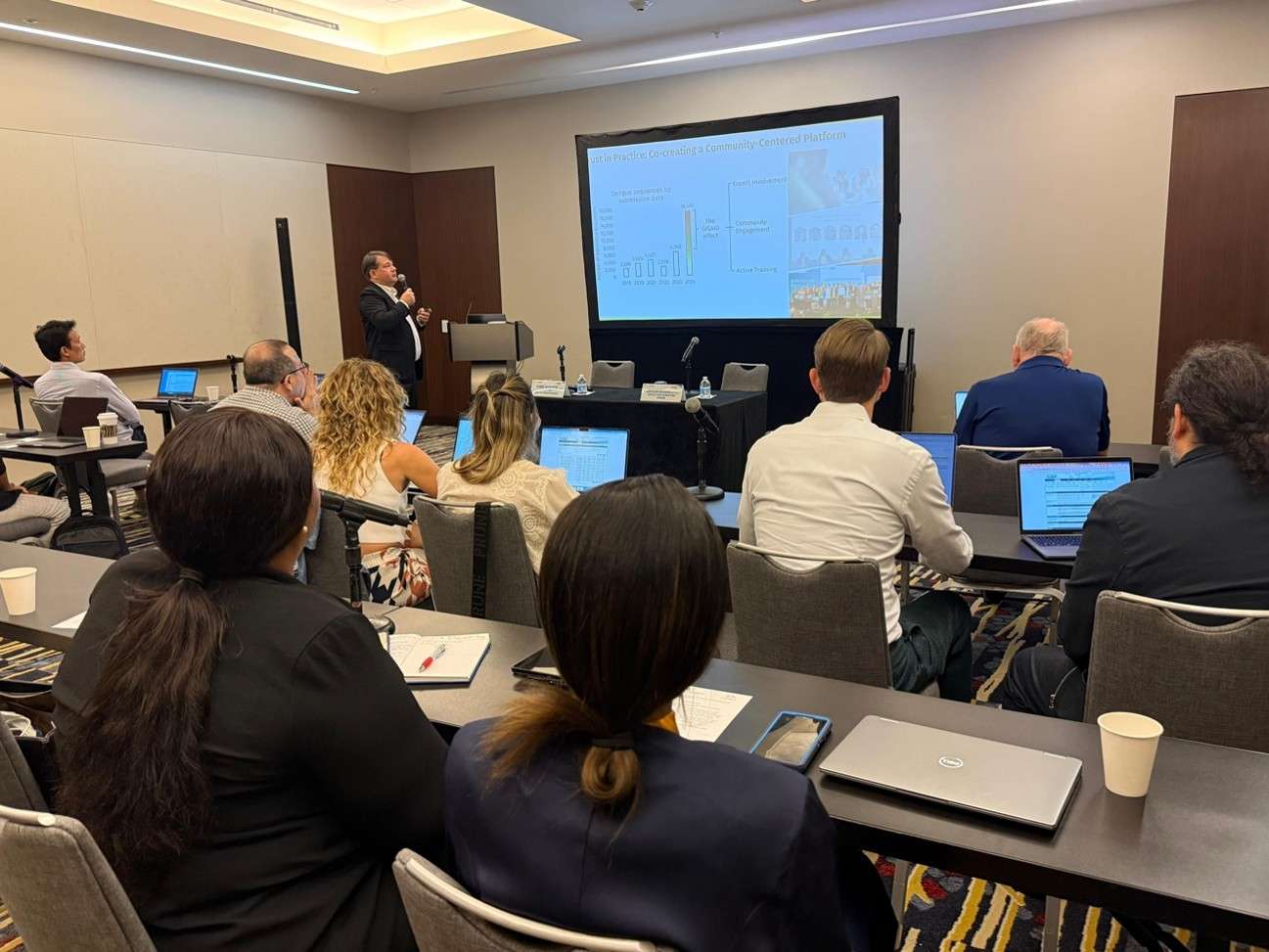
Washington, D.C., August 29, 2026 (PAHO) — The Pan American Health Organization (PAHO), the World Health Organization’s Global Influenza Surveillance and Response System (GISRS), and GISAID held the GISAID–GISRS–PAHO Bioinformatics Workshop in Washington, D.C., ahead of the Options XIII Conference for the Control of Influenza. The workshop brought together professionals from Argentina, Chile, Costa Rica, Guyana, Honduras, Malaysia, Palestine, Peru, South Africa, Spain, Suriname, Tunisia and Uruguay, along with experts from institutions and WHO Collaborating Centres for influenza in Japan, Australia and the United States.
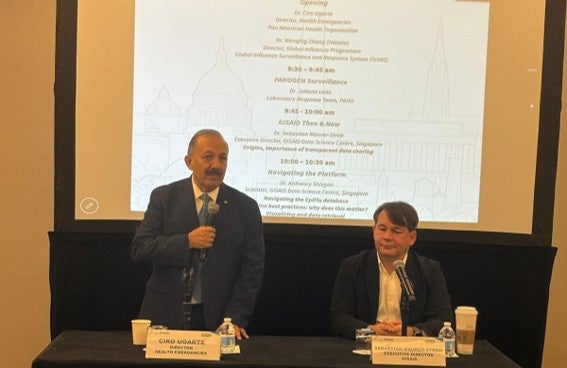
The opening session featured Dr. Ciro Ugarte, Director of PAHO’s Health Emergencies Department; Dr. Wenqing Zhang, Director of Global Influenza Surveillance and Response System, who joined virtually; and Dr. Sebastian Maurer-Stroh, Executive Director of the GISAID Data Science Centre.
During the opening, speakers emphasized the need to strengthen not only sequencing capacity, but also bioinformatics, data interpretation, and the integration of genomic information with epidemiological surveillance and public health response.
“The true value of genomic surveillance emerges when we are able to analyze, interpret and rapidly share these data, transforming them into actionable information for public health decision-making,” said Dr. Ciro Ugarte.
From genomic data to public health action
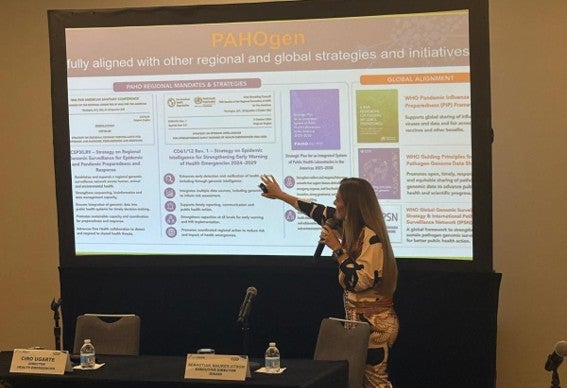
Dr. Juliana Leite, from PAHO’s Laboratory Response Team, presented PAHOgen, and the regional strategy aimed at strengthening genomic surveillance through a collaborative network that connects national capacities, regional networks and global initiatives.
PAHOgen promotes the use of genomic information as a tool for public health action. Within this framework, RESVIGEN has contributed to strengthening genomic surveillance of respiratory viruses and fostering collaboration among laboratories and countries across the Region.
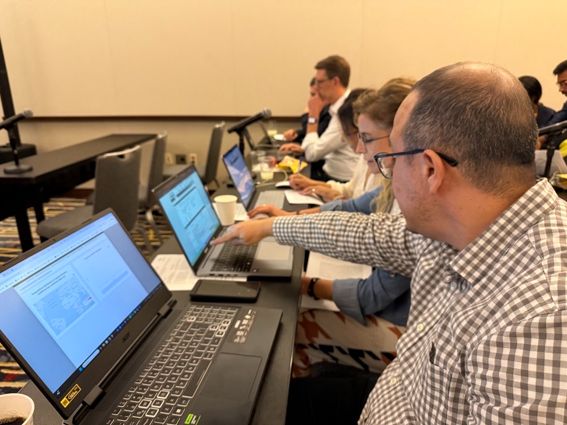
The training programme combined technical sessions and hands-on exercises on the use of GISAID and EpiFlu, good practices for data curation and retrieval, quality assessment, sequence annotation, clade assignment and mutation analysis using tools such as GISAID FluSurver. Participants also explored comparative sequence analysis, phylogenetics and phylodynamics, as well as the tracking of genetic changes with potential public health relevance.
The agenda also included a session on lessons learned from Nipah virus outbreaks, broadening the discussion to other emerging viruses and the role of genomic surveillance in responding to threats with epidemic potential.
Zoonotic influenza, mutations and antiviral susceptibility
The surveillance of zoonotic influenza viruses was another key focus of the workshop, with the participation of Dr. Erik Karlsso from Institute Pasteur Cambodia, it complemented by practical case studies in which participants applied the tools reviewed throughout the day.
Subsequent sessions addressed the tracking of mutations of consequence and emerging variants, including the use of PrimerChecker, as well as antiviral susceptibility surveillance, with contributions from experts from WHO Collaborating Centres in Melbourne and Tokyo.
These capacities are critical for the timely identification of changes that may have implications for virus characterization, molecular diagnostics, variant surveillance and public health response.
The workshop concluded with a session on preparedness for future threats, including Disease X, and the presentation of new GISAID tools such as EpiX, EpiPhylo, EpiIntel and artificial intelligence applications.
The workshop reinforced the importance of integrating sequencing, bioinformatics and data sharing into broader surveillance systems that connect laboratories, epidemiology, public health and national, regional and global networks.
PAHO continues to support Member States, in collaboration with GISRS and GISAID, Collaborating Centres and other technical partners, in strengthening sustainable capacities to transform genomic data into actionable public health information and improve preparedness for influenza and future epidemic and pandemic threats.