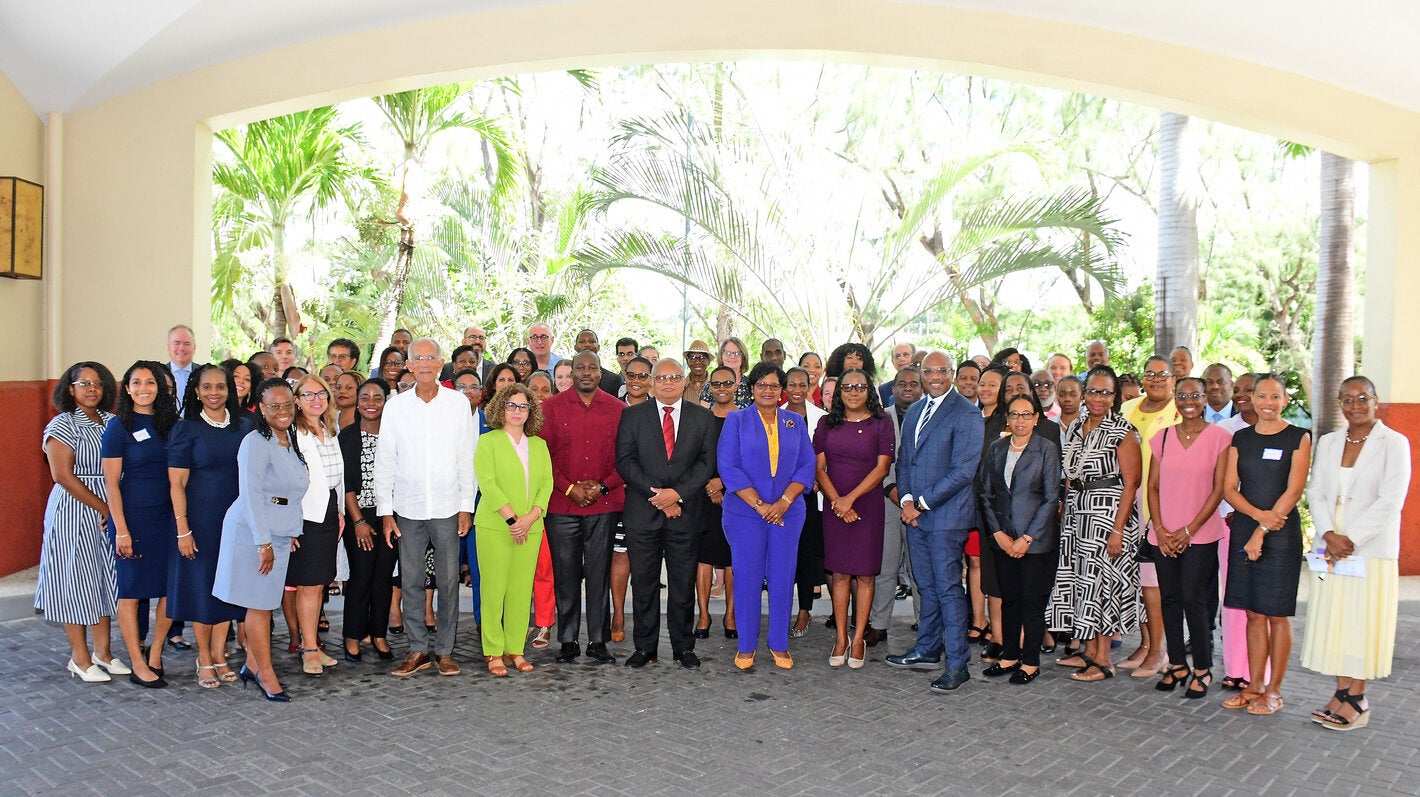
Bridgetown, Barbados, 31 October 2025. From October 15-17, 2025, the Healthy Caribbean Coalition (HCC) with the support of the Pan American Health Organization (PAHO) and the Global Health Advocacy Incubator (GHAI) hosted a regional meeting entitled: Addressing the Commercial Determinants of NCDs in Caribbean SIDS: Protecting NCD policymaking from conflicts of interest and undue influence, in Barbados.
The goal of the three day meeting was to increase regional capacity to protect non-communicable disease (NCD) policymaking from conflicts of interest and undue influence by actors with vested commercial interests. Over seventy participants convened in Barbados from twelve CARICOM countries representing Ministries of Health, Trade, Education, Agriculture, Sports, and Attorney General Offices; civil society advocates; regional organisations including PAHO, Caribbean Public Health Agency (CARPHA), Organisation Eastern Caribbean States (OECS) Commission, the CARICOM Secretariat, the University of the West Indies and the private sector.
The meeting represents a major regional milestone in sensitising key non-communicable disease (NCD) stakeholders about key concepts and regional experiences in addressing the commercial determinants of health and critically, advancing collective action towards the development of strategies and tools to support the management of conflicts of interest, prevention of undue influence and overall improvement of NCD governance in Caribbean small island development states (SIDS).
In recent years, much attention has been focused on the commercial determinants of health as defined by the Lancet 2023 Commercial Determinants of Health series as the systems, practices and pathways through which commercial actors drive health and equity. The commercial determinants of health are the actions, products and policies of businesses that affect our health — for example what foods and drinks are available and how they are advertised, whether harmful products are cheaper than healthier options, and how companies lobby the government. The negative dimensions or impacts of the commercial activities which influence health, such as the production and promotion of unhealthy commodities including tobacco, alcohol, ultra-processed products and fossil fuels; and actions of the commercial sector to undermine regulation of these products, represents the greatest barrier to the prevention and control of NCDs including mental health.
Dr. Kenneth Connell, President of the HCC underscored, “this meeting is important to shape the future of public health in our region. It is a critical step in our collective journey to safeguard the health of our people. We have witnessed the impact of commercial determinants of health. We have seen tobacco industry interference in public health policy-making, aggressive marketing of ultra-processed products (UPPs) to vulnerable groups like our children and persistent challenges in implementing front of package warning labelling across CARICOM”. He referred to the 2023 Bridgetown Declaration, which spoke to commercial and economic forces deeply embedded in a rising tide of NCDs across our region which called for bold rights-based government mechanisms to protect our policy-making practices from undue influence and conflicts of interest (COI).
Dr. Amalia del Riego, WHO/PAHO Representative at the Office for Barbados and the Eastern Caribbean Countries, in her remarks to the attendees, noted that regional capacity to protect conflicts of interest from undue commercial interest in NCD policymaking needed to be increased. She shared, “the Caribbean continues to face one of the highest burdens of NCDs. The actions and practices of commercial actors can either support or undermine health, depending on the nature of the products, policies and influence”. She then added that “the drivers of this epidemic are not only biological or behavioural; they are deeply rooted in the systems that shape our societies and communities”. Mrs. Piedad Huerta, Director, ad interim, PAHO/WHO Subregional Program Coordination for the Caribbean provided welcoming remarks virtually. She reminded those in the room that overweight affected 60% of the adult population across the English-speaking Caribbean. She reiterated that, “the Caribbean’s health future depends on our ability to protect policymaking from undue influence.” She urged those present to “implement evidence-based measures and re-affirm that public health is not for sale! She shared that by doing so, “we would own our duty to protect current and future generations, building a Caribbean where health, not profit drives our choices”.
The Minister of Health and Wellness of Barbados, Senator Dr. The Most Honourable Jerome Walcott officially opened the event with strong comments, noting that “the commercial determinants of health are among the most powerful and complex drivers of disease in our time,” he warned. “If left unchecked, they will continue to erode the health gains we have made. The path forward requires courage, collaboration, and clarity of purpose.” He also shared a message to his regional counterparts; “Governments and health institutions must establish and enforce strong conflict of interest safeguards. For tobacco, full exclusion from policy processes, as required under Article 5.3 of the WHO FCTC, must remain non-negotiable. For alcohol, given its inherent risks, engagement in policy development should also be limited. As it relates to engagement with the food industry, this will require caution with transparency and independent oversight to prevent undue influences”.
The strong high level political support was accentuated on Day 2 when The Honourable Colin Jordan, Minister of Labour, Social Security & the Third Sector opened the day’s proceedings sharing that, “honesty and collaboration across all sectors are essential in tackling the region’s worsening non-communicable disease (NCD) crisis” and that “We have to push the message that people must come before profit, but that people coming before profit does not mean that people and profit are mutually exclusive. We are able to find that model that will allow everybody to earn a living and people to be as healthy as possible”.
Next steps will focus on the co-development of tailored tools to support the management of conflict of interest within Ministries of Health and in health influencing ministries and within civil society organisations.