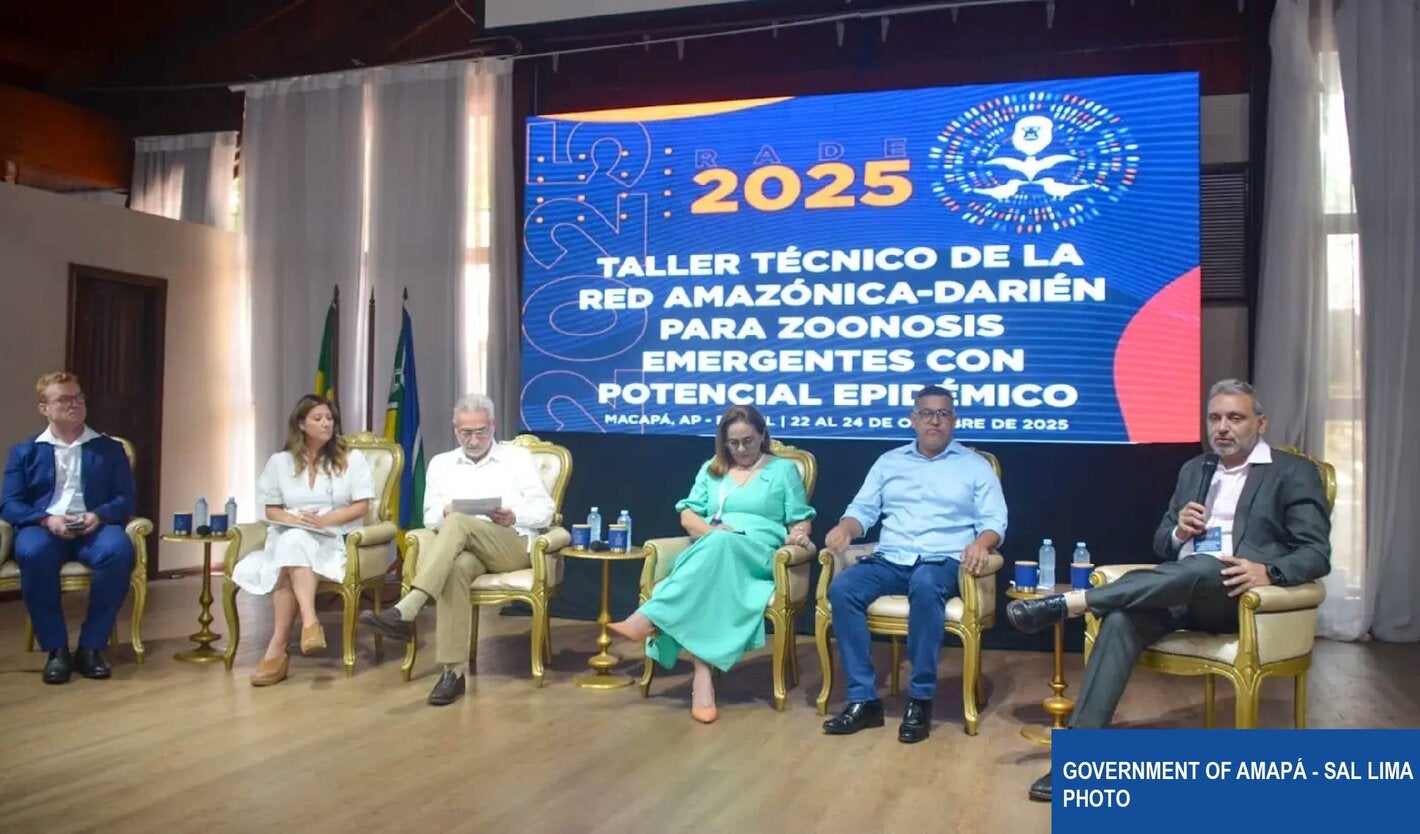
Macapá, Amapá (Brazil), 22–24 October 2025 – The Pan American Health Organization (PAHO/WHO), in coordination with the authorities of the Ministries of Health, Agriculture, and Environment of Brazil, the Government of the State of Amapá, and national and international partners, held the fourth Technical Meeting of the Amazon–Darién Network for Emerging Zoonoses with Epidemic Potential (RADE 2025) from 22 to 24 October in the city of Macapá, Brazil.
The meeting brought together representatives from the human health, animal health, and environmental sectors of the Network’s member countries – Bolivia, Brazil, Colombia, Ecuador, Guyana, Panama, Peru and Suriname – as well as experts from technical institutions, collaborating centers, and various areas of PAHO/WHO.
During the meeting, the first General Assembly of the RADE was held, with its technical secretariat hosted by the PAHO Office in Brazil, marking the official launch of the Network. On this occasion, the ratified Statute was presented, defining its governance structure, principles of cooperation, and strategic lines of action under the One Health approach.
Additionally, Technical Working Groups were established in four priority areas: Laboratory; Intelligence and Modeling; Preparedness; and Surveillance Systems. Two cross-cutting axes were also defined: intersectoral and international coordination, and capacity strengthening.
This fourth meeting also laid the groundwork for the RADE 2026–2028 Action Plan, which will guide joint efforts to improve surveillance, preparedness, and response to emerging zoonotic threats, fostering technical exchange and collaborative development based on the existing capacities in the participating countries.
The activity was supported by the multi-country PROTECT project – Prevention, Preparedness and Response to Emerging and Re-emerging Zoonotic Threats in Latin America and the Caribbean, funded by the Pandemic Fund, which aims to strengthen national and regional capacities for the timely detection of priority zoonotic diseases and promote a coordinated multilateral response.
Thus, the RADE is consolidated as a strategic subregional cooperation platform, fostering interdisciplinary coordination, applied research, and participatory governance in human, animal, and environmental health. Through this mechanism, countries advance toward greater regional health security and an integrated response to emerging zoonoses with epidemic potential.