Washington, D.C., 22 July 2026 (PAHO) — The Pan American Health Organization (PAHO) held a regional webinar on Strategies for the Prevention, Detection, and Management of Neonatal Sepsis in the Context of Antimicrobial Resistance. The webinar built on previous PAHO sessions on hand hygiene and the clinical management of maternal sepsis, extending the Organization's focus on preventable maternal and newborn deaths to the specific challenges of neonatal sepsis and the growing threat of antimicrobial resistance (AMR) in the Region.
“It is essential to note that neonatal sepsis falls within the life-course approach: newborn health is not addressed in isolation but rather as part of a continuum that begins with prenatal care, continues through childbirth, and extends to long-term maternal and child health - and the control of perinatal infections is a critical link in that chain.”, said Dr. Suzanne Serruya, Unit Chief, Life Course, Women's and Children's Health at PAHO, who opened the session by underscoring the relevance of the topic within regional public health priorities, including newborn survival and antimicrobial resistance.
Neonatal sepsis in the Americas
Dr. Pablo Durán, PAHO Regional Advisor on Perinatal Health, presented an overview of the current situation of neonatal sepsis in Latin America and the Caribbean, noting that it accounts for 10% of neonatal deaths and affects more than 500,000 newborns worldwide each year, with an estimated 12,000 associated deaths in the Region of the Americas in 2024. He pointed out that while overall neonatal mortality has declined over the past 24 years, the proportion of deaths attributable to sepsis has remained unchanged, underscoring the need for a comprehensive approach to infection prevention and control. Dr. Durán emphasized that reducing neonatal sepsis requires more than individualized clinical treatment; it calls for safe, high-quality health systems centered on the newborn and family.
Preventing infections in neonatal units
Dr. Fernando Espinoza, founding member of the Latin American Association for Infection Control (ASLACI) addressed infection prevention and control in neonatal units, explaining that risk factors include the immaturity of the newborn's immune system, the need for invasive devices, and the severity of the underlying condition. He stressed that strict adherence to the five moments of hand hygiene is the fastest and most effective way to contain infection during an outbreak, preventing cross-transmission and curbing new cases. He outlined four core measures for preventing health care–associated infections in neonatal units: maintaining patient safety, epidemiological surveillance programs, ensuring rigorous hand hygiene, and applying multimodal strategies or care bundles for procedures such as central venous catheter insertion — noting that hand hygiene remains the most effective and least costly measure, yet also represents the greatest challenge to sustain over time.
Safe medication practices
Lic. Ana Quiroga, Neonatal Nurse at Universidad Austral from Argentina, addressed safe practices in neonatal medication, identifying complex dosing calculations, system failures such as the absence of standardized protocols, staff workload, and the physiological vulnerability of preterm infants as key risk factors. The most common errors, she noted, involve incorrect dosing, preparation, and route of administration, as well as patient identification errors. Recommended safeguards include double-checking doses, using standardized concentrations and labeling, maintaining aseptic technique, using non-interchangeable routes, correctly identifying patients through wristbands, and verbal confirmation before administering medication. She also highlighted the importance of involving families in care as an additional safety and quality measure.
Timely and rational use of antibiotics
Dra. Liliana Vázquez, member of the Latin American Society of Pediatric Infectious Diseases (SLIPE) addressed the timely and rational use of antibiotics, noting that each hour of delay in antibiotic administration reduces survival by approximately 8%, while prolonged use can increase the risk of necrotizing enterocolitis and death. She pointed to the emergence of multidrug-resistant organisms in Latin America and the Caribbean, including carbapenemase-producing bacteria and methicillin-resistant staphylococci, linked to inappropriate or prolonged antibiotic use, with consequences not only for mortality and hospitalization but also for neurodevelopment. She noted that, according to a study conducted by SLIPE, nearly half of health facilities in the Region do not know their infection rates, and fewer than half have implemented policies to prevent group B streptococcal sepsis, underscoring the need for rapid, effective antibiotic response guided by local microbiological data.
Safe nutrition and feeding
Dra. Taina Malena, Neonatal Coordinator for the National Health Service of the Dominican Republic, addressed safe nutrition and feeding practices, including the key elements of safe donor human milk banking, rigorous donor screening, safe processing through pasteurization, and full traceability, as well as three priority practices for the safe use of parenteral nutrition: standardized prescription and preparation protocols, safe administration through appropriate vascular access, and continuous clinical and biochemical monitoring. She also highlighted the importance of implementing strategies such as early maternal feeding, the use of milk expression stations, and daily monitoring of neonates’ nutritional status.
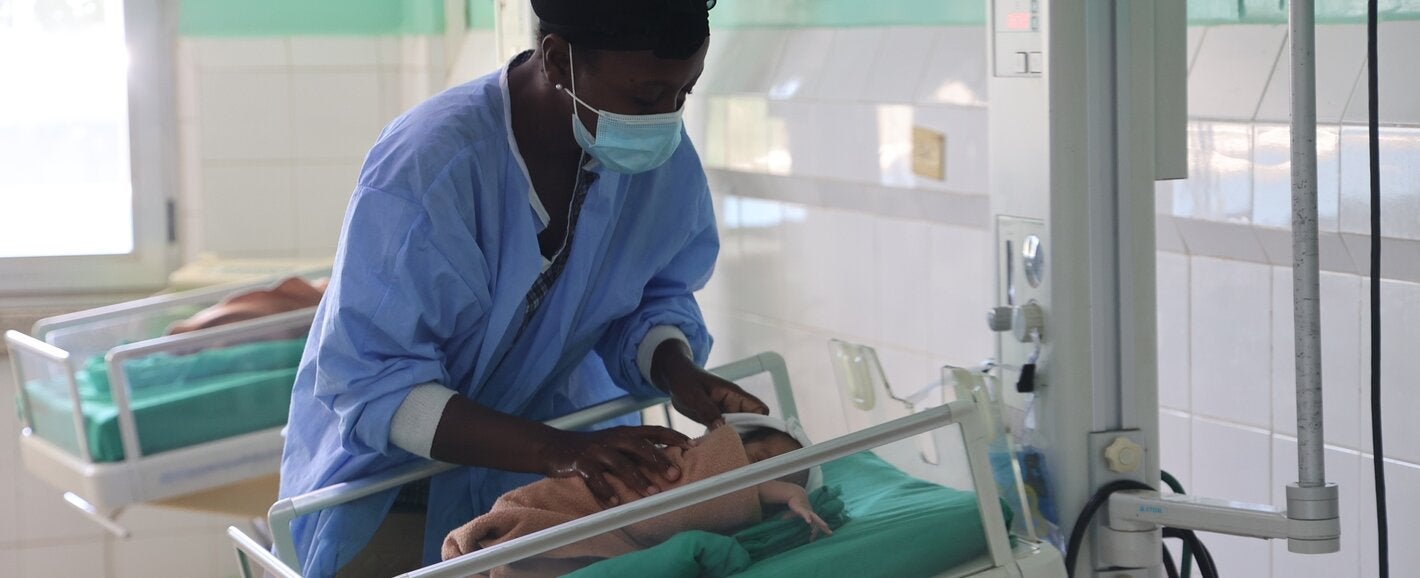
Panelists also discussed the essential role of nursing in infection prevention, including hand hygiene, care of invasive devices, and early detection of warning signs.
Closing the webinar, Dr. Pilar Ramon-Pardo, Chief of the Antimicrobial Resistance Special Program at PAHO, stressed that neonatal sepsis is a preventable cause of illness and death that requires an integrated, multidisciplinary approach, and reaffirmed PAHO's commitment to supporting countries in strengthening these capacities.