Washington, D.C., 28 October 2026 (PAHO) – Following the notification in France of the first documented case of human disease caused by Shamonda virus, Jairo Méndez Rico, Regional Advisor on Viral Diseases at the Pan American Health Organization (PAHO), explains what is known so far, the current situation in the Americas, and why continued surveillance is important.

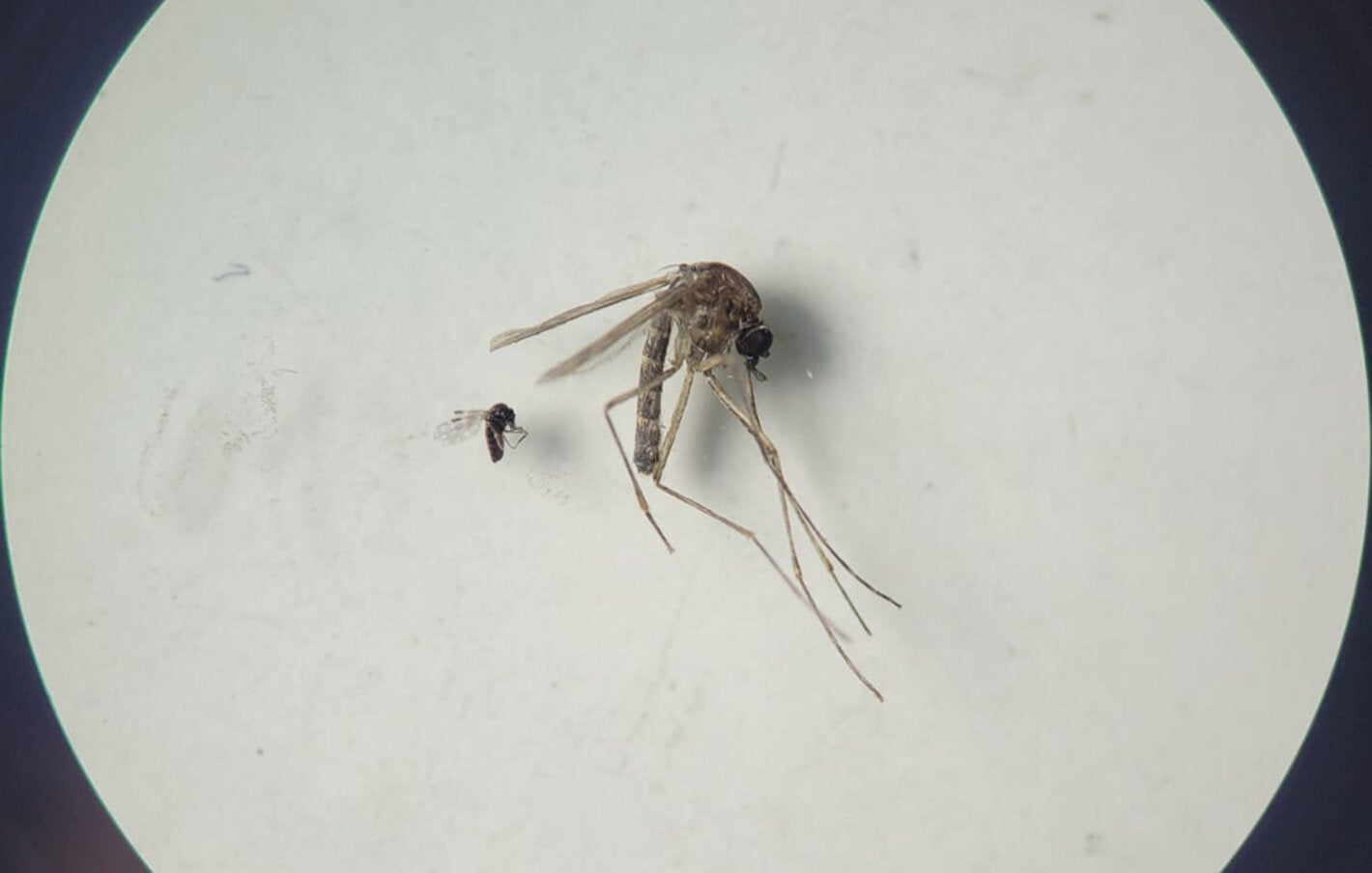
The World Health Organization (WHO) has reported that, to date, only one human case of disease caused by Shamonda virus has been reported. The virus primarily affects animals, including cattle, sheep, goats and horses, and is thought to be transmitted among animals through the bites of small insects of the genus Culicoides, commonly known as biting midges. Information on transmission and its effects in humans remains very limited.
What is the current situation regarding Shamonda virus in the Americas?
To date, there is no evidence of Shamonda virus circulation in the Region of the Americas. No human cases or detections of the virus in animals have been reported in the Region. The only documented human case was reported in France.
Very little is known about Shamonda virus infection in humans. With only one documented case, it is not yet possible to define the clinical spectrum of the disease.
What do we know about the first human case, and what does it actually tell us?
It is important to put the case into context. The patient already had a severe underlying illness and was severely immunocompromised, making the individual particularly vulnerable to infections and their complications. The patient also developed neurological manifestations that were considered to be associated with Shamonda virus infection.
What occurred in this patient cannot be extrapolated to the general population. A single case, particularly in a person with a serious pre-existing health condition, does not allow us to determine how the infection might behave in other people.
Could Shamonda virus reach the Americas?
While there is currently no evidence of circulation in the Americas, as with other emerging arboviruses, the possibility of an eventual introduction cannot be ruled out. Based on the information currently available, however, the probability is considered very low.
Any potential introduction would depend on several factors, including the intensity of viral circulation in affected areas and the existence of pathways that could allow the virus to reach the Region.
Maintaining surveillance systems capable of detecting unusual events in people, animals and vectors in a timely manner is therefore important, using a One Health approach.
Shamonda virus has been associated with Culicoides biting midges. Are these insects present in the Americas?
Yes. Several species of Culicoides are widely distributed throughout the Americas, and some are of public health importance in the Region. However, there is a fundamental distinction: the presence of Culicoides in the Americas does not mean that these insects are capable of transmitting Shamonda virus.
To date, there is no evidence that Culicoides species present in the Americas are competent to transmit this virus. WHO also notes that further studies are needed to determine exactly which arthropod species are involved in its transmission.
For a vector-borne virus to become established in a new region, several conditions must be met, including the availability of infected reservoirs and the ability of local vectors to acquire and efficiently transmit the virus. The presence of a potential vector alone does not mean that transmission can occur.
The Region also has experience in entomological surveillance and the identification of Culicoides, strengthened through the response to Oropouche virus, which is also transmitted by Culicoides. This expertise is important for investigating these vectors when unusual events emerge. PAHO and Brazil’s Oswaldo Cruz Foundation (Fiocruz) have developed technical materials to support entomology teams in the surveillance and identification of Culicoides species of public health importance.
Why, then, is continued surveillance important?
Precisely because this is a new event and many questions remain unanswered. From a public health perspective, it is important to maintain integrated surveillance under a One Health approach to identify unusual events in animals, humans and vectors.
Because the clinical spectrum of Shamonda virus infection in humans is not yet known, it is difficult to establish specific criteria for clinical suspicion. In this context, the capacity to investigate unusual manifestations or events and conduct differential diagnosis becomes particularly important.
Does the Region have the capacity to respond to a potential introduction of Shamonda virus?
There is currently no specific diagnostic protocol implemented for the detection of Shamonda virus in the Region of the Americas. However, countries and PAHO have networks, experience and capacities developed for the surveillance of and response to emerging arboviruses, including experience gained in responding to Oropouche virus, another Orthobunyavirus.
This experience includes laboratory capacity for detection and characterization using molecular and sequencing tools, as well as advances in entomological and entomovirological surveillance and the identification of Culicoides species. These capacities could provide a foundation and be adapted if investigation of Shamonda virus in the Region became necessary. Technical materials developed by PAHO and Fiocruz on Culicoides are also available to support countries’ entomological surveillance capacities.
Shamonda, however, is a different virus, and important questions about its transmission remain. If a suspected case or detection were to arise, specifically validated protocols, reagents and procedures for this virus would be needed.
Should people in the Americas be concerned?
Based on the evidence currently available, there is no indication of a current public health threat from Shamonda virus in the Americas.
There is no evidence of circulation of the virus in the Region. However, because knowledge of Shamonda virus infection in humans remains very limited, it is important to continue monitoring new evidence and developments.
PAHO continues to monitor available information and works with countries to strengthen surveillance for emerging viruses as new evidence on Shamonda virus becomes available.
More information
WHO published its questions and answers on Shamonda virus on 22 October 2026, with information on what the virus is, how it is transmitted, where it has been detected and what is currently known about disease in humans.