

Photograph: © Shutterstock/pixelheadphoto digitalskillet
Annual report 2025
The Bahamas,
and Turks and Caicos
Islands
Pan American Health Organization
Message from the PAHO/WHO Representative in The Bahamas, and Turks and Caicos Islands
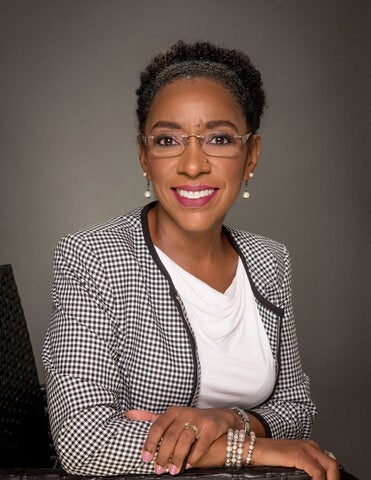
I am pleased to present the 2025 Annual Report of the PAHO/WHO country office for The Bahamas, and Turks and Caicos Islands, reflecting collaboration and progress in advancing public health and health system resilience. In partnership with national authorities and partners, PAHO supported priority actions aligned with national and regional goals.
In The Bahamas, PAHO’s technical cooperation supported achievements that included expansion of the Perinatal Information System Plus, strengthening infection prevention and control, and the passing of the Health Promotion and Wellness Bill, a milestone for disease prevention. Radiology and mammography services were enhanced, and a Systematic Evaluation of Rehabilitation Situation provided vital evidence to advance rehabilitation services.
In Turks and Caicos Islands, PAHO’s efforts focused on reinforcing core public health functions and emergency preparedness. Environmental and port health capacities were improved, also through work on air quality, development of a food and drug ordinance, and a cholera plan. Public health emergency readiness was improved through health emergency operations center training and development of a multihazard plan.
Both The Bahamas and Turks and Caicos Islands advanced toward validation of the elimination of mother-to-child transmission of HIV, demonstrating sustained commitment to equity and quality care.
I thank all stakeholders and partners for their dedication and reaffirm PAHO's support in the year ahead.
Eldonna Boisson
PAHO/WHO Representative in The Bahamas, and Turks and Caicos Islands
JAN

MAR

MAY

JUL
OCT
NOV

HEALTH EMERGENCY OPERATION CENTER TRAINING
Turks and Caicos Islands bolstered emergency preparedness through health emergency operating center training, risk assessment, and multihazard planning.
PERINATAL HEALTH INFORMATION SYSTEMS (SIP+) ROLLOUT
The Bahamas rolled out SIP+, boosting digital health capacity, standardization of perinatal data capture, and use of maternal and newborn health information for monitoring and decision-making.
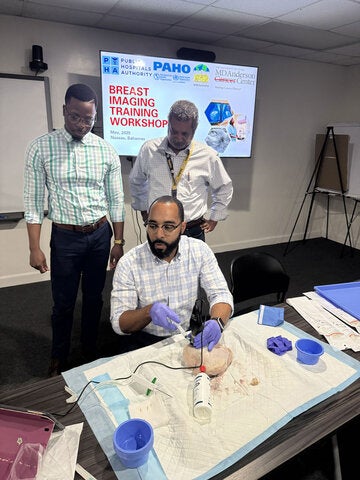
STRENGTHENING BREAST-IMAGING CAPACITY
The Bahamas Ministry of Health & Wellness, with PAHO and partners, and with Universal Health Coverage Partnership funding, conducted a breast-imaging seminar, boosting radiological capacity.
ADVANCING HEALTH AND WELLNESS
The Bahamas developed the 2025 Health Promotion and Wellness Bill, landmark legislation to support nutrition policy, noncommunicable disease prevention, and regulatory action.
STRENGTHENING INFECTION PREVENTION AND CONTROL
The Bahamas advanced infection prevention and control through development of a national five-year road map to strengthen the program.
IMPROVING ENVIRONMENTAL AND PORT HEALTH
Turks and Caicos Islands improved indoor air quality monitoring through hybrid training for environmental health officers.
Achievements in The Bahamas, and Turks and Caicos Islands

Boosting capacity for maternal and newborn health care
The Bahamas introduced and operationalized the Perinatal Information System Plus (SIP+) as part of its national digital health transformation agenda with PAHO support, to enhance maternal and newborn outcomes. Implementation began in New Providence and expanded to Grand Bahama and the Family Islands including Abaco, Cat Island, Exuma, Eleuthera, and San Salvador, reaching hospitals and public clinics nationwide. A total of 222 health personnel were trained through structured, hands-on sessions that included live system use, standardized data entry, and report generation to support monitoring of key indicators. The implementation of SIP+ institutionalized standardized perinatal data capture and boosted national capacity for real-time surveillance, quality improvement, and evidence-informed health system planning.
Strengthening infection prevention and control
In 2025, with increased national commitment and support from PAHO, The Bahamas advanced its infection prevention and control (IPC) program in alignment with WHO and PAHO core components. PAHO supported development of the five-year national IPC road map and key technical documents. The 2025 national IPC workshop was conducted, convening 100 multidisciplinary participants and reinforcing governance and accountability. At service level, PAHO assisted in drafting the national hospital-acquired infections surveillance protocol and financed online certification from the Association for Professionals in Infection Control and Epidemiology for five IPC coordinators. Communication assets for World Hand Hygiene Day raised risk awareness. Antimicrobial Resistance (AMR) governance progressed through a One Health approach with multisectoral coordination, and PAHO support for AMR Awareness Week 2025 and a review of the national action plan. These activities advanced sustainable IPC and AMR systems nationwide.

Advancing health and wellness
The Bahamas passed the Health Promotion and Wellness Bill 2025, landmark legislation to improve national health outcomes. Minister of Health & Wellness, Dr. the Hon. Michael Darville said, “the Bill is a ‘critical piece of legislation’ that is designed to change the approach to health and wellness in The Bahamas.” The legislation promotes healthy lifestyles across all age groups, strengthens intersectoral collaboration to safeguard food and nutrition security, and aims to reduce chronic noncommunicable diseases and premature mortality. It also supports implementation of global and regional policies aligned with the WHO framework on noncommunicable disease prevention. PAHO provided technical input through virtual consultations and a comprehensive review of six regulatory components, including food labeling, advertising, nutrients, baby formula, food establishments, and inspection and compliance measures. Participation in the PAHO-coordinated 2025 regional legislative drafting workshop on trans-fat elimination and sodium reduction further boosted national capacity and informed the legislation’s evidence-based provisions.
Improving environmental and port health
The Turks and Caicos Islands’ Ministry of Health and Human Services bolstered environmental and port health systems, with technical cooperation from PAHO and its specialized center, the Pan American Center for Foot-and-Mouth Disease and Veterinary Public Health. A comprehensive technical review of the food and drug ordinance generated actionable recommendations to modernize national food safety and quality frameworks. Targeted virtual and in-person training enhanced environmental health officers’ competencies in indoor air quality assessment. Baseline air quality data from landfill sites now inform risk mitigation and policy decisions. Revised port health standard operating procedures aim to improve surveillance, coordination, and compliance with international standards at points of entry. Strengthened intersectoral collaboration across health and nonhealth sectors resulted in a more integrated, resilient environmental health system and built a sustainable national capacity.
Bolstering capacities to deal with emergencies
Turks and Caicos Islands improved national health emergency preparedness and response capacities through strategic collaboration with PAHO. Investments in risk assessment, emergency coordination, and preparedness planning enhanced readiness to manage hurricanes and other public health threats. Capacity built through health emergency operating center training enabled the Ministry of Health and Human Services to respond effectively to hurricanes and floods, improving situational awareness, risk-informed decision-making, and coordinated health sector action. PAHO also supported development of a multihazard health emergency plan and finalization of a national cholera action plan, strengthening prevention, surveillance, and rapid response systems. These advances resulted in resilient national emergency systems.
Stories from the field
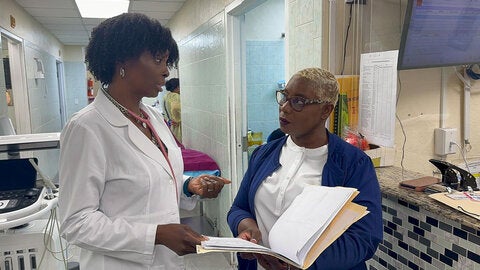
Path to triple elimination
PAHO supported analysis of the Elimination of Mother-to-Child Transmission Plus (EMTCT Plus) data for HIV, syphilis, and hepatitis B for The Bahamas and Turks and Caicos Islands. Subsequently, their national reports were approved by the regional validation committee and have advanced to the global committee for final review. In anticipation of EMTCT certification, Dr. Nikkiah Forbes, Director of The Bahamas Infectious Disease Programme, said, “It will be a red-letter day in The Bahamas. We’ll be smiling from ear to ear. We’ll be very proud.” The Hon. Kyle Knowles, Turks and Caicos Islands’ Minister of Health and Human Services, said, “I feel incredibly proud. This is a major achievement for Turks and Caicos Islands. We are proud to know that we haven’t had any babies infected with HIV within the last decade.”
Virtual and in-country EMTCT assessments were conducted in the period from October to November 2025. Technical support and guidance were provided for a rapid assessment to determine how The Bahamas and Turks and Caicos Islands are aligned to global criteria, especially to functional areas for EMTCT Plus, as well as achievements of the impact and programmatic targets. Technical guidance also included updating of the national EMTCT Plus guidelines and capacity-building for healthcare providers, as well as development of information, education, and communication materials for pregnant women. Through a special Caribbean project funded by the India-UN Development Partnership Fund, The Bahamas and Turks and Caicos Islands received computers to bolster their surveillance systems to maintain and sustain gains through ongoing monitoring and tracking cases for HIV, syphilis, and hepatitis B virus in pregnant women and exposed infants.
An advocate for early breast cancer detection
At 53 years old, Patricia Morley, Human Resources Senior Manager at the Princess Margaret Hospital in Nassau, The Bahamas, was undergoing breast cancer treatment when she participated in a breast-imaging training seminar in May 2025. The seminar was conducted by The Bahamas Ministry of Health & Wellness, Public Hospitals Authority, MD Anderson Cancer Center, and PAHO, with Universal Health Coverage Partnership funding.
Diagnosed just over a year earlier, Patricia understands firsthand the journey that follows a breast cancer diagnosis.
Her presence brought an important patient perspective to the training of local healthcare providers. She highlighted the value of early detection and clear public messaging to encourage women to seek screening sooner and better navigate their treatment pathways.
Following the seminar, Patricia partnered with PAHO in the development of public service announcements to promote breast cancer awareness nationwide.
By linking patient experience with provider training and public education, this initiative boosted both clinical capacity and community awareness, supporting national efforts to improve early diagnosis and breast cancer outcomes for women in The Bahamas.
Strengthening rehabilitation and assistive technology
Rehabilitation options for patients following a stroke or major surgery were limited and fragmented in The Bahamas, often with reliance on irregular therapy visits and improvised assistive devices. With the aim of providing better patient care and rehabilitation services, PAHO and Emory University’s WHO Collaborating Centre supported The Bahamas to conduct a Systematic Assessment of Rehabilitation Situation and an assistive technology capacity assessment, the first comprehensive review of rehabilitation and assistive technology services in the country. The findings informed the development of the National Rehabilitation and Assistive Technology Strategic Plan 2025–2030, which was led by the Ministry of Health & Wellness and the Public Hospitals Authority’s Rehabilitation Services Directorate.
Dr. the Hon. Michael Darville, Minister of Health & Wellness, said, “It is often said that there is no ‘them’ only ‘us’. We are releasing the plan in phases so that no one is left to fall between the cracks.” Launched in September 2025 with PAHO support, the plan targets governance, workforce capacity, and integration of rehabilitation into primary health care. The plan will commence implementation in 2026, providing patients with coordinated therapy and access to properly fitted assistive devices.
- The Bahamas Agricultural Health and Food Safety Authority. Through the One Health initiative, collaboration on surveillance and diagnostics to reduce risks to human, animal, plant, and environmental health.
- Canada. Supports PAHO’s programmatic efforts related to strengthening national capacities for preparedness and response to health emergencies, with a focus on immunization.
- Disaster Risk Management Authority, The Bahamas. Collaborates on disaster-resilient health infrastructure, improving health systems, and enhanced health information systems.
- Emory University WHO Collaborating Centre. Collaborates on enhancing national healthcare systems’ rehabilitation sectors.
- Healthy Bahamas Coalition. Ongoing collaboration on reducing unnecessary deaths and disability caused by noncommunicable diseases.
- India-UN Development Partnership Fund. Supports PAHO’s technical cooperation to strengthen the elimination of mother-to-child transmission of infectious diseases (EMTCT Plus) strategy within maternal and child health services.
- Inter-American Development Bank. Ongoing partnership focuses on advancing health sector initiatives with a focus on information systems, gender-based violence, and guideline/protocol development.
- MD Anderson Cancer Center. Collaborates on capacity-building for early cancer detection and treatment.
- Ministry of Health and Human Services, Turks and Caicos Islands. Responsible for the oversight and development of a robust and efficient health system that meets the priority health needs of the population.
- Ministry of Health & Wellness, The Bahamas. Ensures that the highest quality of services for health promotion, health protection, and health care are accessible to all.
- National Health Insurance Authority, The Bahamas. Provides accessible, affordable, and quality health care for the well-being of all.
- Public Hospitals Authority, The Bahamas. Responsible for the management and development of public hospitals, Grand Bahama Community Clinics, and Supplies Management Agency.
- Universal Health Coverage Partnership. Supports PAHO in improving national health systems so that everyone, everywhere, can receive the health care they need without financial hardship.


Making health
a commitment for all
2025 Country Annual Reports
of the Pan American Health Organization