
Annual report 2024
Barbados and the Eastern Caribbean Countries
Pan American Health Organization
PAHO: CATALYST FOR HEALTH IN THE AMERICAS
120 years of history
PAHO was the first multilateral health agency. Established in 1902, its founding objective was to respond to disease threats associated with increasing trade among countries in the Americas.
Preferred partner
La posición de la OPS como autoridad técnica respetada, sumada a sus relaciones sólidas y duraderas con los Ministerios de Salud, la convierten en un socio muy valorado en la Región.
Honest broker for health
We strive to build consensus around issues that are common to countries in the Region to prioritize health in a politically heterogenous and epidemiologically complex context.
Technical excellence
World-class technical expertise, data aggregation, and analytical capacity make PAHO a highly respected technical authority and information source for countries and partners.
Country focus
With the most extensive country presence of any WHO Region, we are committed to country-centered technical cooperation, tailored to unique needs and contexts.
Effective implementation
PAHO has an impressive track record of successes in disease elimination, healthcare coverage and emergency response that demonstrate its capacity to implement efficiently and effectively.
120 years of history
PAHO was the first multilateral health agency. Established in 1902, its founding objective was to respond to disease threats associated with increasing trade among countries in the Americas.
Technical excellence
World-class technical expertise, data aggregation, and analytical capacity make PAHO a highly respected technical authority and information source for countries and partners.
Preferred partner
PAHO’s position as a respected technical authority, along with its strong, long-standing relationships with Ministries of Health, makes it a highly valued partner in the Region.
Country focus
With the most extensive country presence of any WHO Region, we are committed to country-centered technical cooperation, tailored to unique needs and contexts.
Honest broker for health
We strive to build consensus around issues that are common to countries in the Region to prioritize health in a politically heterogenous and epidemiologically complex context.
Effective implementation
PAHO has an impressive track record of successes in disease elimination, healthcare coverage and emergency response that demonstrate its capacity to implement efficiently and effectively.
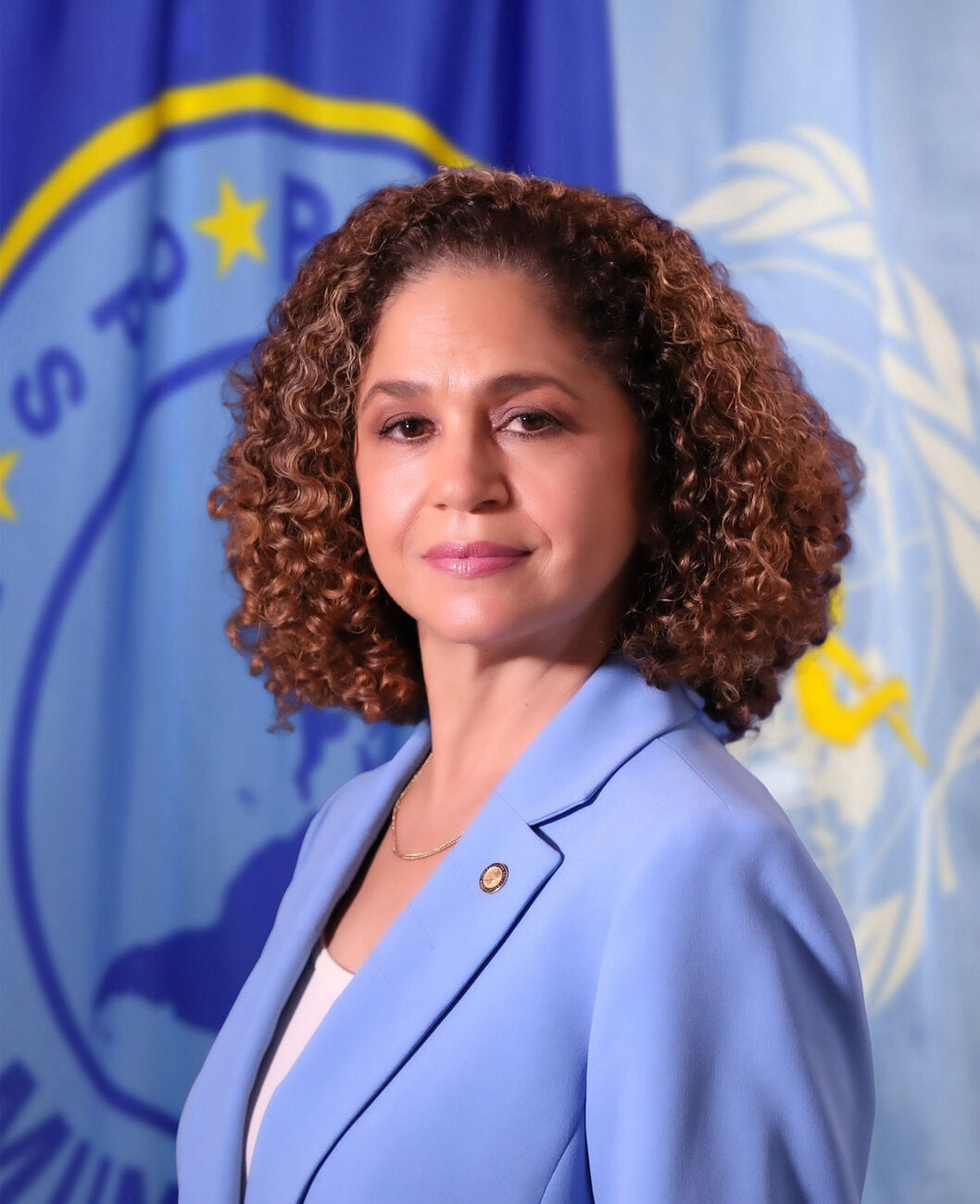
Message from the PAHO/WHO Representative in Barbados and the Eastern Caribbean Countries
For the PAHO/WHO country office for Barbados and the Eastern Caribbean Countries, 2024 was a year of remarkable progress, collaboration, and resilience.
Through active engagement of countries during Vaccination Week in the Americas, implementation of food and nutrition policies, and the advancement of HEARTS and mental health initiatives, we strengthened our engagement with the countries and communities. Support was provided to nurses through a forum to share insights and strengthen their role in achieving universal health.
Our team mobilized swiftly in response to Hurricane Beryl’s devastation, providing critical support to the affected countries, while also celebrating major milestones such as the recognition of Saint Vincent and the Grenadines for eliminating mother-to-child transmission of HIV and syphilis, the designation of Barbados’ Best-dos Santos Laboratory as a WHO National Influenza Centre, and progress in routine immunization, with Antigua and Barbuda, and Saint Kitts and Nevis leading the way globally. Strategic partnerships were strengthened to amplify our health agenda.
Our team closed the year with pride, having received PAHO’s Outstanding Team Award. To the governments, partners, and communities who journeyed with us, thank you; and to Team ECC, your commitment is inspirational!
Amalia Del Riego
PAHO/WHO Representative in Barbados and the Eastern Caribbean Countries
Highlights in 2024
FEB
APR
MAY
JUL
AUG
OCT
PARTNERSHIP
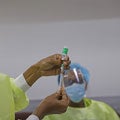
PAHO and Gavi informed countries about new vaccine introductions.
INTERNATIONAL RECOGNITION
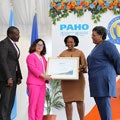
Best-dos Santos Public Health Laboratory recognized as a WHO National Influenza Centre.
EMTCT VALIDATION
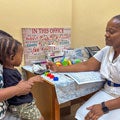
Achievement of validation of elimination of mother-to-child transmission of HIV and syphilis in Saint Vincent and the Grenadines.
DISASTER RESPONSE
Swift mobilization of resources and support in response to the devastating impact of Hurricane Beryl.
VACCINATION SUCCESS
Antigua and Barbuda, and Saint Kitts and Nevis recognized globally for recovering vaccination coverage levels to above those before COVID-19.
COOPERATION FOR HEALTH AND DEVELOPMENT
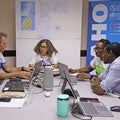
PAHO and the Organisation of Eastern Caribbean States launched two projects focused on disease elimination and noncommunicable disease care.
Achievements in Barbados and the Eastern Caribbean Countries
Strengthening health systems to address mental health
Significant strides have been made in strengthening health systems to address mental health in Antigua and Barbuda, Barbados, Dominica, Grenada, Saint Kitts and Nevis, and Saint Vincent and the Grenadines. With direct technical cooperation and strong emphasis on multisectoral engagement, Barbados and the Eastern Caribbean Countries advanced efforts to integrate mental health into primary care.
Central to this achievement was the review and updating of national mental health strategies, policies, legislation, and services. This process was rooted in stakeholder consultations that engaged persons with lived experience, ensuring that reforms were responsive and rights-based.
In Barbados and Saint Vincent and the Grenadines, targeted, school-based, mental health literacy programs were introduced and implemented, equipping educators with the tools to recognize and respond to mental health concerns early.
Additionally, the Mental Health Gap Action Programme intervention guide was used to build capacity among primary care providers in Barbados, Dominica, Grenada, and Saint Vincent and the Grenadines, promoting early identification, treatment, and referral of mental health conditions.
Advocacy efforts at all levels, including government, civil society, and the private sector, facilitated the integration process by helping to reduce stigma, increase awareness, and foster stronger political commitment to mental health reform.
Strengthening vaccine introductions
PAHO and Gavi, the Vaccine Alliance supported capacity-building in Saint Lucia for the introduction of critical vaccines under Gavi’s new strategy for middle-income countries.
Under this strategy, approved in 2020, catalytic funding was provided for technical assistance, one-off costs, and vaccine supplies to ensure equitable and sustainable introductions of rotavirus, pneumococcus, and human papillomavirus vaccines. This approach addressed threats to the equity and sustainability of routine immunization programs, aligning with Gavi’s vision of leaving no one behind.
Postpandemic, the Caribbean subregion made significant strides in recovering immunization coverage rates. However, further efforts were essential to achieve the necessary coverage to prevent potential outbreaks.
Expanded Program on Immunization managers, chief medical officers, pharmacists, and health planners from Belize, Dominica, Grenada, Saint Lucia, and Saint Vincent and the Grenadines benefited from updated vaccine coverage in the subregion, experience-sharing, and improved knowledge of the types of support available through Gavi’s strategy.
With direct technical cooperation and strong emphasis on multisectoral engagement, Barbados and the Eastern Caribbean Countries advanced efforts to integrate mental health into primary care.
International designation for public health laboratory
In April, WHO recognized Barbados’ Best-dos Santos Public Health Laboratory as a National Influenza Centre. This designation, initially granted in October 2023, also included membership in the
WHO Global Influenza Surveillance and Response System.
During the ceremony, Prime Minister Mia Amor Mottley expressed pride in the laboratory’s achievement, emphasizing its global excellence and trustworthiness. She noted that the designation reflects Barbados’ capability to meet international standards and its dedication to public health.
During the pandemic and beyond, PAHO has worked diligently with the Ministry of Health and Wellness and the laboratory in strengthening diagnostic capacity for many diseases; and an evaluation mission conducted by PAHO recommended the designation of the laboratory.
This designation means the laboratory is recognized for its high standards and ability to perform specialized diagnostics, contribute to global influenza surveillance, and provide critical data that help in the fight against influenza and pandemics.
The laboratory’s new role empowers Barbados to better understand and combat influenza through effective vaccines and treatments. Many international partners have been instrumental in providing support to the laboratory through PAHO. This collaboration represents a very good example of strong and effective partnership.
The Best-dos Santos laboratory, led by Director Songee Beckles, continues to support Eastern Caribbean countries through training and capacity-building.
Approval of major investment in pandemic preparedness
In 2024, with the support of PAHO, the Food and Agriculture Organization of the United Nations, and the World Bank, and in collaboration with the Organisation of Eastern Caribbean States (OECS) Commission, the six independent Member States of the OECS, namely Antigua and Barbuda, Dominica, Grenada, Saint Kitts and Nevis, Saint Lucia, and Saint Vincent and the Grenadines, were awarded funds through a multicountry proposal titled Strengthening Prevention, Preparedness and Response to Emerging Health Threats in the Eastern Caribbean.
This proposal, valued at USD 24 million, offers an important opportunity to support Eastern Caribbean countries in strengthening surveillance, diagnostic, and workforce capacity to better respond to emerging health threats.
Activities will follow a One Health approach with the involvement of both health and animal sectors in each country and be aligned with existing national and regional efforts. The project focuses on conducting cross-sectoral assessments, strengthening multisectoral surveillance and response systems, improving diagnostic capacity, and building human resource capacity. It also reinforces the value of regional solidarity and partnerships in addressing shared challenges.
The successful approval of this project not only secures significant financial resources but also positions the subregion as a model for collective action in pandemic preparedness and response.
The country office’s support to Grenada and Saint Vincent and the Grenadines in responding to Hurricane Beryl in July showcased its resilience and coordination capacity.
Enhancing emergency response capacities
The implementation of the Strategic Tool for Assessing Risks assessment and the completion of the All-Hazard Plan in Antigua and Barbuda laid a robust foundation for emergency preparedness across the subregion. In addition, comprehensive training was conducted in mass casualty management, emergency care and treatment, and the incident command system. This training included simulation exercises in Anguilla, Barbados, British Virgin Islands, Dominica, Saint Kitts and Nevis, and Saint Vincent and the Grenadines, ensuring that personnel were well-equipped to handle various emergency scenarios.
The country office’s support to Grenada and Saint Vincent and the Grenadines in responding to Hurricane Beryl in July showcased its resilience and coordination capacity. Despite challenges such as damaged healthcare infrastructure, disrupted communication networks, and limited human resources, PAHO played a pivotal role in restoring critical health services in the most affected areas.
PAHO’s efforts were marked by active collaboration with the Ministries of Health, United Nations agencies, and nongovernmental organizations. By convening weekly health sector and mental health and psychosocial support coordination meetings, PAHO ensured a well-coordinated response that addressed both immediate and long-term healthcare needs. This achievement underscores PAHO’s commitment to strengthening emergency response capacities and fostering resilience in the face of natural disasters.
Accelerated path toward accreditation
Barbados and its neighbors face growing risks from hurricanes and other disasters, compounded by climate change. The Barbados Field Medical Hospital, operated by the Barbados Defence Force (BDF), plays a vital role within the Caribbean Community (CARICOM) as a mobile, rapidly deployable healthcare facility designed to respond to regional emergencies and disasters.
As the only WHO-verified Type 1 Emergency Medical Team in the Caribbean, it provides essential outpatient emergency care and supports CARICOM’s collective disaster preparedness and health security framework. The hospital is equipped with triage, surgical, obstetric, and pediatric capabilities, and can be deployed swiftly to areas where healthcare infrastructure is compromised.
In collaboration with PAHO and WHO, the BDF is working toward achieving Type 2 accreditation, which would elevate the hospital’s capacity to provide inpatient surgical emergency care. PAHO has been instrumental in this effort, offering technical guidance, training, equipment procurement, and mentorship to meet the rigorous standards required for Type 2 classification.
In 2024, in addition to technical assistance in areas such as training, capacity-building, equipment procurement, and operational readiness (standard operating procedures), PAHO and the BDF engaged in documenting this experience and the readiness exercises. In a significant communications achievement, PAHO produced a video documentary highlighting the critical role of the mobile field hospital in strengthening emergency health response across Barbados and the Eastern Caribbean and its journey toward Type 2 accreditation. The documentary offers an inside look at how the BDF Field Medical Hospital, developed with PAHO’s technical and strategic support and in collaboration with development partners, was established to meet these challenges. It explains what a field hospital is, how it is constructed, how it operates, how it is funded, and its value in times of crisis.
Documenting and sharing success stories like this are essential to PAHO’s technical cooperation. The documentary captures a story of innovation, preparedness, regional solidarity, and partnerships, providing an inspiring look at how regional resilience is being built, one step at a time. The documentary has been widely disseminated in the Caribbean and beyond.
In collaboration with PAHO and WHO, the BDF is working toward achieving Type 2 accreditation.
Stories from the field
Resilience in the face of crisis
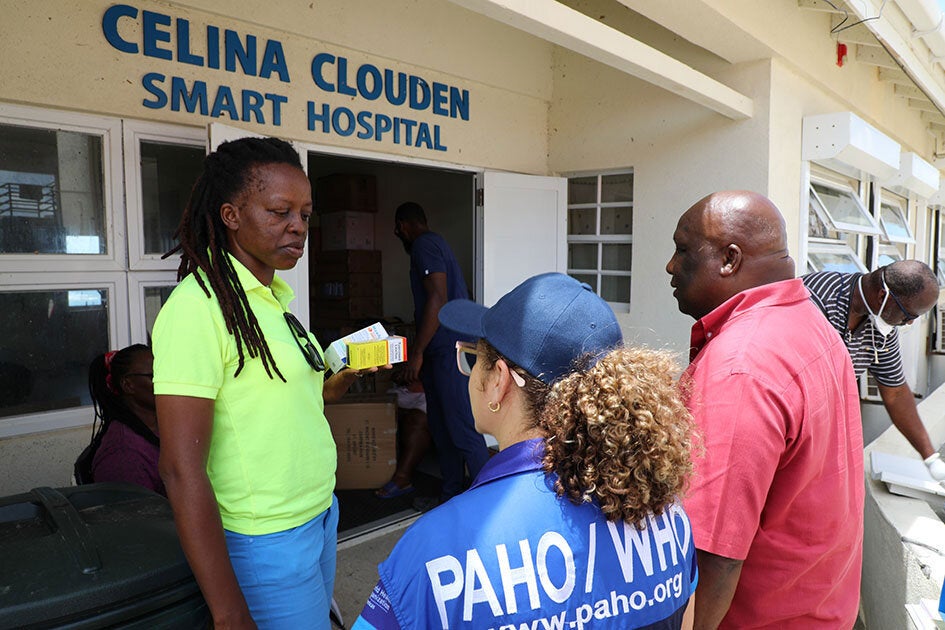
“We are a resilient people.” This spirit defines Saint Vincent and the Grenadines. Between 2020 and 2024, the country faced various adversities: a pandemic, a dengue outbreak, La Soufriere’s explosive eruption, and, most recently, Hurricane Beryl.
The mental health of nurses and doctors was put to the test in the wake of the hurricane, especially as they responded to a surge in injured persons. Nurse Chambers-Webb shares, “It was overwhelming – people were showing up everywhere with injuries.” She did her best to provide immediate care but eventually had to refer many to the hospital.
To support healthcare workers during this difficult period, PAHO assisted the Ministry of Health by deploying a mental health and psychosocial support expert, and facilitated coordination of the mental health and psychosocial support health cluster network.
Nurse Lewis supports digital innovation amid immunization challenges
In Dominica’s journey toward full health systems transformation, the Electronic Immunization Registry (EIR) stands out as a key milestone. Launched in April 2022 with support from PAHO, and developed by a local firm, the EIR is transforming how vaccine data are captured and used.
Senior Community Health Nurse and Expanded Program on Immunization Manager, Florestine Lewis, explains: “The EIR gives us accurate data, tracks defaulters, and helps plan follow-up care.”
Nurse Lewis envisions a future where parents can download their child’s vaccine records online, with no clinic visit required.
Challenges remain: the EIR is not used in all districts, and there has been a decline in immunization numbers. But she remains hopeful: “With better data and greater access, I believe we can turn this around. The EIR is the foundation for stronger, more equitable health care.”
Boosting readiness ahead of a major global conference
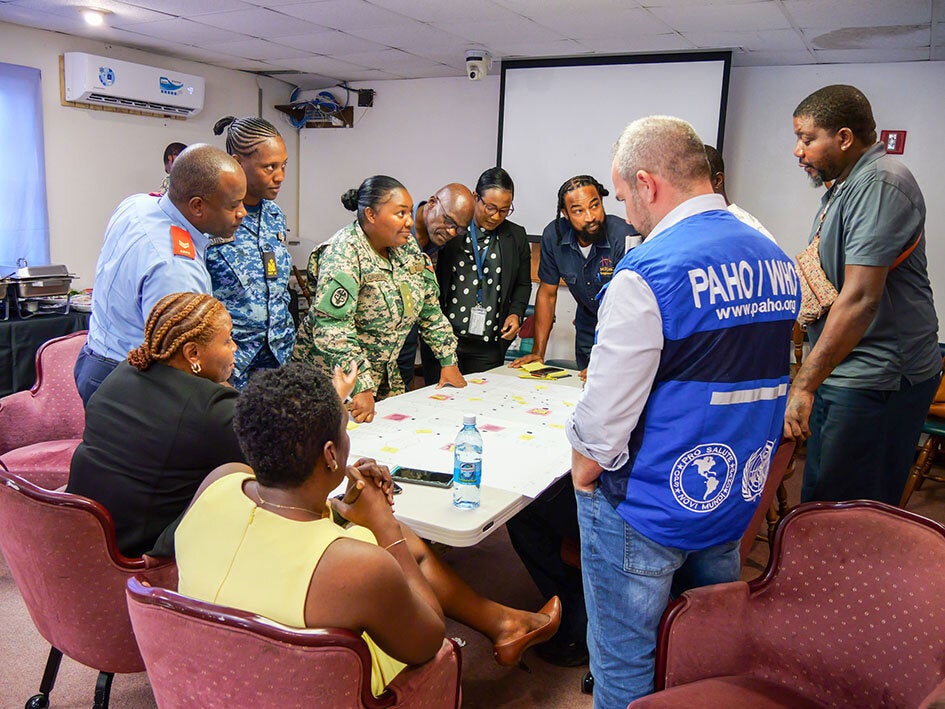
Antigua and Barbuda’s Emergency Medical Teams (EMTs) are now better equipped to respond to emergencies, following targeted training and technical support from PAHO. The journey to EMT readiness began in February 2023 and progressed ahead of the SIDS4 Conference, held in May. Lieutenant Carla Browne Thomas, Military Focal Point for EMTs, noted that before the training, many participants were unaware of the EMT initiative. The sessions raised awareness among key emergency response stakeholders, fostered strong collaboration, promoted knowledge-sharing, and clarified the roles of each participating organization in emergencies. “It brought about camaraderie and built lifelong relationships,” she says. This collaborative effort strengthens Antigua and Barbuda’s health emergency response and reflects its commitment to preparedness.
Our partners
- Barbados Community College
- Barbados Defence Force
- Caribbean Disaster Emergency Management Agency
- Caribbean Public Health Agency
- Centers for Disease Control and Prevention
- Embassy of the Argentine Republic, Barbados
- European Union
- Food and Agriculture Organization of the United Nations
- Gavi, the Vaccine Alliance
- Global Affairs Canada
- Healthy Caribbean Coalition
- Heart and Stroke Foundation of Barbados
- India-UN Development Partnership Fund
- International Development Bank
- Office of the United Nations for Barbados and the Eastern Caribbean
- Organisation of Eastern Caribbean States
- Ross University School of Medicine
- Samaritan’s Purse
- The World Bank
- UN Women
- UNICEF
- United Nations Development Programme
- United States Agency for International Development
- World Food Programme

Thinking regionally,
acting locally
2024 Country Annual Reports
of the Pan American Health Organization