
PAHO: CATALYST FOR HEALTH IN THE AMERICAS
120 years of history
PAHO was the first multilateral health agency. Established in 1902, its founding objective was to respond to disease threats associated with increasing trade among countries in the Americas.
Preferred partner
PAHO’s position as a respected technical authority, along with its strong, long-standing relationships with Ministries of Health, makes it a highly valued partner in the Region.
Honest broker for health
We strive to build consensus around issues that are common to countries in the Region to prioritize health in a politically heterogenous and epidemiologically complex context.
Technical excellence
World-class technical expertise, data aggregation, and analytical capacity make PAHO a highly respected technical authority and information source for countries and partners.
Country focus
With the most extensive country presence of any WHO Region, we are committed to country-centered technical cooperation, tailored to unique needs and contexts.
Effective implementation
PAHO has an impressive track record of successes in disease elimination, healthcare coverage and emergency response that demonstrate its capacity to implement efficiently and effectively.
120 years of history
PAHO was the first multilateral health agency. Established in 1902, its founding objective was to respond to disease threats associated with increasing trade among countries in the Americas.
Technical excellence
World-class technical expertise, data aggregation, and analytical capacity make PAHO a highly respected technical authority and information source for countries and partners.
Preferred partner
PAHO’s position as a respected technical authority, along with its strong, long-standing relationships with Ministries of Health, makes it a highly valued partner in the Region.
Country focus
With the most extensive country presence of any WHO Region, we are committed to country-centered technical cooperation, tailored to unique needs and contexts.
Honest broker for health
We strive to build consensus around issues that are common to countries in the Region to prioritize health in a politically heterogenous and epidemiologically complex context.
Effective implementation
PAHO has an impressive track record of successes in disease elimination, healthcare coverage and emergency response that demonstrate its capacity to implement efficiently and effectively.

Message from the PAHO/WHO Representative in Suriname
As Suriname continues to advance toward a more resilient, equitable, and people-centered health system, the PAHO/WHO country office has worked in close collaboration with the Ministry of Health, international partners, and national stakeholders to provide impactful technical cooperation across a wide range of priority areas.
This report highlights the achievements of a team committed to strengthening health systems, reducing inequities, and fostering innovation. Despite challenges, the team supported key initiatives, from capacity-building and strategic policy development to field-level innovations, that directly benefit communities.
Milestones include the implementation of a telehealth approach to improve access in underserved regions; the rollout of an information system to enhance maternal and neonatal health data; and the institutionalization and expansion of the HEARTS initiative. Suriname also officially initiated the malaria certification process, signaling a historic step toward disease elimination.
It is with pride and gratitude that I present the annual report of the country office. It reflects our collective achievements and the steadfast commitment of national authorities, health professionals, development partners, and communities to advancing health equity. Together, we are shaping a healthier and more resilient future for all.
Yafflo W. Ouattara
PAHO/WHO Representative in Suriname
Highlights in 2024
APR

JUN

AUG

AUG
NOV

DEC
HPV VACCINATION
Relaunch of the schoolbased program using a single dose.
MALARIA ELIMINATION
High-level, kick-off meeting: Suriname on the road to certification of malaria elimination.
BETTER CARE FOR NCDs
Adoption of policy framework to implement the initiative, expanding access to hypertension and diabetes care (HEARTS approach).
DIGITAL MORTALITY SURVEILLANCE SYSTEM
System launch, transforming how Suriname captures vital mortality data.
TELEHEALTH
Launch of the telehealth platform in five remote interior communities, serving over 54 000 people.
PERINATAL INFORMATION SYSTEM PILOT
Official start of the pilot in two hospitals with the highest number of deliveries and three primary health care facilities.
Achievements in Suriname
- Scaling up HPV vaccination. Suriname restarted its HPV vaccination program within schools, a critical step toward elimination of cervical cancer. The program follows the WHO recommendation of a single-dose HPV vaccine, simplifying logistics and enabling wider coverage. PAHO supported a revitalized nationwide campaign, with 1450 children (657 girls) receiving the vaccine. The campaign strengthens the national immunization program and adolescent health services.
- Closer to malaria elimination. Suriname submitted its malaria elimination certification dossier to WHO. This achievement reflects its long-standing commitment to malaria control and elimination, led by the Ministry of Health, with strong support from PAHO and other partners. Suriname has maintained zero indigenous malaria cases for three consecutive years, thereby fulfilling a core eligibility requirement for WHO certification.
- Strengthening primary health care for noncommunicable diseases (NCDs). The HEARTS initiative was integrated into the national policy framework, marking a shift toward more standardized, person-centered, and evidence-based care for NCDs at the primary health care level. Key clinical tools were rolled out across the health system, accompanied by quality improvement drivers and monitoring instruments to enable data-informed decision-making, with more than 200 health professionals receiving training. Through its multifaceted support, PAHO has contributed to enhanced service delivery, reduced fragmentation, and measurable progress toward universal health coverage and reducing cardiovascular disease.
- Reducing suicide and promoting mental health. In response to Suriname’s alarming suicide rates, PAHO provided critical support to advance suicide prevention and mental health system strengthening, anchored in the WHO’s LIVE LIFE framework. A situational analysis was conducted, and primary health care capacity strengthened, with over 55 health professionals undergoing relevant training. With 68% of suicides linked to pesticide self-poisoning, support focused on strengthening legal and regulatory frameworks. Suicide surveillance systems were reinforced in hospitals and police departments. In parallel, a rights-based approach to mental health was promoted through capacity-building of staff.
Suriname successfully piloted a telehealth platform in five remote interior communities, serving over 54 000 people.
- Advancing road safety. Technical and institutional support was provided to the National Road Safety Commission to evaluate the implementation of the 2018–2021 Road Safety Strategic Plan. This assessment helped guide the definition of evidence-based priorities and development of the National Road Safety Strategic Plan 2025–2030. This multisectoral effort reflects a strategic shift toward sustainable, data-driven, and people-centered solutions.
- Embracing digital tools to modernize death registration. With support from PAHO, Suriname launched its first digital mortality surveillance system. The system empowers health professionals with a streamlined, standardized workflow, improves accessibility for families, and enhances the quality and timeliness of data. This marks a strategic advance in health information systems, aligning Suriname with global best practices.
- Telehealth for interior communities. Suriname successfully piloted a telehealth platform in five remote interior communities, serving over 54 000 people. Led by the Ministry of Health, in collaboration with PAHO and the Medical Mission, the initiative aimed to bridge long-standing access gaps. “Telehealth is transforming care in our most isolated communities,” said the Medical Mission Director. The deployment of the PAHO All-in-One Telehealth Platform introduced core functionalities such as electronic health records. Frontline health workers reported enhanced coordination, more efficient follow-up, and improved clinical decision-making.
- Advancing maternal and neonatal health. SIP Plus, a web-based perinatal information system, was introduced in Suriname’s two largest maternity hospitals as well as three primary health care centers. With support from PAHO, the initiative focused on digitizing clinical records to improve data collection, monitoring, and quality of care. Achievements include adaptation of the SIP Plus tool into Dutch, development of localized clinical guidelines, installation of IT infrastructure, and training of 30 health professionals. By strengthening national capacity for perinatal data management and quality improvement, Suriname is improving maternal and child health outcomes and laying the groundwork for scaling digital health innovations nationwide.
Stories from the field
“Now the doctor comes to us”
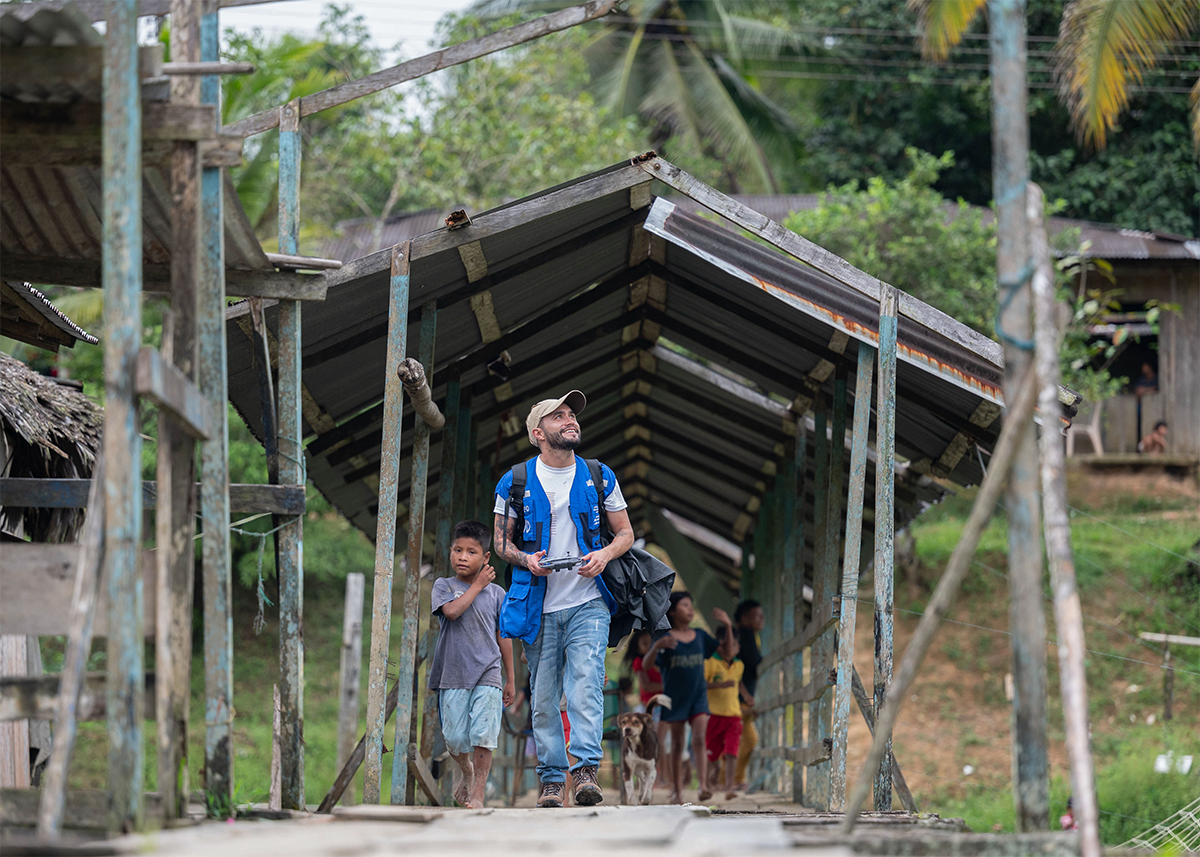
Powakka became one of five remote communities in Suriname to benefit from a transformative telehealth initiative supported by PAHO. For village leader Sergio Sabajo, the change has been profound. “For years, my people had to travel long distances for care. Some avoided going altogether because it was too costly or difficult,” he explains. “Now the doctor comes to us, through a screen, yes, but with care that saves lives.” Implemented by the Medical Mission with PAHO’s support, the telehealth pilot is closing health access gaps for indigenous and Maroon communities. Using simple digital tools, local nurses now connect with doctors in Paramaribo for real-time consultations, improving timely diagnosis and continuity of care.
“We used to do what we could,” says Jacintha Kent, “but now we’re supported by doctors instantly. It makes a big difference.”
The initiative trained health workers, upgraded connectivity, and engaged local communities to build trust and acceptance. It reflects a commitment to health equity and culturally responsive care in hard-to-reach areas.
Final steps toward malaria elimination
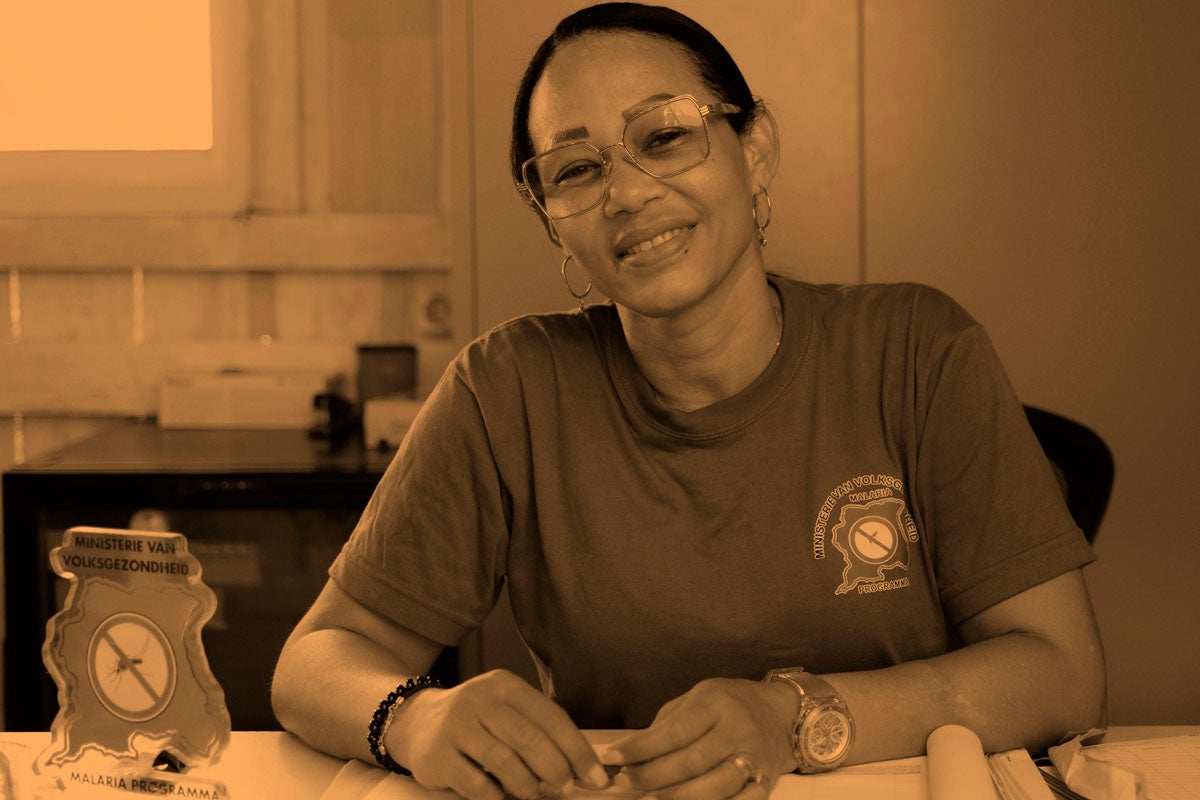
Suriname reached a public health milestone in 2024 by formally submitting its malaria elimination certification dossier to WHO. For Dr. Marthelise Eersel, Suriname’s National Malaria Program Manager, the journey to elimination has been both strategic and deeply personal. “We used to hear about malaria every week,” she recalls. “In the interior, it was part of daily life.”
Thanks to strong political commitment, community engagement, and technical support from PAHO and other international partners, Suriname has sustained zero indigenous malaria cases since 2021. The country implemented the malaria service delivery approach, transforming surveillance into a rapid, case-based, and action-oriented system. Mobile teams now reach remote areas, and real-time data drive immediate response.
“Surveillance is no longer passive,” Dr. Eersel explains. “That’s what makes elimination possible.”
Suriname’s journey demonstrates how leadership, innovation, and partnerships can drive a nation toward a malaria-free future, proving that elimination is an achievable reality.
How HEARTS is rewriting the story of chronic care
“I didn’t know I had high blood pressure,” says Robert, a 55-year-old teacher. “Now I feel stronger, safer, like I’ve been given a second chance.”
His experience reflects the impact of the HEARTS initiative, launched by the Suriname Ministry of Health with support from PAHO and partners. The goal: improve hypertension and diabetes care at the primary level and reduce the burden of cardiovascular disease.
Before HEARTS, only 20% of patients had their blood pressure under control. Many lacked access to care. Clinics struggled with limited training, essential medicines, and tools – resulting in preventable heart attacks and strokes.
HEARTS changed that. With standardized protocols, trained providers, reliable blood-pressure devices, and consistent medicine supplies, primary care has been strengthened. Community outreach and mentoring have empowered patients and providers.
Hypertension control has risen from 20% to 55%, and medicine availability has improved from 60% to 73%. More patients now attend follow-up visits and trust their care. HEARTS is more than a program, it is saving lives.
Our partners
- Bilateral stakeholders (Brazil, Canada, China, France, Guyana, India, Netherlands, Spain, the United States, and the European Union). PAHO maintains active and strategic partnerships with key bilateral actors in Suriname. These partnerships are grounded in continuous dialogue and shared priorities in public health.
- Inter-American Development Bank. The bank supports health infrastructures, digital health, and the HEARTS initiative, and is engaged in joint initiatives to modernize care delivery and strengthen health system resilience.
- Islamic Development Bank. A promising partnership with the bank to support health sector transformation is focusing on strengthening infrastructure, workforce capacity, and institutional development.
- Medische Zending. A key provider of primary health care in the interior, Medische Zending plays a vital role in delivering maternal, child, and immunization services, supporting equitable access for indigenous and Maroon communities.
- Regional Health Services. This key primary health care provider mainly serves the coastal area while also collaborating with other actors to create conditions that enable the entire community to have access to health care and live healthy lives.
- Road Safety Institute. The institute plays a key role in improving road safety through policy development, research, training, and awareness. Its collaboration supports health sector efforts to reduce traffic-related injuries and strengthen trauma care and prevention systems.
- Stichting Lobi Health Center. A leading organization in sexual and reproductive health in Suriname, the center has been instrumental in community outreach, health education, and increasing awareness around screening and early detection of cervical cancer.
- United Nations agencies. The United Nations Country Team in Suriname plays a critical role in advancing national development and health priorities through coordinated efforts. In close collaboration with PAHO, United Nations agencies support a wide range of initiatives, from health governance and climate resilience to immunization and maternal care. These partnerships reinforce equity, strengthen primary health systems, and ensure that no one is left behind, particularly in underserved and remote communities.
Thinking regionally,
acting locally
2024 Country Annual Reports
of the Pan American Health Organization