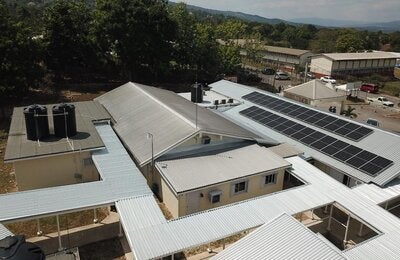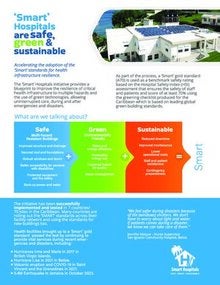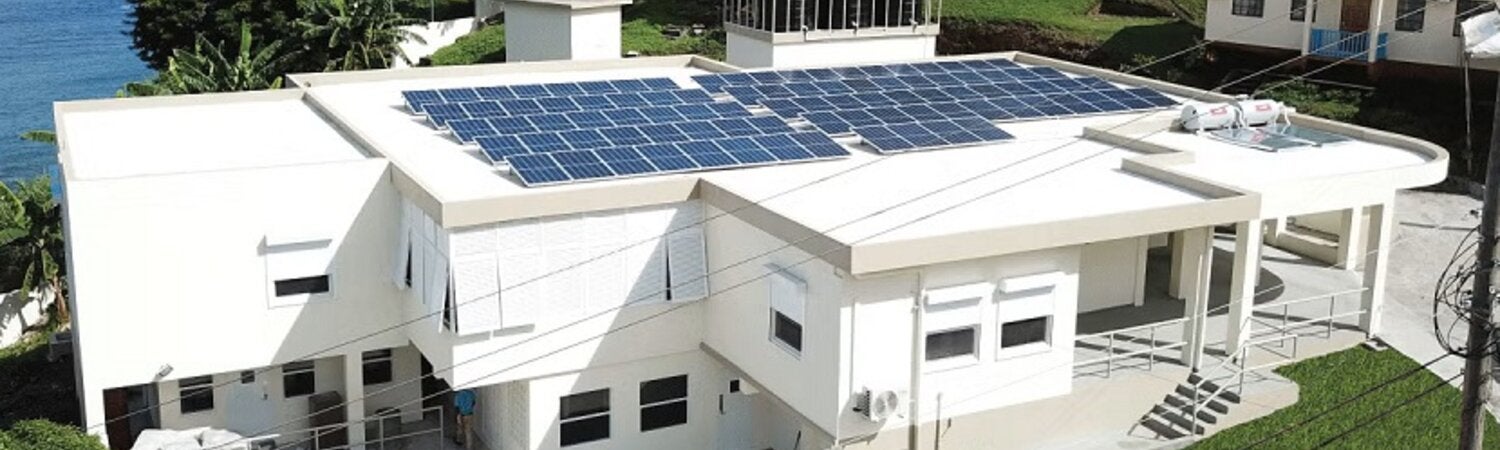
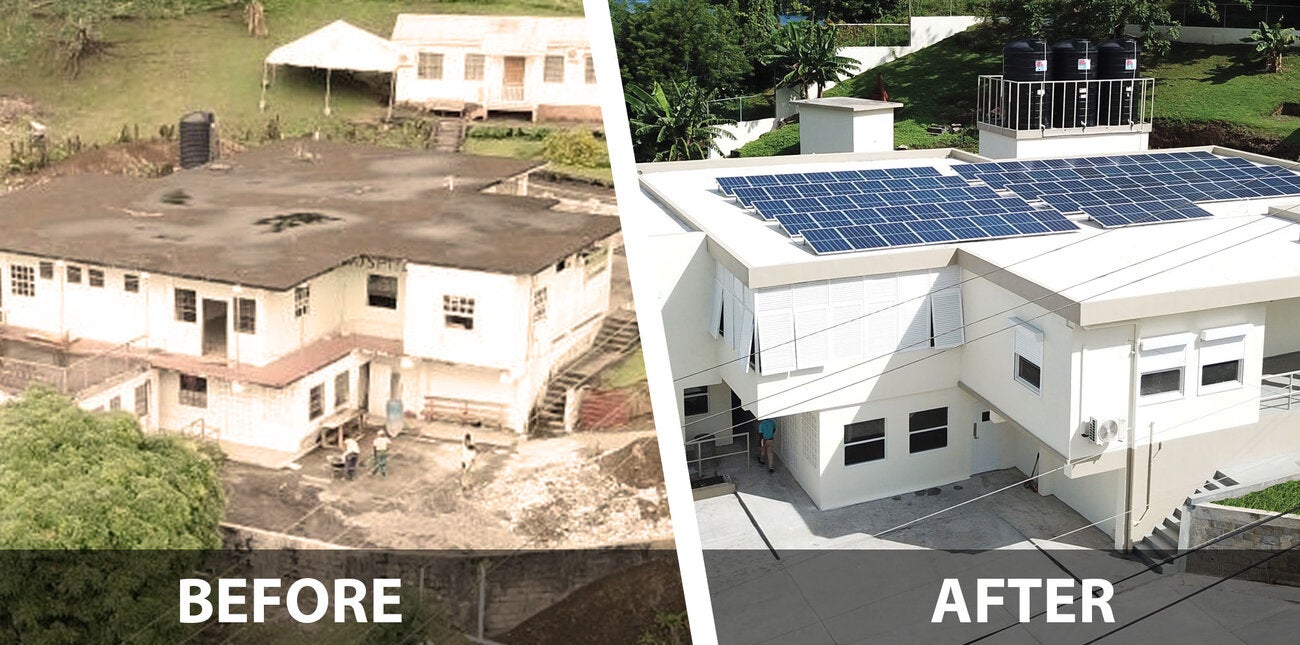
The Smart Hospital initiative builds on the Safe Hospital Initiative and focuses on improving hospitals' resilience, strengthening structural and operational aspects and providing green technologies. Energy improvements include solar panels installations, electric storage batteries, and low-consumption electrical systems, which, in addition to reducing energy consumption, reduce health sector carbon footprint in the environment and provide the hospital with energy autonomy, allowing it to continue running during emergencies and disasters.
Piloted in 2012 in Saint Vincent and the Grenadines and St. Kitts and Nevis, Smart Hospitals is one of PAHO’s largest partnership initiatives, together with the United Kingdom’s Foreign, Commonwealth and Development Office (FCDO).
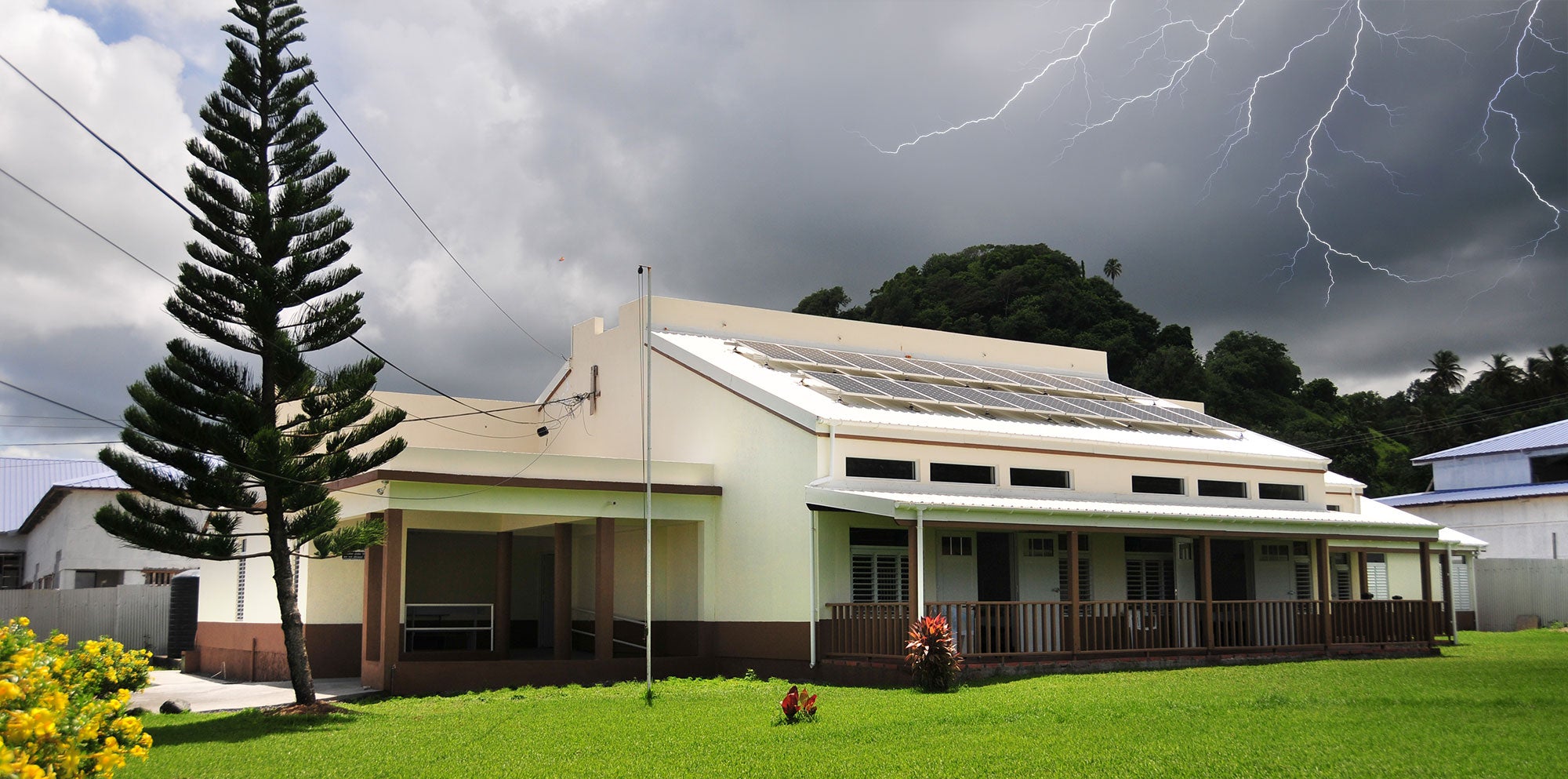
In St. Vincent and the Grenadines, Georgetown Hospital, benefiting from the intervention of a Smart hospital, was the only one that remained functional after a severe storm-affected 39 clinics and the reference hospital Milton Cato Hospital. In addition, this hospital became a water supply center for the community after the storm, using rainwater reserves. In Jamaica after the passage of hurricane Melissa in 2025 all four smart facilities remained functional. Caribbean countries are encouraged to tackle multi hazard challenges including climate change and diseases by using smart standards in all health facilities.
This Smart Hospitals Toolkit is designed for hospital administrators, health disaster coordinators, health facility designers, engineers and maintenance staff to help assess disaster safety levels and energy consumption and provide recommendations and action plans for the implementation of interventions aimed at improving resilience, conserving resources, cutting energy costs and dependency, increasing energy efficiency in operations, and reducing carbon emissions.
This Toolkit is comprised of previously developed instruments such as the Hospital Safety Index, the Green Checklist and other accompanying tools aiming to guide healthcare facilities in the process of linking their structural and operational safety with green interventions, at a reasonable cost-to-benefit ratio and become Smart.
Tool 1. Hospital Safety Index assessment form for small and medium facilities (Excel)
Tool 2. Hospital Safety Index: Guide for Evaluators Small / Medium facilities
Tool 3. Green Checklist spreadsheet (Excel)
Tool 4. Illustrated Guide to using the Green Checklist
Tool 5. Baseline Assessment Tool workbook
Tool 6. Technical Standards for Retrofitting
Tool 8. Hurricane shutters & windows: the dos and don'ts of installation
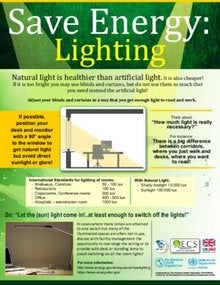
Tool 9. LED Lighting in Hospitals
Tool 10. Hurricane-resistant buildings: Building CAT-5 Resistant Timber Roofs
Tool 11. Smart II Case Study - Roofing Details
Tool 12. Preventive Maintenance Manual
Tool 13. Cost-effectiveness Analysis: The Retrofitting Economic Support Tool (REST)
Tool 14. REST: Retrofitting Economic Support Tool - User Guide
Tool 15. Water conservation and rainwater harvesting at smart hospitals
Tool 16. Wastewater management in smart healthcare facilities
Tool 17. Solid, infectious, hazardous waste management at smart hospitals
Tool 18. Fire Safety in small/medium healthcare facilities
Tool 19. Cooling and Ventilation in small/medium healthcare facilities
Tool 21. Water and Energy Conservation Plan Example
This document will be available soon.
Tool 22. Contingency Plan Template
Tool 24. Sustainable Construction: Designing for the Future Smart Hospitals – 2025
Smart Hospitals Implementation Roadmap
Smart Hospitals Dashboard
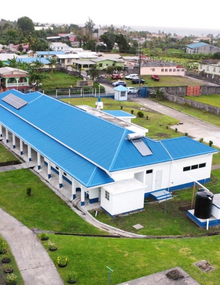
Explore the dashboard to learn how the Caribbean region is retrofitting their health care facilities to make them Safe + Green + Maintained = Smart, to provide care in disasters.

Interested to see what a Safe+Green+Maintained= Smart healthcare facility looks like? PAHO’s Smart Hospitals project comes to life! Explore the 360 visualizations that showcase resilient infrastructure and eco-friendly design, all working together to protect communities and improve care. From disaster-ready layouts to energy-efficient systems, 3D technology helps decision-makers, planners, and stakeholders see the future of healthcare facilities—today.
According to the Disaster Risk Reduction Action Plan 2016-2021, 77% (13,566 / 17,618) of the Region's hospitals are in at-risk areas and require urgent repair measures to protect the lives of staff and patients during and after a disaster. The International Panel on Climate Change Report AR53 indicates that extreme weather events (heat waves, storms, floods, droughts, wildfires) will occur in the coming years, leading to a decrease in available water, reduced food production, and an increase in vector-borne and other diseases, making the vulnerability of ecosystems and human systems much more evident.
Health systems will be among the most vulnerable to climate variability (according to the AR5 Report). The effects of climate change are variable; however, it is necessary to create conditions to reduce vulnerabilities before the effects manifest themselves.
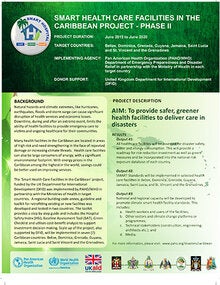
Smart Health Care Facilities in the Caribbean aims to support safer, greener health facilities capable of delivering care during disasters and has already been implemented in more than 10 Caribbean countries with the support of strategic partners.
Many health facilities in the Caribbean are in areas of high risk and need strengthening in the face of repeated damage or increasing climate threats. Health care facilities can also be large consumers of energy, with a significant environmental footprint. With energy prices in the Caribbean among the highest in the world, savings could be better used on improving services. Natural hazards and climatic extremes, like hurricanes, earthquakes, floods and storm surge can cause significant disruption of health services and economic losses. Downtime, during and after an extreme event, limits the ability of health facilities to provide emergency care to victims and ongoing healthcare for their communities.
The purpose of the 'Smart Health Care Facilities in the Caribbean' is to provide safer, greener health facilities to deliver care in disasters. This project, funded by the UK Foreign, Commonwealth and Development Office (FCDO) was implemented by PAHO/WHO in partnership with the Ministries of Health in target countries.
A toolkit for retrofitting existing or new facilities and technical standards were developed and tested in St. Kitts and St. Vincent and the Grenadines.
The toolkit provides a step-by-step guide and includes the Hospital Safety Index (HSI), Baseline Assessment Tool (BAT), and Green Checklist and utilizes cost-benefit analysis to support investment decision making. Scale-up of the project, also supported by DFID, was implemented in seven Caribbean countries: Belize, Dominica, Grenada, Guyana, Jamaica, Saint Lucia and Saint Vincent and the Grenadines. Other donors like EU and IDB also adopted the project and funded facilities in Belize, Haiti, BVI and Sint Maarten.
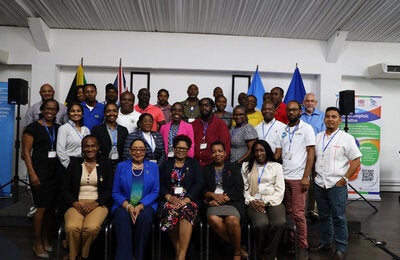
Caribbean experts and representatives from the donor FCDO discuss the relevance of the Safe + Green + Maintained = Smart healthcare facilities project during the annual Disaster Mitigation Advisory Group (DiMAG) meeting.
DiMAG is an international, not-for-profit body of experts that is available to provide advice and services to PAHO/WHO member countries on risk and vulnerability reduction projects in the health sector. Although DiMAG’s expertise focuses on health sector issues, the Group is composed of experts from many disciplines-engineering, architecture, disaster management, emergency services, economics and others-with a proven track record of working in developing countries.
PAHO has been providing technical assistance to Caribbean countries for the implementation of the Smart Hospitals initiative in phases I and 2.
As part of an external evaluation of the Smart Hospital Project, this video provides an overview of the project and focuses on its objectives, results, lessons learned, and recommendations for future similar projects aimed at increasing the resilience of the health sector.
Key Resources
- Smart Technical Guideline on Base Isolation in Hospital Design
- A Conceptual and Adaptable Model for Disaster Management in the Caribbean
- Caribbean Basin Wind Hazard Maps Aid in Siting of Hospitals
- Design Wind Speed Maps for the Caribbean
- Smart Hospitals - Lightning Strikes
- Smart Hospitals - Off-Grid Photovoltaic System for Small Health Facilities
- Retrofit Measures for COVID-19: Smart Hospital Project
- A 'Smart' Approach to Building Back Better After Hurricane Irma - Adina Donovan Home - BVI
- Case Study - Georgetown Hospital - St. Vincent Hospital 2014
- Case Study - Pogson Hospital - St. Kitts & Nevis 2014
- Case Study: The Smart Hospital Project – 2014
- Smart Hospitals - Putting SMART to the Test
- Putting SMART to the Test – Weathering Climate Change in the Caribbean - 2019