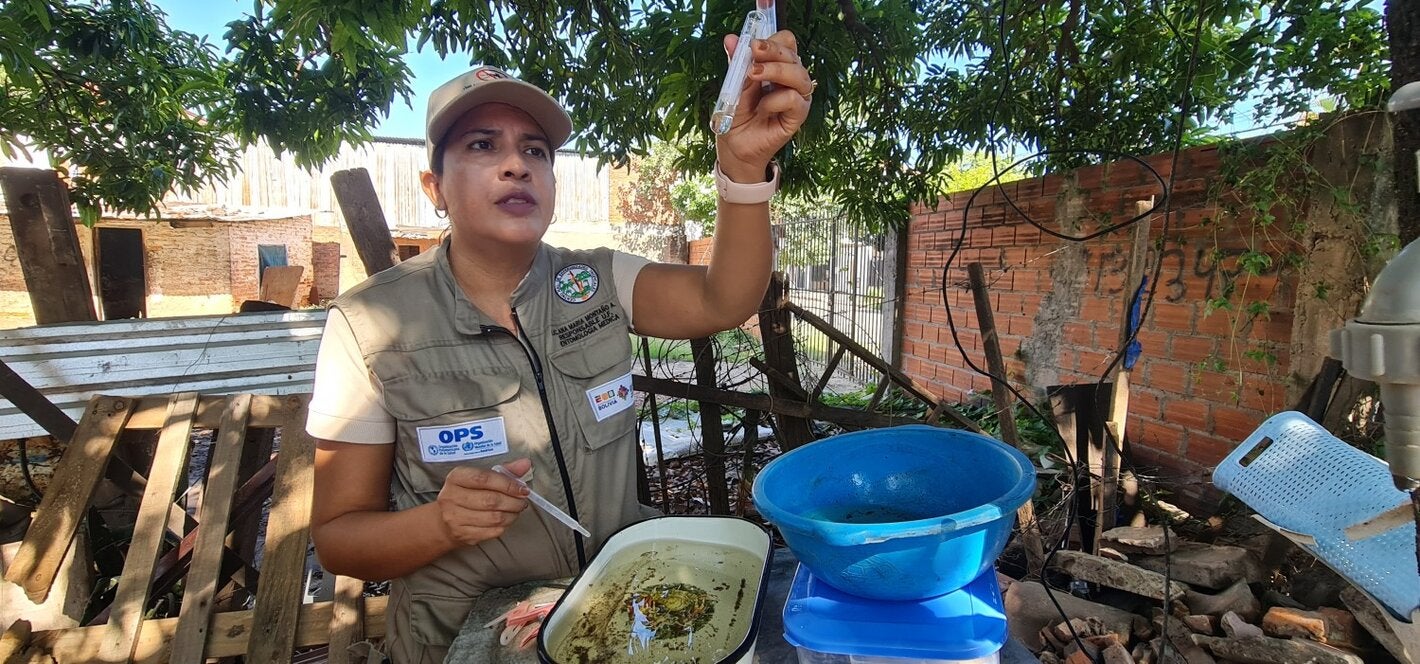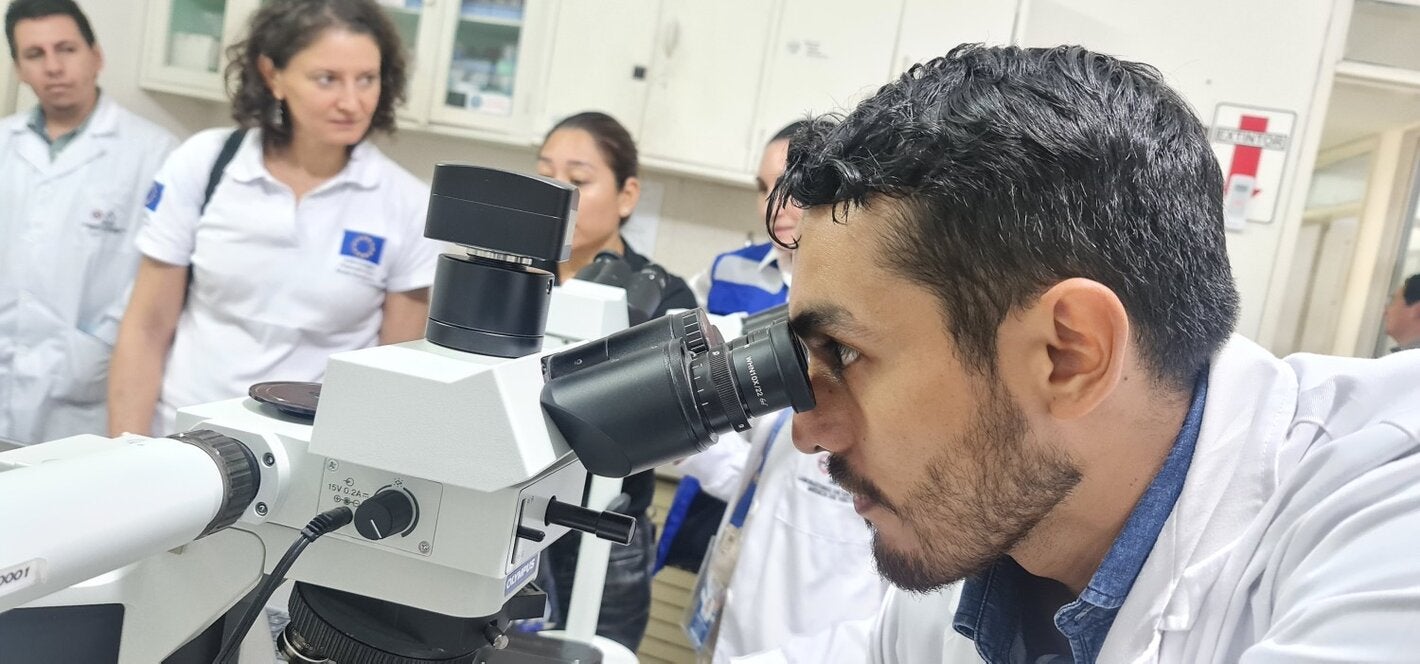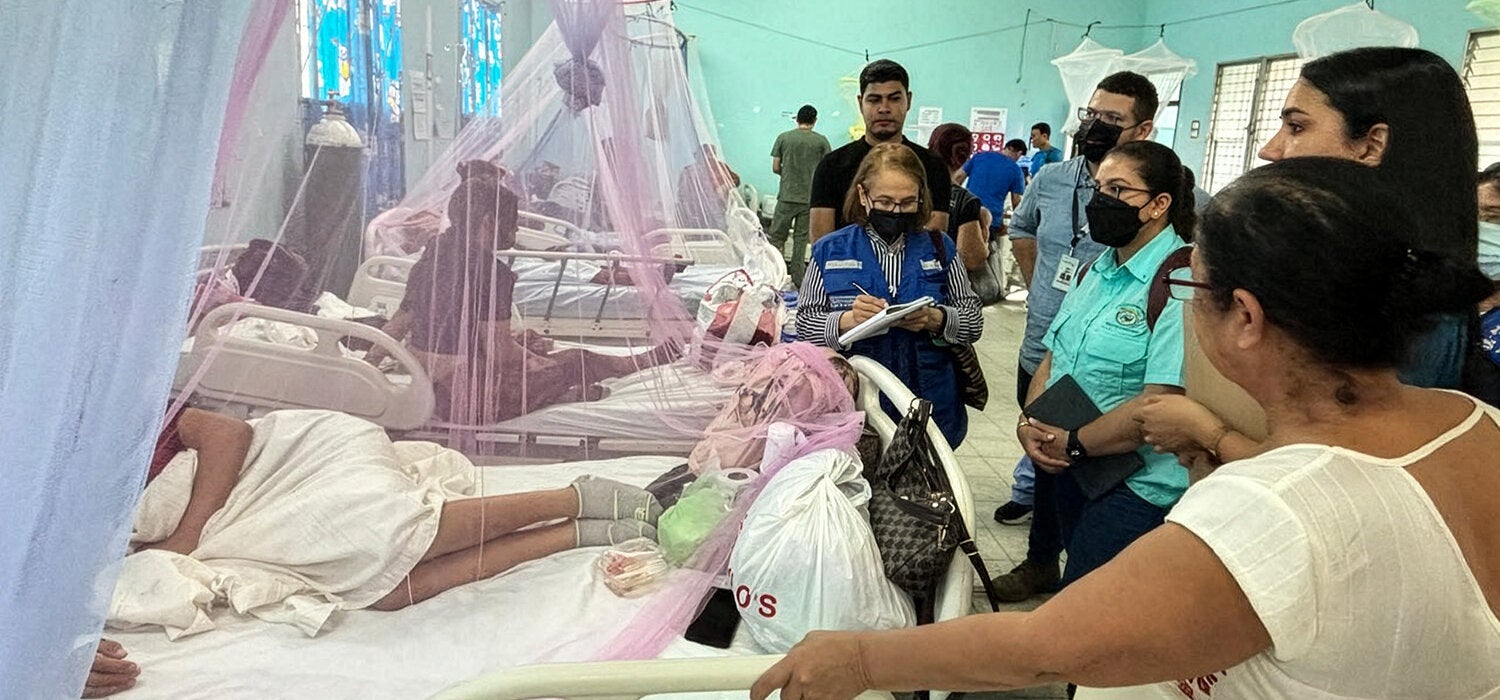
With support from the European Commission’s Directorate-General for European Civil Protection and Humanitarian Aid Operations (ECHO) and PAHO, Bolivia, Guatemala, Honduras, Panama, and Paraguay strengthened surveillance, clinical care, and community participation, helping to contain the epidemic.
— December 2025 —
A year ago, Bolivia faced a significant increase in dengue cases, setting off alarms among health authorities. The country began assessing how to intensify epidemiological surveillance and strengthen clinical management to contain an epidemic that had reached nearly 59,000 cases in 2024.
As an immediate response, the Pan American Health Organization (PAHO) worked with authorities to design a strategy to strengthen clinical care. More than 200 health professionals — including intensivists and second- and third-level hospital teams — received training to improve the country’s capacity for timely detection, and accurate classification and treatment of patients with dengue, which can be fatal in its severe form.
The first step was to identify clinical leaders in dengue to form the National Network of Clinical Experts, made up of frontline health personnel treating patients with suspected illness. Priorities were then defined, and training sessions were carried out in various parts of the country, mainly in Santa Cruz, the department with the highest transmission. These activities made it possible to standardize, update, and strengthen knowledge on the diagnosis, classification, and treatment of dengue.
“Management of dengue patients has been optimized to standardize care from a higher-complexity hospital to a first-level center or a medical post,” explained Dr. Eliana Vega of the French Hospital in Santa Cruz, Bolivia.
For families, the strengthening of clinical care also made a tangible difference. Amalet Angulo, mother of Jaime Manuel, who was hospitalized with dengue at the French Hospital of Santa Cruz, recalls the relief she felt upon arriving at the health facility: “When you go to the doctor, it gives you confidence and you feel safe arriving at a place where you know they are trained to take care of you, because you’re not bringing just anyone, you’re bringing your child.”
Her son, Jaime Manuel, who at first did not understand the severity of the disease, changed his mind when he was admitted to intensive care: “When someone goes to intensive care, it’s because they’re very sick, and I wondered how serious this could be. When I got to intensive care, I was the only one awake because the others were intubated,” he recounts.