• Community work

Early warning for dengue: Cuba strengthens prevention at the community level

La Habana, August 2025 


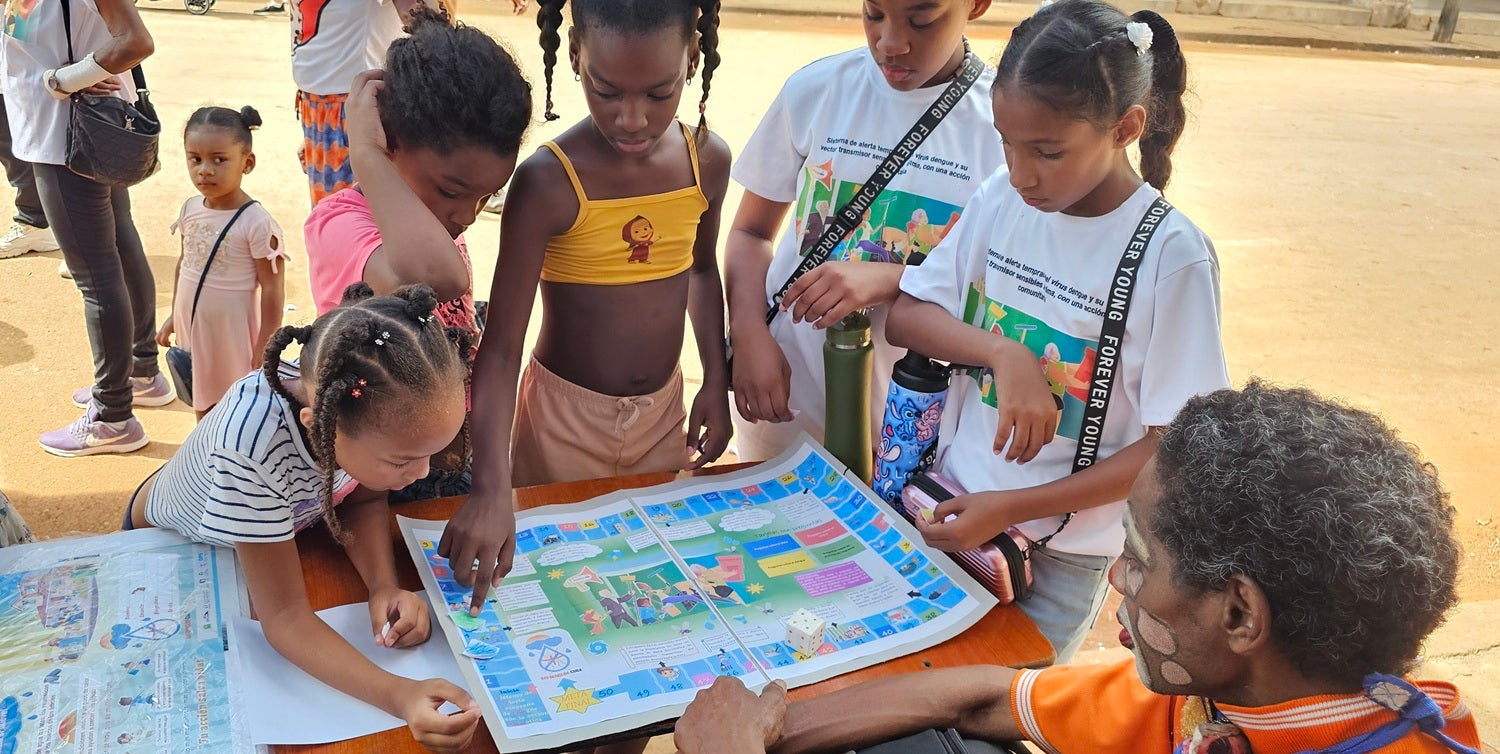
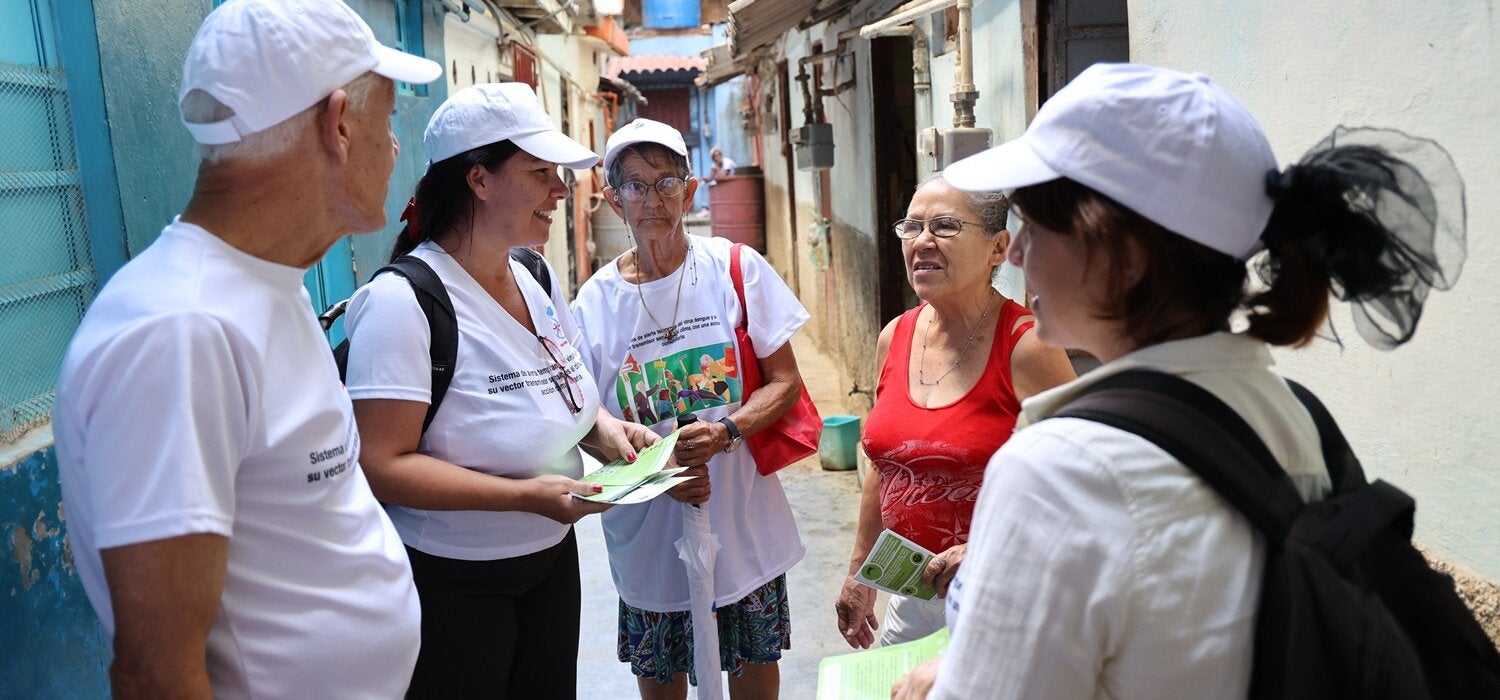
In the Jesús María neighborhood of Old Havana, community leader Maydolis Bueno Vargas speaks with conviction about a "seed" that germinates and grows into a great tree. She is not really talking about a plant, but rather the seed project known as SAT-DENCLIM, an initiative that has united her community to prevent dengue. Supported by the Pan American Health Organization (PAHO) and the Inter-American Institute for Global Change Research (IAI), this effort combines community action with technical knowledge to combat a disease that remains a constant threat to the region.

SAT-DENCLIM (Climate-Sensitive Early Warning System for the Dengue Virus and its Transmitting Vector, with Community Action) is a project focused on adapting the health sector to environmental and climatic factors that influence the spread of vector-borne diseases. Its primary goal is to provide an early warning system for dengue prediction, allowing local authorities and the public to take proactive and timely actions to minimize the risk of transmission. The project was developed in the Old Havana municipality, an area where many people live in socially vulnerable situations. The area also faces complex hygiene and sanitation conditions and, as it is a low-lying area near the coast, is also at risk of flooding. These conditions create an environment conducive to the proliferation of the Aedes aegypti mosquito, which transmits dengue.

An integrated approach

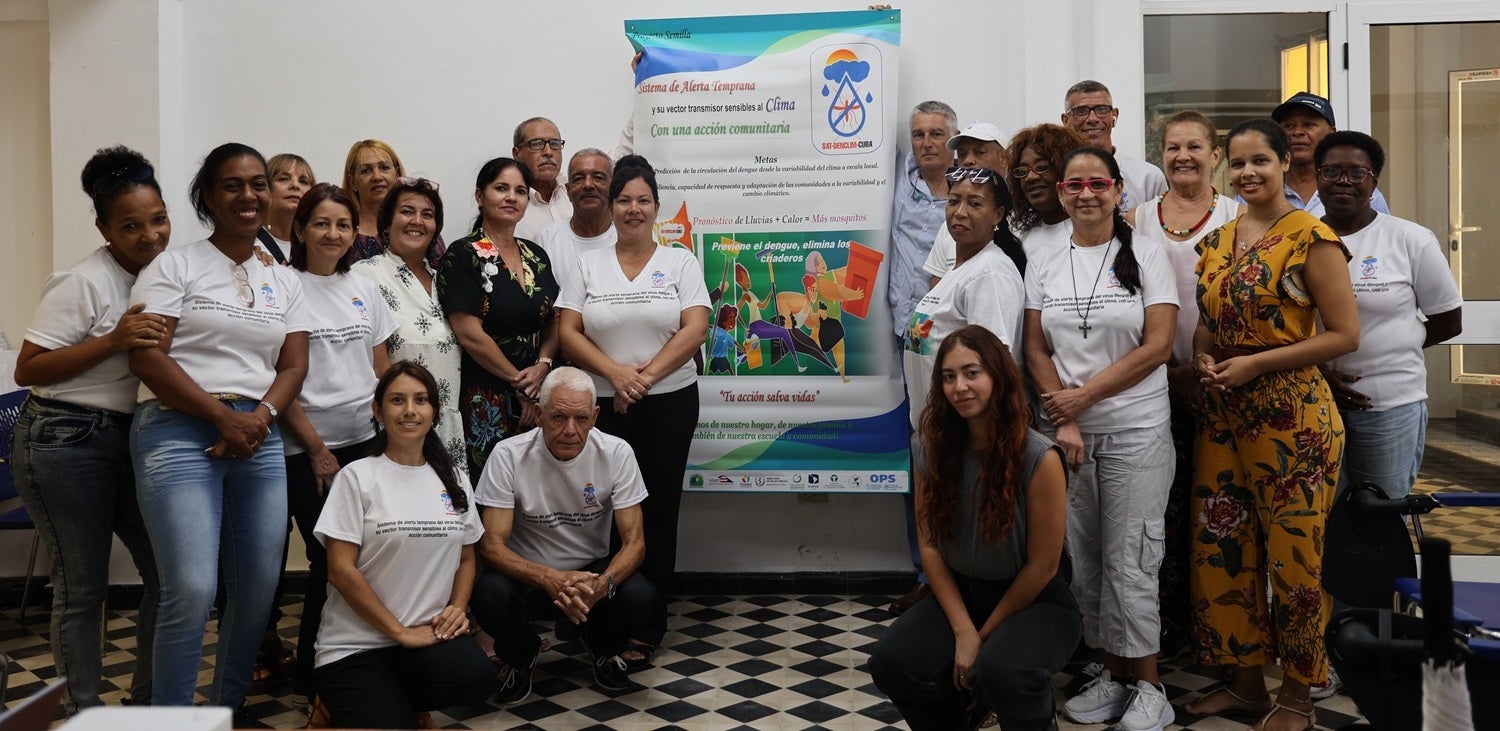
Mario Cruz Peñate, the PAHO/WHO representative in Cuba, highlights the importance of this initiative, which is part of the national "One Health" project. For Peñate, the project is an example of how cross-sectoral collaboration can strengthen the country's ability to protect both human and environmental health. At the project's closing workshop, representatives from the ministries of Science, Technology and the Environment (CITMA), Public Health (MINSAP), and Education (MINED) joined various community stakeholders to share results, best practices, and lessons learned.

Community project


Activities and results

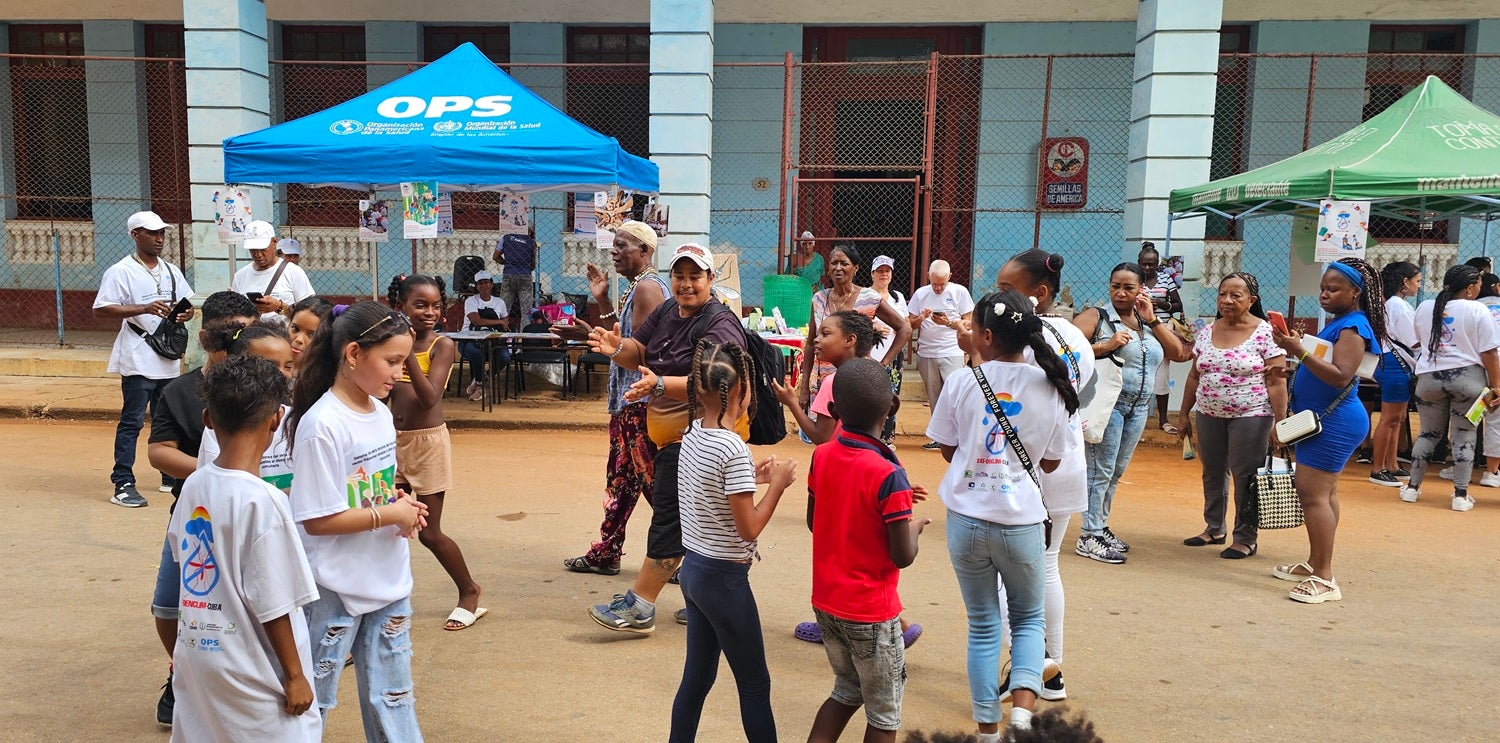
Among the activities that took place during the 12-month project, notable highlights include training workshops for a multidisciplinary group of specialists, community-level exchanges, and talks to raise awareness and educate the public.

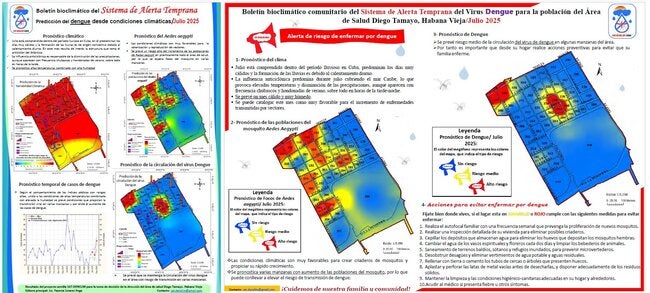
"One of the most significant results has to do with the creation of dengue prediction bulletins based on climate forecasts," says Yazenia Linares Vega, the leader of the SAT-DENCLIM climate. "These bulletins are produced monthly, and include two types: one for local authorities and institutions to help them make informed decisions, and another to help neighborhood residents act preventively," she adds.

The project also invested in equipment for research, communication, education, and vector control, including the purchase of microscopes to improve diagnostic accuracy.

Bulletin
Examples of Bioclimatic Bulletins from the Early Warning System


Project impact

According to the project's coordinating team, the ultimate purpose of the is ambitious: to empower community members so that behavioral change happens at the local level, and people work together to prevent diseases and promote well-being. With over 13 million dengue cases in the Americas in 2024 and 3.6 million so far in 2025, projects like this are essential.

For Daniel Buss, head of the Climate Change and Environmental Determinants of Health Unit at PAHO, "preventative systems provide an invisible layer of protection for health services; the better they work, the fewer cases of dengue and other diseases will occur.” He also emphasizes the importance of continuing to develop these types of initiatives, which can serve as examples for other cities, provinces, and countries throughout the Americas.

While it's too early to measure long-term results, encouraging signs are already appearing, including a greater understanding within the community of how to organize preventive actions for vector control. In recent months, no dengue cases have been reported in the intervention area.

The change is already palpable, and Maydolis expresses her enthusiasm: "This project has led to so many good things. We started with dengue, but we can extend it to other areas. When we start taking the first steps, we realize we can put a lot of heart into it and do more. I'm so happy!" 

Community fair
Community fair